-

A Detailed Guide to the Latest Scientific Fertilization Methods for Chinese Ash (Fraxinus chinensis) Bonsai
During the growing season, apply light fertilizer frequently. To make it easier for the tree to absorb and to avoid wasting fertilizer solution, it is best to apply once every 5-7 days. Fertilization is generally done on a sunny afternoon when the potting soil is on the dry side, and after application, water to rinse the leaves. On rainy days when the potting soil is wet, the roots cannot breathe well, and after fertilization the roots do not absorb it easily;
-
How much does a Chinese ash tree cost? Learn to grow it this way and it will grow fast
The Chinese ash tree, also known as the white thorn tree and green spindle wood, is a common sun-loving tree species found in mixed woods. Because of its strong adaptability, it is widely used in various woodland construction and protective landscaping projects. To make the Chinese ash tree grow well, you need to choose good saplings. So how much does a Chinese ash tree cost roughly
-
-
-
Branch selection and shaping methods for Chinese ash (Fraxinus hupehensis) bonsai stumps
Fraxinus hupehensis belongs to the Oleaceae family, genus Fraxinus. Native to Jingshan in western Hubei, it is a deciduous tree reaching over 30 m in height. Young and middle-aged trees have smooth, pale grayish-green bark, while middle-aged and old trees have vertical dark gray furrows. The new shoots that sprout in the first year should be handled according to the vigor of sprouting and branch growth of each stump. For vigorous trees
-
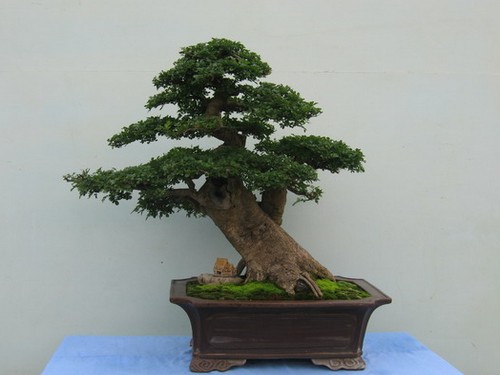
Four-Season Water Management Methods for Chinese Ash Bonsai
Chinese ash (Fraxinus chinensis) grows slowly, has a long lifespan, a beautiful tree form, and gnarled, intertwined roots. It is the finest among landscaping, bonsai, and root-carving varieties, and is hailed as a "living fossil" and the "king of bonsai." In daily water management work, the water regimen for Chinese ash bonsai can be summed up as "heavy watering." Heavy watering: there must be sufficient moisture, and slightly wet is better than dry. Water more in spring.
-
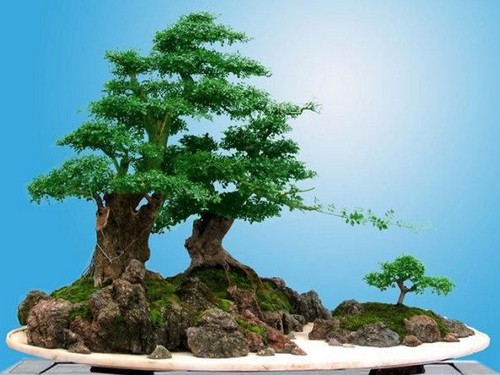
A Detailed Guide to Scientific Fertilization Methods for Chinese Ash (Fraxinus chinensis) Bonsai
During the growing season, apply light fertilizer frequently. To facilitate absorption by the tree and avoid wasting fertilizer solution, it is best to apply once every 5-7 days. Fertilization is generally carried out on a sunny afternoon when the potting soil is on the dry side, and after application, water to rinse the leaves. On rainy days when the potting soil is wet, the tree roots cannot breathe well, and after fertilization the roots do not absorb it easily; in strong sun: even in the hottest days of the dog days of summer
-
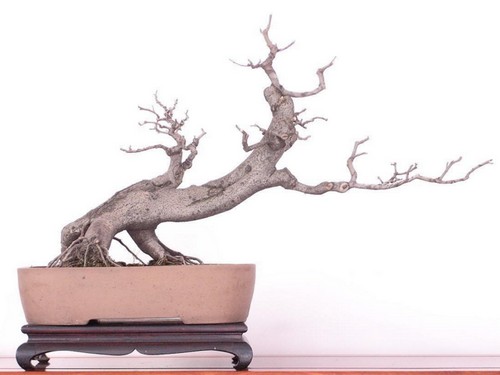
Detailed explanation of branch-pad styling methods for Chinese ash bonsai
Chinese ash (Fraxinus hupehensis) is a fast-growing species with vigorous growth. After one year of training and pruning of the trunk and primary branches, apart from a few terminal transition branches, cascading branches and drooping branches deliberately left long to thicken, most branches can be pruned and built into pads in the second year. In the early stage, primary and secondary branches are mainly wired (or guyed), with pruning as a supplement; in the later stage, once the branch pads have basically taken shape, pruning becomes the main method.
-
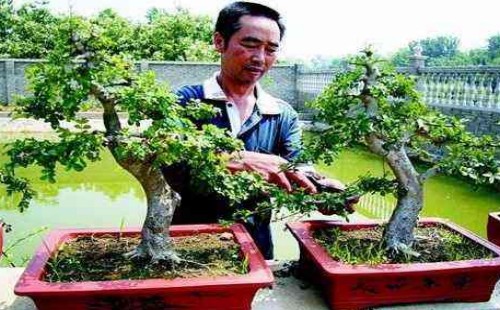
Handling of branches during the shaping of Chinese ash bonsai
Pruning is one of the most commonly used methods in tree bonsai shaping, and how to prune branches to better meet aesthetic standards has always been worth exploring for bonsai creators. However, for different creators, their creative personality, thinking, temperament, cultivation, and preferences are often not the same
-
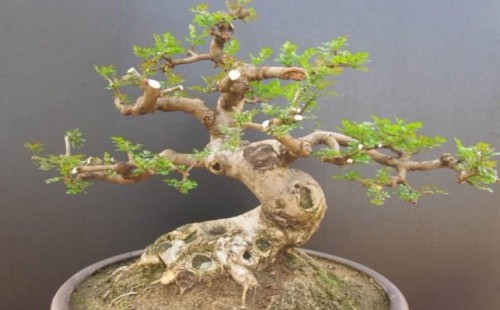
How to prune a Chinese ash bonsai? A detailed guide to the correct pruning method
A beautiful bonsai work inevitably has a distinctive shape, and creating that shape is often inseparable from pruning, and pruning techniques play a very important role in the bonsai shaping process. Because whether the branches are pruned well or not will directly affect the beauty of the bonsai's shape and its ornamental effect. The same is true for the Chinese ash bonsai
条件筛选