-

Detailed Explanation of Schisandra Breeding Techniques and Methods
Schisandra is a plant of the Magnoliaceae family and a valuable medicinal material, with effects of astringing the lungs, nourishing the kidneys, stopping sweating, stopping diarrhea, and securing essence. Schisandra prefers humid environments (but is not tolerant of low-dust waterlogging), is cold-resistant, needs moderate shade, and is suitable for humus soil or loose, fertile loam. It has strong adaptability and can be planted in both northern and southern China. It often grows wild in mixed coniferous and broad-leaved forests, mountain gullies, along stream banks, among small trees and shrubs, or at forest edges and open areas within forests. Breeding methods for superior varieties: 1. Seed propagation. After autumn, collect the fruits, remove the fruit
-
Detailed Explanation of Key Techniques for Artificial Breeding of Schisandra chinensis
The special medical and health benefits of the Chinese medicinal herb Schisandra chinensis are increasingly favored by people. However, the breeding and seedling cultivation of Schisandra chinensis is a difficult problem. The Schisandra chinensis improved variety breeding base in Kuandian County, Liaoning Province, has used wild Schisandra chinensis to cultivate excellent new varieties. The method is as follows: First, based on the principle that crossbreeding (inbreeding) between excellent varieties (lines) of fruit trees such as grapes and pears tends to produce "transgressive segregation in offspring," variety selection, purification, and domestication improvement were carried out on wild Schisandra chinensis. The main approach is: select an area of wild Schisandra chinensis on the mountain, and when the fruit ripens, select plants with long, uniform
-
What are the methods for breeding improved varieties of Schisandra chinensis?
Schisandra chinensis is a plant of the Magnoliaceae family and a valuable medicinal herb, with effects of astringing the lungs, nourishing the kidneys, stopping sweating, stopping diarrhea, and securing the essence. Schisandra chinensis prefers a humid environment (but does not tolerate waterlogging), is cold-resistant, needs moderate shade, and is suited to humus soil or loose, fertile loam. It has strong adaptability and can be grown in both northern and southern China. It often grows wild in coniferous and broad-leaved mixed forests, mountain gullies, along stream banks, among small trees and shrubs, or at forest edges and in open areas within forests. Methods for breeding improved varieties 1. Seed propagation. After the fruits are harvested in autumn, remove the flesh and wash out the seeds, then dry and store them.
-
Construction of High-Yield Schisandra Orchards and Seedling Selection and Breeding Techniques
Terrain conditions: Different terrains have a considerable impact on cultivated Schisandra. Under natural conditions, Schisandra is mainly distributed on shaded forest edges and open woodlands in mountainous areas, growing naturally with extremely low yields. Through artificial cultivation and 5 years of observational practice, it has been proven that more than 10 hours of all-day sunlight, an open field of view, no major obstacles around, good ventilation and light penetration, access to water, drainage capability, and a soil layer of 50 cm constitute the optimal location. Water source conditions: Schisandra is relatively drought-tolerant. To obtain higher yields and ensure good plant growth, strengthen rapid division of growth cells
-
Breeding Methods and Feeding Techniques for the Ganoderma Turtle
The Ganoderma turtle, also called the twelve-ridged turtle, is small in size, reaching a maximum of only 200-250 grams. It is a Class II nationally protected animal and a specialty of China. The Ganoderma turtle resembles the Ganoderma herb in shape, hence its name. Its mouth is hook-shaped and curved. Its eyes are large and protruding, with light yellow longitudinal stripes running from the side of the snout along the eye to the side of the neck. The Ganoderma turtle has strong adaptability, tolerates hunger, has strong vitality, and a long lifespan. Its meat is tender, has no off-flavor, and is rich in nutrients, making it an ideal nourishing food. The Ganoderma turtle has effects such as replenishing yin and blood, boosting essence and qi, and helping with weakness. Therefore, the Ganoderma turtle is extremely valuable and deeply
-
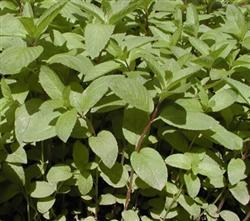
Detailed Explanation of Key Techniques for Summer Propagation and Breeding of Mint
1. Select good varieties. For summer propagation and breeding of mint, choose varieties with vigorous growth, strong disease resistance, high menthol content, and pure aroma; generally, Asia 39 and Fuyou No. 1 are selected. 2. Propagation time. It is generally carried out when the first crop of mint enters the bud stage. In the south, around June; in the north, around July. 3. Land preparation. Choose...
-
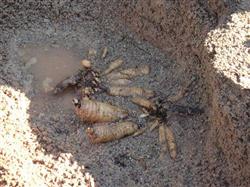
Differences Between Sexual Hybrid Breeding of Gastrodia and Traditional Varieties, and Management Methods
Explaining the principles and technical methods of mulching for increased yield: the principle of mulching for increased yield. Gastrodia is a plant that prefers cool, humid conditions. In nature, it is mainly distributed under forest canopies or in shrublands, mostly growing on gentle slopes at 10-30°C. During its growth period, it likes moisture but fears waterlogging; it likes warmth, with the most suitable temperature being 20-2...
条件筛选