-
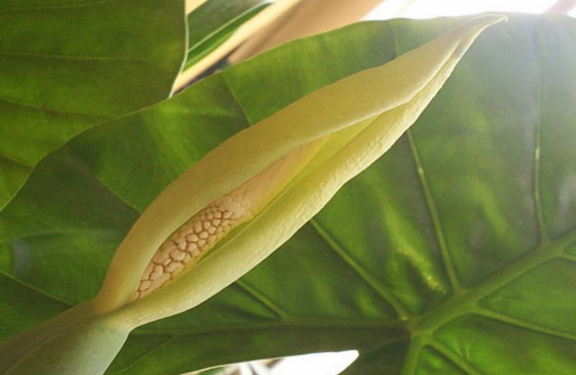
Reasons for Yellowing Leaves on Alocasia macrorrhizos, Prevention Methods, and Benefits of Growing It
The ornamental value of Alocasia macrorrhizos lies mostly in its lush, verdant leaves. When watered or when the air humidity is high, water droplets drip from the edges of the leaves, which is very endearing. Let's learn more about Alocasia macrorrhizos.
-
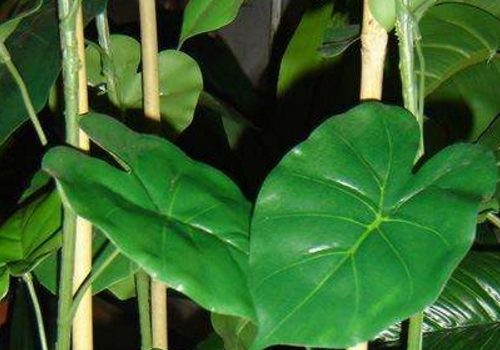
Why does Alocasia macrorrhizos get root rot and how is it different from Spathiphyllum
Alocasia macrorrhizos, many people have seen it, they just don't know its name. Why does Alocasia macrorrhizos get root rot? How is it different from Spathiphyllum? Why does Alocasia macrorrhizos get root rot: 1. Root rot in soil-grown Alocasia macrorrhizos is mainly caused by the potting soil being too wet. When the potting soil is too wet, the rhizomes of Alocasia macrorrhizos easily rot. The cause of overly wet potting soil may be that you watered too much, leading to water accumulation in the pot, or it may be that the soil is highly clayey, has poor aeration, and easily retains water on its own.
-

Detailed Explanation of Key Points for High-Quality Cultivation Techniques of Huanghuali (Asian Pear)
Huanghuali pears produced with traditional techniques have poor quality and low economic returns. To achieve high quality, high yield, and high returns for Huanghuali pears, the following cultivation techniques must be implemented: 1. Change the traditional pruning and training method, converting the lateral central-leader form to the natural open-center form. Remove the central leader of the pear tree, leaving only three main scaffold branches, similar to the training form of peach trees. Practice has proven that through this simple measure, apical dominance is weakened, the scaffold branches become noticeably thicker, increasing by 35 cm compared with ordinary production orchards, and the extended branches of the main limbs reach over 2 m, expanding the canopy and increasing the fruiting area in the second year.
-
Scientific control methods for the first-generation Asiatic rice borer (Chilo suppressalis) in rice
According to surveys conducted across Hubei Province, the overwintering mortality rate of the Asiatic rice borer this year was higher than last year, and the post-winter population base was lower than last year but still relatively high. In addition, suitable climate conditions and the expansion of high-quality rice varieties are both favorable to the occurrence and damage of rice stem borers, and the first-generation Asiatic rice borer will show a major outbreak trend in the rice-growing areas of our province, making the control situation still severe. In response to this severe situation, all localities should strengthen leadership, raise awareness, actively organize control efforts, and quickly launch a campaign to wrest grain from the pests to ensure the safety of grain production. 1. Recognize the situation clearly and strengthen organizational leadership. Last winter, our province suffered freezing ice and
-
Introduction to the Breeding Methods of the East Asian Scorpion "Shenlong No. 1"
The East Asian scorpion "Shenlong No. 1" is a new breed developed through hybrid vigor. Its advantages are large body size, high venom yield, short growth cycle, high litter rate, and high reproduction rate, and it has improved immunity to the original diseases and pests and adaptability to the growth environment, which facilitates feeding management. I. Characteristics: The features of this breed are similar to other East Asian scorpions. The trunk (from the anterior abdomen to the cephalothorax) is flat and elongated oval, and the posterior abdomen is tail-shaped. The entire body resembles a pipa shape, and the whole body surface is a highly chitinized hard skin. The body is
-
High-yield cultivation techniques for bulb propagation of Asiatic lilies in semi-arid regions
1. Site selection, land preparation and fertilization. According to the growth characteristics of Asiatic lilies, choose level, fertile sandy loam with deep soil layers, high organic matter content, loose texture, and good drainage and irrigation for cultivation. After selection, plow deeply to 30 cm, harrow fine and level. In combination with deep plowing, apply 6 cubic meters of fully decomposed high-quality farm manure per 667 sq m. For each cubic meter of manure, use 50% carbendazim and 50% phoxim at 1000 g each, add 50 kg of water, stir evenly and pile up to ferment. Then make beds running north-south, 1-2 m wide and 10-15 m long, with bed ridges
-
East Asian scorpion
The East Asian scorpion has a relatively long body and is deep black. It prefers slightly acidic soil and feeds on insects. It produces many offspring but has poor maternal instincts. It is mainly found in the border area between Shandong and Hebei.
-
What kind of fish is the East Asian plateau loach? Characteristics and habits
Common name: Jiuerbang. Origin and season: Widely distributed in Qinghai, Tibet, Gansu, ** and western Sichuan. Description: Mouth inferior, relatively wide. Lips thick, upper lip wrinkled, lower lip with papillae and deep wrinkles, lower jaw spoon-shaped. Tips of pelvic fins extending backward to or beyond the anus. Caudal peduncle relatively high. Body surface smooth and scaleless. A bottom-dwelling fish, living in slow-flowing streams or shallow water with abundant gravel and aquatic plants, feeding on animal food. Individuals are relatively large; a specimen with a body length of 142 mm has been observed; numbers are abundant and can form regional
-
The snakehead Channa asiatica is a prized tonic fish in South China.
Channa asiatica belongs to the order Perciformes, suborder Anabantoidei, family Channidae, genus Channa. Common names: in Guangdong it is called qixing fish, shanhua fish, shanban fish, diancheng fish, chengxing fish, and xingguang fish; in Guangxi it is called xing fish and zhanggong fish; in Taiwan, China it is called youdai. English names: Snakehead, Chinafish. Its form resembles the spotted snakehead. The head is large, wide and flat, the snout short and bluntly rounded, the mouth large, and the nasal tubes thick, extending forward beyond the upper lip. The scales are relatively large, and the scales on top of the head are enlarged but irregular; the scales on the sides of the head are also relatively large. Dorsal fin and anal fin
-
An introduction to the physical characteristics and living habits of the Eurasian red squirrel
Eurasian red squirrel size: body length about 30cm, tail length about 20cm; origin: central Europe to western Asia; diet: omnivorous, mainly plant-based. A large squirrel. The whole body is bright reddish-brown, and the belly is white. The ears have long hair. It is large in size and lively in movement, so a fairly large cage is needed when keeping it.
条件筛选