-
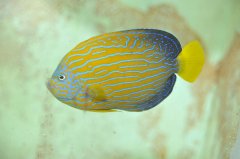
Breakthrough in Artificial Breeding of Blue-banded Angelfish Fry, Creating Value While Balancing Ecology
Brilliant colors and dazzling postures, with schools of fish swimming gracefully underwater, are extraordinarily therapeutic, and have also made the ornamental aquarium industry a star industry under trends such as the stay-at-home economy and physical and mental stress relief; according to the Food and Agriculture Organization of the United Nations (FAO)
-

The Complete Guide to Angelfish Keeping: Learn How to Keep This Elegant Tropical Fish Well
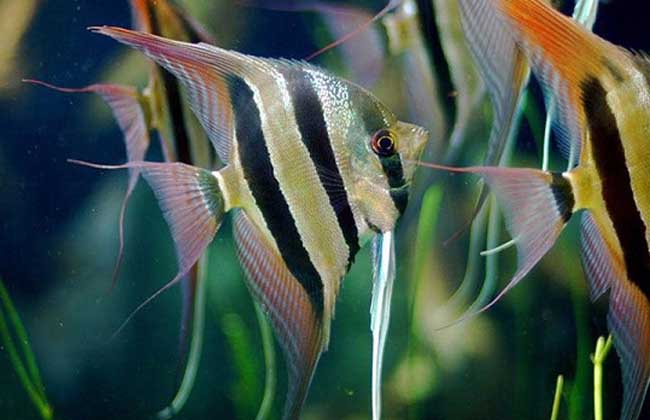
Angelfish, also known as yan fish, angel, little angelfish, little-fin sailfish, etc., belongs to the genus Pterophyllum in the family Cichlidae, and originates from Guyana and Brazil in South America. Angelfish grow 12-15 cm long...
-

What varieties of freshwater angelfish are there? A detailed guide to common species classification
1. Common Angelfish Scientific name: pterophyllum scalare English name: Angelfish Native to the waters from the central Amazon River to the Peru and Ecuador region, it is the original species from which today's general artificially improved angelfish breeds are derived. In its scientific name, pterophyllum means "as soft and light as a feather," while scalare describes its body stripes as being like a ladder. Apart from breeding, there are no obvious external sexual characteristics; the male's external genital organ is pointed, while the female's is
-
How Do Angelfish Breed? Detailed Breeding Methods and Techniques
Angelfish, English name AngelFish, scientific name Pterophyllum scalare, belongs to the cichlid family and is a quite representative species of fish. Cichlids have a characteristic: when breeding, unless they are naturally paired by mutual affection, they will absolutely not produce the next generation, and they have an innate tendency to care for their offspring. However, when spawning, angelfish are extremely afraid of disturbance. If they are disturbed during paired breeding, the tragedy of eating their own eggs or fry can occur. Therefore, an environment free from external interference during breeding is
-
A Detailed Guide to Selecting and Choosing Breeding Angelfish
Let's talk about breeding angelfish. First, when selecting breeding fish, choose healthy young fish with strongly contrasting, vivid colors and good body shape, and raise them from a young age. As for the issue of "disabilities," you need to look at it from two sides. Some disabilities must be firmly avoided when selecting fish, such as: a crooked body, deformed head or mouth, etc.; but ordinary external injuries, damaged scales or fins, and so on are minor problems that will not affect breeding quality. When raising breeding fish, pay attention to four issues: first, increase the amount of water changed, and it is better to change less at a time but more often; you can do it once every three days, 30
-
Feeding Methods and Technical Key Points for Juvenile Angelfish
Feed the fry opening food 5-8 hours after they leave the board and swim freely; feed them infusoria or brine shrimp nauplii. Feeding egg yolk water is no good; the fry do not like to eat it, and it fouls the water. Changing the water is unrealistic; you will find it simply cannot be done. The first feeding should be a small amount, just enough for every fish to get some. Feeding too much causes indigestion and instead kills the fish. After the first feeding, wait about 8 hours before the second feeding, so the fry have ample time to digest, adapt, and empty the "yolk water (milky mucus)" in their bellies. After that it is easy to manage; you just need to feed three times a day.
-
What food do angelfish eat? A detailed guide to feeding methods
At first glance, angelfish have small, delicate mouths, but they are actually very cunning. When angelfish eat their food, their mouths protrude into a tube shape, sucking it in along with water like a straw. Their suction is very strong; taking an angelfish with a body length of 10 cm as an example, it can suck in a fish about 1 cm long in one go. Once angelfish reach their maximum size, it is best not to keep them together with small tetras, and especially not with black-shell shrimp, which are even more of a meal for large angelfish. Tubifex worms are about 5 cm long, and tubifex worms living in water
-

How to Keep Angelfish? A Detailed Guide to Care Methods for Beginners
Angelfish Care Methods (Beginner's Edition)
-
-
条件筛选