How Do Angelfish Reproduce? A Detailed Guide to Breeding Methods
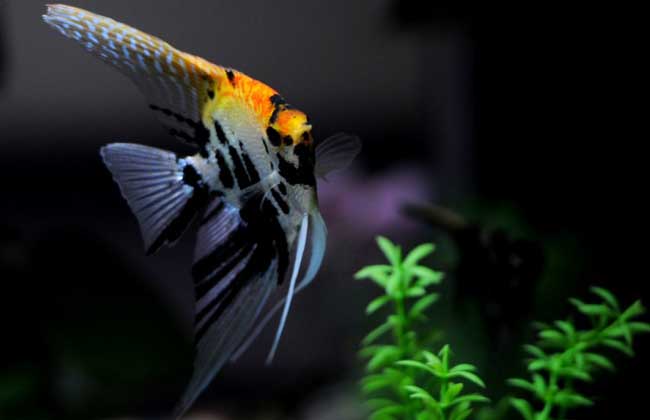
The angelfish is a tropical fish with high ornamental value, also known as the freshwater angelfish, small-finned sailfish, angel fish, and dwarf angelfish. It belongs to the genus Pterophyllum in the family Cichlidae and is native to Guyana, Brazil, and other parts of South America. It has the reputation of being the "queen of ornamental fish" and is almost synonymous with tropical fish. Let us take a look together at the breeding methods for angelfish below!
Sources of Angelfish Broodstock
Angelfish broodstock need to be paired from a young age, like " childhood sweethearts." When selecting breeding fish, choose healthy small fish with strongly contrasting, vivid colors and good body shape, and raise them from a young age. As for the issue of "disabilities," it should be viewed from two sides. Some disabilities must be firmly avoided when selecting fish, such as a crooked body or deformed head or mouth, but ordinary external injuries such as damaged scales or fins are minor problems that will not affect breeding quality.
Identifying Male and Female Angelfish
Identifying male and female angelfish is relatively difficult during the juvenile stage, but once the adult fish have passed 8 to 10 months and entered sexual maturity, the male and female characteristics become very obvious. The male fish's forehead is more developed than the female's, appearing full and prominent, while its abdomen is not as swollen as the female's. The male's sperm duct is thin and pointed, while the female's ovipositor is thick and round. Angelfish are a tropical fish species that likes to pair off naturally. Successfully paired angelfish often leave the group and swim and feed together as a couple, living an independent life in which they envy only mandarin ducks, not immortals.
Feeding and Caring for Angelfish Broodstock
Angelfish require a spacious tank and broad-leaf aquatic plants, with several hours of light each day. They have no strict requirements for water quality and like to live in weakly acidic soft water with a pH of 6.5 to 7.0. The suitable temperature is 26 to 30 degrees Celsius. They like fresh water that has been left to stand, and frequent water changes will reduce their chances of falling ill. The diet is mainly live tubifex worms and Artemia, supplemented by copepods and cladocerans, fed three times a day at fixed times. The feeding amount should be based on "seven-tenths full," limited to the tubifex worms being completely eaten within ten minutes. Normally, change one-fifth of the water every day, siphon out feces and food residue from the bottom of the tank with a pipette, and the newly added water should be tap water that has been aerated for more than 2 days.
Spawning and Reproduction of Angelfish
1. Spawning and fertilization: Angelfish have strong reproductive capacity, spawning about once every half a month, and they spawn on their own without the need for induced spawning. When signs of impending spawning are noticed in the broodstock, such as the female's abdomen swelling and even her ovipositor protruding, place a spawning slate (made of thin green plastic material). After the spawning slate is placed, the broodstock quickly discover it and actively nibble and brush its surface with their mouths. At the same time, the broodstock's ovipositors continually enlarge. When they reach the state just before spawning, the female's ovipositor is about 2 mm and the male's is about 1.5 mm. The female lays a row of eggs on the spawning slate, and the male immediately follows behind the female to fertilize them. This is repeated continuously until spawning is complete, with each spawn producing anywhere from 200 to 1,200 eggs.
2. Natural hatching: Natural hatching is relatively simple. After spawning, the broodstock do not move away and continue the hatching process, and the broodstock will guard the eggs. During hatching, the male and female take turns fanning the eggs with their pectoral fins, fanning water close to the eggs to drive water flow and exchange, so that the fertilized eggs have sufficient oxygen to meet the needs of embryonic development. If white eggs, that is, unfertilized eggs, are found, the broodstock will peck them out and eat them. Once the fry hatch and drop off the slate, the broodstock can be removed.
3. Artificial hatching: Artificial hatching is a relatively commonly used method. As soon as the broodstock finish their spawning behavior, immediately move the spawning slate to a hatching tank. The hatching tank should have the same water temperature and water quality as the spawning tank and should be disinfected in advance with a methylene blue solution throughout the tank. At the same time, set up a small oxygen pump (or sponge filter) in the hatching tank to play the role of the broodstock splashing water. During hatching, if there are white dead eggs, they should be immediately siphoned out with a pipette to avoid infection by water mold, and the temperature should immediately be kept constant.