-
Whether or not to use pesticides when farming is a dilemma either way. What is the best course of action?
A few days ago I went back to my hometown and made a point of walking along the river outside the town, and by the edge of the fields I found a pile of empty pesticide bottles and bags. I looked it up online, and pyrazosulfuron-ethyl and bispyribac-sodium...
-

What are the key points to note when mixing pesticides? Remember these few points
Pesticide bottles used in citrus orchards. Reasonable pesticide mixing can enhance pesticide efficacy. However, improper pesticide mixing can reduce pesticide efficacy, increase costs, and in some cases cause...
-

What are non-toxic pesticides? Market prospects and safety analysis
In today's pesticide market, many farmers are emphasizing environmental protection and green practices. Light-pack non-toxic pesticides are a type produced through green process flows...
-
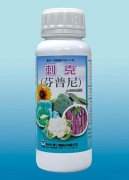
What Are the Dangers of Pesticides? The Banned Drug Fipronil Poisons Millions of Bees
Millions of bees have been poisoned by the banned pesticide fipronil! Reports of damage have come from the Puli and Caotun areas of central Taiwan, China. What exactly happened? Let's take a look together. Quick facts about fipronil: It is used as a pesticide, an animal drug and an environmental drug; it acts as a neurotoxin and has an immediate effect on insects.
-

Pesticide Application Methods and Analysis of Common Questions About Microbial Pesticides
What problems have you encountered when using pesticides that you are not aware of? See if any of the questions below are what you want to ask, and let us take a look together. Biological pesticides refer to pesticides produced from natural materials, such as animals, plants, and microorganisms, which are relatively harmless to living things and
-
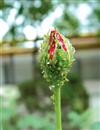
What are the methods for controlling aphids on flowers in spring and summer?
How do you control aphids on flowers in spring and summer? Please explain the methods. Many aphids, every year in the spring and summer period, like to gather densely on the young leaves, young shoots, young stems, buds, flower buds and corollas of Chinese roses, chrysanthemums, hibiscus and so on, causing damage. They use piercing-sucking mouthparts to absorb large amounts of sap from plant tissues, causing a lack of nutrients in the flowers, making the roots, stems, leaves, flowers and flower buds of the affected parts grow slowly or stop growing, and in severe cases causing the whole plant to wither or die.
-
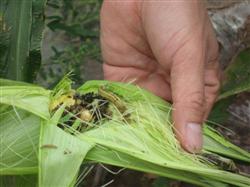
What pesticide gives good control results against corn borers?
Which pesticides can control corn borers? Please introduce in detail. For corn borers, the following methods can be used for control: At the funnel stage of corn, broadcast Miral (isofenphos-methyl) into the funnel, at a rate of 1 kg/mu. During the ear stage of corn, the chemical irrigation control methods include: pouring chemical solution into the tassel: 25% bisultap aqueous solution at 500 times dilution...
-
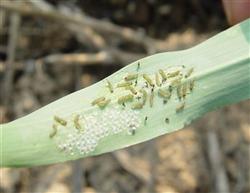
What pesticide is effective for controlling rice stem borer larvae?
What pesticide should be used to control rice stem borer larvae? For controlling rice stem borer larvae, you can use 30 to 40 ml of 5% fipronil suspension concentrate per mu, or 120 to 150 ml of 20% triazophos emulsifiable concentrate plus Tianda 2116. When using chemical control, maintain a 3 to 5 cm deep water layer in the field and let it dry naturally. Click to get more insecticide...
-
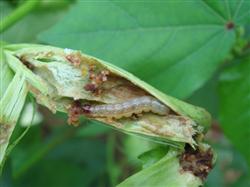
What are the causes of corn borer outbreaks?
What are the causes of corn borer outbreaks? Please explain. The causes of corn borer outbreaks are as follows: (1) Insect population base: the size of the insect population base from the previous generation is an important factor affecting the severity of corn borer damage. A large insect population base, under suitable environmental conditions, often causes severe damage. ...
-
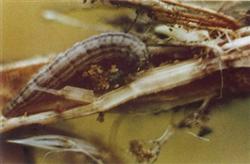
What is the rice stem borer (Chilo suppressalis)? Detailed control methods
What is the rice stem borer and how to control it? Please provide an introduction and control methods. The rice stem borer, also known as the stem maggot, is distributed in rice-growing areas across both southern and northern China. Its hosts include rice, corn, sugarcane, foxtail millet, broad bean, water bamboo, sorghum, rapeseed, wheat, Chinese milk vetch, and others. In recent years, damage from this pest has remained severe....
条件筛选