-
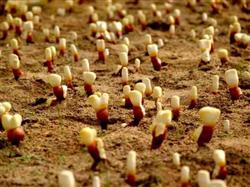
What are the cultivation techniques and growing methods for reishi mushroom?
How is reishi mushroom cultivated? Please provide an introduction to the methods. Artificial cultivation of reishi mushroom in China began in 1960 and was successfully domesticated by Mr. Chen Meipeng of the Edible Fungi Research Institute of the Shanghai Academy of Agricultural Sciences. Reishi cultivation has two types: substitute cultivation and log cultivation. Substitute cultivation means filling artificially prepared culture material into bags and arranging them in a shed to cultivate reishi fruiting bodies...
-
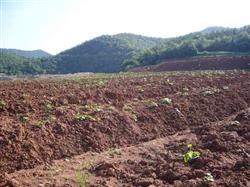
What should be noted when planting kudzu?
What should be noted when planting kudzu? Please give an introduction. The following points should be noted when planting kudzu: 1. Site selection: Kudzu has strong adaptability and does not have strict requirements for soil conditions, but deep, fertile, well-drained sandy red loam is best. 2. Land preparation: For general dry land, plow and turn about 33 cm, break up and rake the soil surface...
-
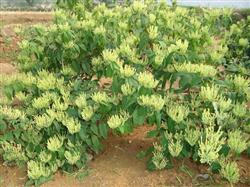
What are the main management measures for growing honeysuckle (Lonicera japonica)?
What are the main management practices for growing honeysuckle? Please give an introduction. The main management practices for growing honeysuckle are as follows for reference: 1. Cultivation and weeding. Generally 3-4 times a year. The 1st time is when new leaves sprout in spring; the 2nd time is in June; the 3rd time is in July-August; the 4th time is in late autumn and early winter. During...
-
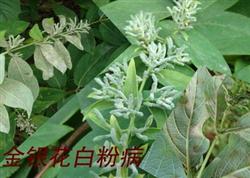
What are the common pests and diseases of honeysuckle (Japanese honeysuckle) and their control methods?
What pests and diseases need to be controlled when growing honeysuckle? Please provide an introduction and guidance on control methods. The main diseases controlled in honeysuckle cultivation are powdery mildew and leaf spot, and the main pest is aphids, etc. The control methods can refer to the following: (1) Powdery mildew. Powdery mildew is the main disease of honeysuckle, mainly harming the leaves and tender stems...
-
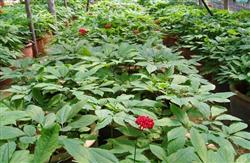
What are the management methods for ginseng in autumn, winter and spring?
How should ginseng be managed in autumn, winter and spring? Please explain the methods. Autumn, winter and spring are the overwintering dormancy period for ginseng, and field management during this stage is an important production step that cannot be ignored. The main tasks are cold protection and moisture conservation, and the key management points are: sealing the beds in autumn, allowing snow cover in winter, and digging drainage ditches in spring. Applying cold-protection soil in autumn...
-
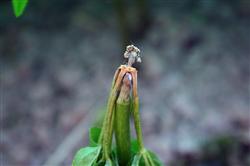
What are the control methods for ginseng gray mold?
How do you control ginseng gray mold? Please explain the methods. Ginseng gray mold symptoms: It damages ginseng leaves; the lesions on the leaves are limited by the leaf veins and appear polygonal or irregular. They are light brown, and on the underside of the lesions there is a sparse, thin, grayish-white or pale yellow mold layer, namely the pathogen's sporangiophores and sporangia. In the later stage, the lesion tissue necroses, breaks apart easily...
-
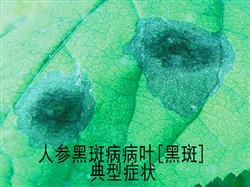
What fungicide works well to control ginseng black spot disease?
What fungicide should be used to control ginseng black spot disease? Please explain that ginseng black spot disease is caused by fungi of the genus Alternaria infecting the stems, leaves, flowers and fruits of ginseng. It spreads through the air. It occurs easily when there are many rainfall events, high air humidity and temperatures of 18°C-22°C, and spreads to surrounding plants. Stem spots mostly appear in mid-to-late May,...
-
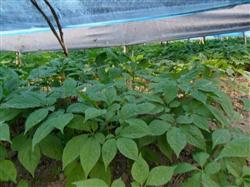
What kind of disease is ginseng bacterial leaf blight?
What is ginseng bacterial leaf blight? Please provide an introduction. Symptoms of ginseng bacterial leaf blight: it is generally more common in 1-year-old and 2-year-old ginseng in recent years. The leaves of ginseng fade from the leaf tip or edge, and water-soaked lesions spread toward the stem part of the leaf. After fading, the leaves are white or light yellow. Some faded leaves look like white paper and have tension, and do not break easily when pulled by hand. Finally...
-
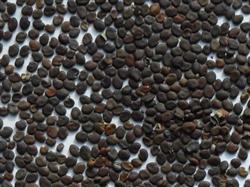
What are the common propagation methods for the medicinal herb Scutellaria baicalensis?
How is the medicinal herb Scutellaria baicalensis propagated? Please explain the methods. The propagation methods for the medicinal herb Scutellaria baicalensis can be carried out with reference to the following methods: 1. Cuttage propagation. The most suitable period for cuttage is May and June, when the plants are in a vigorous vegetative growth stage. Cut the semi-lignified young tender part from the upper end of the stem and branch (the survival rate is very low when the middle and lower parts of the stem are used as cuttings)...
-
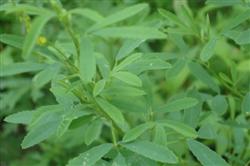
What environment suits Scutellaria baicalensis? Detailed sowing methods
What environment suits growing Scutellaria baicalensis? How do you sow Scutellaria baicalensis well? Here is an introduction: Scutellaria baicalensis can grow in areas with an annual average temperature of 4-10°C, an annual accumulated temperature of 2500-4000°C at ≥10°C, and a frost-free period of 120-180 days. Suitable soil conditions for sowing: deep soil layers, good drainage, loam, sandy loam or humus loam, and both flat land...
条件筛选