-
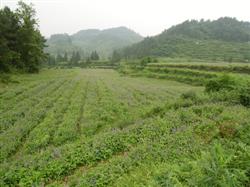
What are the cultivation methods and key technical points for Salvia miltiorrhiza?
What are the methods for growing Salvia miltiorrhiza? Please give an introduction. Salvia miltiorrhiza, also known as purple salvia, red salvia, blood salvia, and red-rooted salvia, is the dried root of the plant Salvia miltiorrhiza in the Lamiaceae family. It has the functions of removing blood stasis and relieving pain, promoting blood circulation and regulating menstruation, and nourishing the heart and relieving restlessness. It is suitable for irregular menstruation, amenorrhea, ectopic pregnancy, hepatosplenomegaly, angina pectoris, restlessness and insomnia...
-
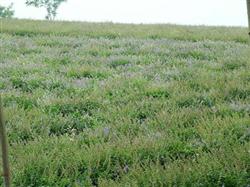
What are the key technical points for Salvia miltiorrhiza cultivation and management?
How do you manage Salvia miltiorrhiza well during cultivation? Please provide guidance. Salvia miltiorrhiza cultivation management is as follows: 1. Intertillage and weeding. Generally carried out 3 times, the first in May, when the seedlings are about 15 cm tall; the second in June; the third in August. 2. Timely topdressing. Topdressing is carried out together with intertillage and weeding. Per mu, apply...
-
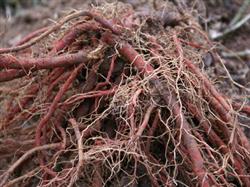
What are the control methods for root-knot nematode disease in Danshen (Salvia miltiorrhiza)?
How to control root-knot nematode disease in Danshen (Salvia miltiorrhiza)? What are the symptoms of root-knot nematode disease in Danshen (Salvia miltiorrhiza)? The control methods for root-knot nematode disease in Danshen (Salvia miltiorrhiza) can be referred to as follows: 1. Damage symptoms. The disease damages the roots of Danshen (Salvia miltiorrhiza). The affected taproots, lateral roots and fibrous roots all bear tumor-like root galls; the taproots and lateral roots become thinner, and the fibrous roots increase in number. On the galls...
-
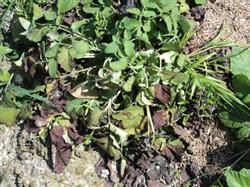
What are the control methods for root rot in red sage (Salvia miltiorrhiza)?
How do you control root rot in red sage? Please provide an introduction. Red sage root rot: 1. Harmful symptoms: Red sage root rot occurs in hot, rainy seasons and harms the plant's roots. In the early stage, only a few roots or part of the underground rhizome become diseased first, gradually spreading to the entire root system. After the roots are damaged, wet rot occurs, the outer skin turns black,...
-
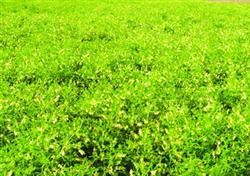
What are the control methods for purple root rot of Astragalus membranaceus?
How to control purple root rot of Astragalus membranaceus? Please explain the methods. The pathogen of purple root rot of Astragalus membranaceus is a kind of basidiomycete fungus, which mainly damages the underground roots. It first occurs on the underground fibrous roots, then spreads to the lateral roots and the main root. In the early stage of the disease, a layer of white thread-like material can be seen wrapped around the roots; as the disease develops, it turns purplish brown and...
-
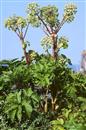
What causes early bolting in Angelica sinensis?
Why does Angelica sinensis bolt early? Please explain the reasons. 1. Causes of early bolting in Angelica sinensis. 1.1 Seeds that are too plump, or seeds produced by early-bolting plants (commonly known as "gunpowder seeds", [flower] seeds or fire seeds) used for raising seedlings, are prone to early bolting after transplanting. According to the experience of herbal farmers, Angelica sinensis seedling cultivation has very strict requirements for seeds...
-
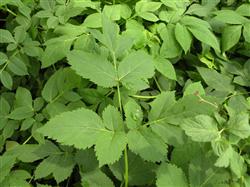
What are the growing environment requirements for Angelica sinensis?
What kind of growing environment suits Angelica sinensis? Please explain that Angelica sinensis is an alpine plant, requiring cool, moist climatic conditions, with the characteristics of loving fertilizer, fearing waterlogging, and fearing high temperatures; when cultivated in low-altitude areas, it struggles to survive the summer, and dies easily when temperatures are too high. Seeds germinate well within the range of 10-25°C, with seedlings emerging in 10-15 days. Angelica...
-
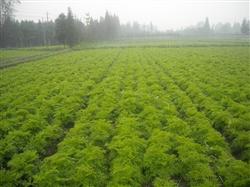
What are the key points of high-efficiency Angelica sinensis cultivation techniques?
How to cultivate Angelica sinensis efficiently? Please introduce the methods. For high-efficiency cultivation of Angelica sinensis, you can refer to the following cultivation methods: 1. Seed collection: In mid-to-late November, when wild Angelica sinensis seeds mature, go up the mountain to collect the seeds, dry them in the sun, and store them in cloth bags or woolen mesh bags in a ventilated, airy place for sowing in March of the following year. 2. Seedling raising: Raise...
-
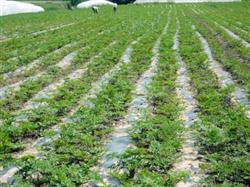
What precautions should be taken when growing Angelica sinensis with plastic film mulching?
What should be noted when growing Angelica sinensis with plastic film mulching? Please introduce Angelica sinensis, of the Apiaceae family, a perennial herb with a fleshy root. Its leaves are several times pinnately compound. It flowers in summer, with white flowers in compound umbels. The fruit is oblong-elliptical, with broad wings on the lateral ribs. It is produced in Gansu, Shaanxi, Sichuan, Hubei, Yunnan, Guizhou and other provinces of China. In...
-
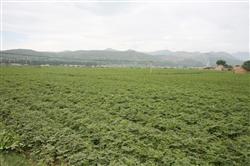
What are the key points of winter management techniques for Angelica sinensis?
How to manage Angelica sinensis in winter? Please give an introduction. For Angelica sinensis sown directly in winter, combine with topdressing before winter, cover the seedlings with manure or add about 1 cm of fine soil over the seedlings to protect them from frost damage; for Angelica sinensis raised in seedbeds and then transplanted, storage of seedlings should be done well in winter; for Angelica sinensis grown for seed, in order to improve seed yield and quality, before harvest it is necessary to...
条件筛选