-

What are the precautions for bag-cultivated white fungus?
What are the common mistakes in bag-cultivated white fungus? Please introduce some mistakes that farmers often make when using bag cultivation of white fungus, resulting in poor yield and quality; the following lists some common mistakes in bag-cultivated white fungus for everyone to learn from. Mistake one: improper cultivation season: under natural temperature conditions, indoor cultivation of white fungus is best in spring and autumn...
-

Oyster Mushroom Cultivation Techniques: What Contaminant Fungi Affect Oyster Mushroom Cultivation?
What contaminant fungi affect oyster mushroom cultivation? What methods can be used in oyster mushroom cultivation to prevent and control contaminant fungi? Please introduce them. The contaminant fungi that appear during oyster mushroom cultivation include green mold and Trichoderma viride. The mycelium is initially white, gradually turning pale green and then dark green. This fungus is a major enemy harming oyster mushroom growth. Like oyster mushrooms, this fungus prefers to grow in...
-

Oyster Mushroom Cultivation Techniques: What Are the Methods to Increase Oyster Mushroom Yield?
What cultivation methods can increase oyster mushroom yield? We also hope friends can offer guidance. To increase oyster mushroom yield in cultivation, day-to-day management needs to be strengthened. Below are four methods that can increase oyster mushroom yield (for everyone's reference). Oyster mushroom yield increase method one, adding nutrient solution: After the first flush of mushrooms is harvested, soak the fungus bags in nutrient water containing 0.1% urea and 3% white sugar for about 10 hours, so they can absorb a large amount of water, and the second flush of mushrooms will form quickly; then use a water injector to inject nutrient solution (vitamin B1, 20 mg, magnesium sulfate 20 g, boric acid 5 g, zinc sulfate 10 g, urea 25 g, cold boiled water 50 kg), reduce humidity and keep warm for 7 days, and the second flush of mushrooms will grow smoothly.
-

What are the weed molds and insect pests of the oyster mushroom (Pleurotus sajor-caju)? With cultivation pictures
What weed molds and insect pests are there in cultivating the oyster mushroom (Pleurotus sajor-caju)? What good methods are there to control them? Netizens are asked to share. The weed molds and insect pests that need to be controlled in cultivating the oyster mushroom (Pleurotus sajor-caju) are: molds, Coprinus fungi, mushroom flies and mites; the detailed control methods can be found in the list below. Prevention methods for weed molds and insect pests of the oyster mushroom (Pleurotus sajor-caju): 1. Environmental pre...
-
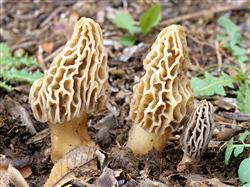
Morel Cultivation Techniques: What Are the Growing Environment Requirements?
What are the environmental requirements for morel growth? Please provide an introduction. Morel is a rare wild mushroom. Because its cap surface is uneven and shaped like a sheep's stomach, it is named morel (sheep-stomach mushroom). Morels often grow in the humus soil under mixed coniferous and broadleaf forests dominated by poplar and birch trees, generally appearing in large numbers after rain from March to May. It...
-
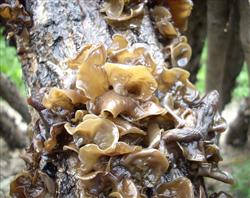
What are the methods for preventing and controlling "rotten logs" in black fungus (wood ear mushroom)?
How do you prevent and control "rotten logs" in black fungus (wood ear mushroom)? What causes "rotten logs" in black fungus? What methods can prevent and control it? We also ask netizens to help introduce methods. Zhongdi Network has compiled the causes and prevention methods of black fungus "rotten logs", listed below for netizens' reference. Causes of black fungus "rotten logs"...
-
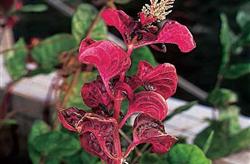
What Is Red Wood Ear? A Complete Guide to Red Wood Ear
What is red wood ear? An introduction: red wood ear is a perennial upright herb. The stems are purplish-red, 1-2 m tall. Leaves are simple and opposite; broadly ovate to nearly round, 2.5-5 cm long, apex deeply concave or 2-lobed, base nearly truncate, slightly decurrent into an ear-like shape, margins wavy, slightly rolled inward, leaf surface slightly curled and uneven, purplish-red with...
-
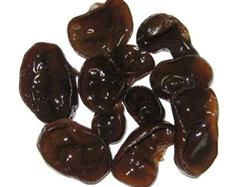
What are the causes of deformed black fungus (wood ear mushroom) during cultivation?
Why does black fungus become deformed? Is there any way to prevent and control it? Please advise. The common deformities of black fungus include fist-shaped ears, tumor-like ears, yellow-white ears and single-sheet ears. Detailed descriptions and control methods are listed below: 1. Fist-shaped wood ear. Symptoms: the primordia do not differentiate and the ear sheets do not grow, while the spherical primordia gradually enlarge...
-
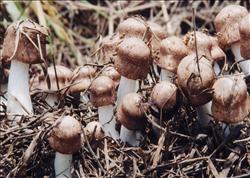
What pests and diseases should be prevented and controlled during the cultivation of Agaricus blazei?
What pests and diseases should be prevented and controlled when cultivating Agaricus blazei? Is there anyone online who can guide me? The common pests and diseases of Agaricus blazei during cultivation include slugs, mites, nematodes, mushroom gnats, mushroom flies, Coprinus fungi, Diehliomyces microsporus, and Mycogone perniciosa (wet bubble disease). Agaricus blazei has the ability to resist competitor fungi and is generally not attacked by them; the key is...
-

What kind of growing conditions does the cultivation of the almond mushroom (Agaricus subrufescens) require?
What conditions are suitable for the growth of the almond mushroom (Agaricus subrufescens)? We would also like friends to help introduce them. The conditions suitable for the growth of the almond mushroom (Agaricus subrufescens) are listed below for reference: 1. Temperature requirements for the growth of the almond mushroom (Agaricus subrufescens): it is a medium-temperature to high-temperature type mushroom; the mycelium growth temperature range is 15--32°C, with the optimum at 22--26°C; the fruiting temperature range is 16--33°C, ...
条件筛选