What are the causes of deformed black fungus (wood ear mushroom) during cultivation?
Why does black fungus become deformed? Is there any way to prevent and control it? Please advise. The common deformities of black fungus include fist-shaped ears, tumor-like ears, yellow-white ears and single-sheet ears. Detailed descriptions and control methods are listed below: 1. Fist-shaped wood ear. Symptoms: the primordia do not differentiate and the ear sheets do not grow, while the spherical primordia gradually enlarge...
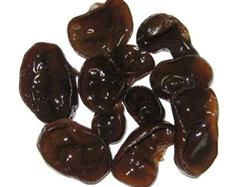 Why does black fungus become deformed? Is there any way to prevent and control it? Please advise.
The common deformities of black fungus include fist-shaped ears, tumor-like ears, yellow-white ears and single-sheet ears. Detailed descriptions and control methods are listed below:
1. Fist-shaped wood ear
Symptoms: the primordia do not differentiate and the ear sheets do not grow, while the spherical primordia gradually enlarge. It is also called fist ear or spherical ear, and in cultivation it is called non-opening.
Causes of fist-shaped wood ear: 1. Ventilation during ear emergence; 2. Insufficient light; 3. Small temperature difference and too deep or too large incisions; 4. Temperature too low during the differentiation stage.
Control methods for fist-shaped wood ear:The ear bed should not be too deep, and the straw curtain should not be too thick; during the differentiation stage, increase ventilation in the morning and evening, and let slanted sunlight shine in to stimulate and promote differentiation; arrange the production season reasonably, do not make incisions too early in early spring, and do not cultivate too late in autumn planting, to prevent the differentiation stage from being too cold.
2. Tumor-like wood ear
Symptoms: tumor-like or wart-like growths appear on the ear sheets, often accompanied by pest damage and dripping ear phenomenon.
Causes of tumor-like wood ear: 1. The combined effect of high temperature, high humidity and poor ventilation; pest damage and pathogens breed together and aggravate the condition of tumor-like ear. 2. Spraying micro-fertilizers and hormone drugs in seasons of high temperature and high humidity can also induce tumor-like ear.
Control methods for tumor-like wood ear:Arrange the season well and avoid ear emergence in seasons of high temperature and high humidity; pay attention to ventilation during the fruiting body growth period; to suppress the breeding of pathogens and pests, let more slanted sunlight shine on the ear bed, and use chemical sprays cautiously in hot seasons.
3. Yellow-white wood ear
Symptoms: the ear sheets are pale in color, turning yellow or even tending to white, and the sheets are thin.
Causes of yellow-white wood ear: 1. Insufficient light and poor ventilation; 2. Harvesting too late, with the ear sheets over-mature; 3. Poor strain quality.
Control methods for yellow-white wood ear:The straw curtain should not be too thick; increase ventilation and light exposure in the morning and evening; harvest in time to ensure quality; select high-quality spawn for production, and do not use inferior or fake spawn or spawn that has been transferred (bagged) too many times for production.
4. Single-sheet ear
Symptoms: the wood ear does not form clusters; two or three single sheets grow in clusters, and the ear sheets are often irregular in shape.
Causes of single-sheet ear: 1. Poor strain quality; 2. Overheating or aging of the mycelium in the cultivation bags; 3. Improper medium formula, with malnutrition or excess nitrogen source (wheat bran, soybean powder, etc.); 4. Raw materials too fine, bags packed too tightly, and the medium not breathable.
Control methods for single-sheet ear:Strictly control the spawn; do not buy inferior or fake spawn, do not use grain spawn, and prevent radiation exposure (such as railway security inspection facilities). During mycelium incubation, prevent overheating and prevent the mycelium from growing slowly and prolonging the incubation period; strictly follow the ingredient formula, do not use overly fine raw materials, and bag according to standards. 1. Fist-shaped ear
Click to get more wood ear cultivation techniques
Click to get more edible mushroom cultivation techniques