-
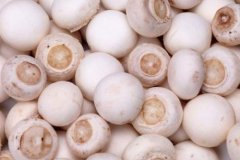
Is the underside of the Tricholoma mushroom cap and its interior turning black toxic, and can it still be eaten normally?
Tricholoma mushroom is also called white mushroom because it is white all over, and it is also a rare edible fungus with high nutritional value. But why do some Tricholoma mushrooms bought and left for a while turn black? Is the underside of the Tricholoma cap turning black toxic? Is the inside of the Tricholoma
-

How to cultivate oyster mushrooms (Pleurotus pulmonarius) under tree shade? With cultivation pictures
I heard that oyster mushrooms can be cultivated under tree shade. How do you cultivate oyster mushrooms under tree shade? Is there anyone online who can explain? Oyster mushrooms can indeed be cultivated under tree shade, generally from March to June and from August to November each year; for detailed methods, refer to the following list: Method for making beds for oyster mushrooms: the bed site should be chosen...
-
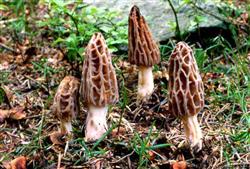
Morel Cultivation Techniques: Can Morels Be Grown Under a Forest Canopy?
Can morels be grown under a forest canopy? What is the best time to plant them? What are the cultivation methods? Please give an introduction. Morels can grow under poplar, birch or mixed broadleaf forests, so morels can be cultivated under trees. When growing morels under a forest canopy, you should choose a coniferous-broadleaf forest dominated by poplar or birch, with a canopy density above 0.7, and loose, thick, moist humus soil beneath the trees...
-
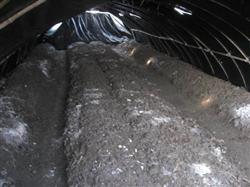
How do you cultivate straw mushrooms in summer under high temperature and high humidity?
How do you cultivate straw mushrooms in summer under high temperature and high humidity? Please introduce how, during the hot summer season of high temperature and high humidity, idle greenhouses can be used to cultivate straw mushrooms. For site preparation, clean the greenhouse thoroughly, repair the greenhouse film, disinfect the floor and walls, and cover the greenhouse roof with wheat straw. Make beds inside the greenhouse, with a bed surface width of 80 cm and a height of 10 cm...
-
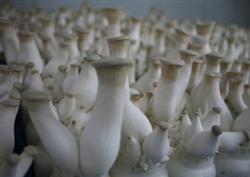
A detailed guide to the king oyster mushroom cultivation process, so easy to understand you will get the growing steps at a glance
What should you pay attention to when cultivating king oyster mushrooms? King oyster mushroom is one of the edible mushroom species newly developed in recent years. Because its cultivation techniques are not yet widespread, some problems encountered in production often affect yields, so attention must be paid to them. 1. Most of the mushroom bags become contaminated during the spawn-running process, and in severe cases...
-

What is the fresh-keeping principle for edible fungi? This article will help you understand it clearly
Fresh-keeping for edible fungi (theprincipleoffresh-keepingforediblefungi): Mushroom bodies separated from the culture substrate still have vitality, and living organisms have resistance to adverse external environments and microbial infection. However, the stronger the life activity, the faster the rate of freshness decline. Therefore, without destroying the normal physiological functions of the organism, by controlling various factors that affect the physiological and biochemical changes of fresh mushroom products, the life activity of the mushroom body can be kept as low as
-
What are the precautions for introducing edible fungi? These key points need to be understood in advance
Edible fungi, like other crops, rely especially on pure, high-quality spawn, because the quality of the spawn directly affects the level of yield and the success or failure of cultivation. With good-quality spawn and reasonable cultivation management, it is easy to obtain high and stable yields; with poor-quality spawn, it is difficult to obtain high yields, or even total crop failure. There is a saying in edible fungus production: whether you harvest at all depends on the spawn, how much you harvest depends on management. For this reason, high-quality edible fungus spawn is the prerequisite for mushroom growers to achieve high returns in edible fungus cultivation. Edible fungus spawn is divided into first-level spawn (also called mother spawn
-
Detailed Explanation of Underground Shiitake Cultivation Methods and Techniques
Underground shiitake cultivation uses underground tunnels, natural caves and other underground facilities to grow shiitake mushrooms, allowing year-round spawn production and fruiting in all four seasons. This is another new cultivation site for shiitake production after wild forest areas, mushroom houses and plastic sheds. This cultivation method has developed rapidly in China, with a history of more than 20 years, and a complete set of production models for large-scale underground shiitake cultivation has been formed. It can be done both in bags and in blocks. Underground shiitake cultivation makes full use of the low-temperature and moisture-retaining properties of this site, and with the addition of cultivation bed racks and light sources, it can
-
Detailed Explanation of Key Techniques for Cultivating Oyster Mushrooms Under Forest Canopy
I. Ensuring Spawn Quality To achieve high and stable yields of oyster mushrooms, it is important to master the correct spawn production process and ensure good spawn quality. The variety we selected is Pinggao No. 1. Practice has proven that good spawn can increase yield by more than 30% compared with poor spawn, and the mushrooms produced are robust with very few pest and disease problems. II. Site Selection The fruiting site for high-temperature oyster mushrooms is a forest arched shed. The requirements are good ventilation and convenient drainage. III. Spawn Bag Preparation The cooked-substrate bag method can be adopted; do not use raw-substrate cultivation. Cooked-substrate cultivation refers to a method in which the substrate is first sterilized at high temperature after being mixed, and then inoculated and incubated.
-
Semi-underground three-dimensional cultivation of oyster mushrooms yields high output and good returns
Semi-underground three-dimensional bed-frame cultivation of oyster mushrooms is a new approach explored in recent years to achieve high yields and improve economic returns. According to trials, on an area of 20 sq m, with 2000 kg of substrate, the annual output of oyster mushrooms is about 2500 kg, with a biological efficiency of over 120%. The key technical points are as follows: 1. Building the greenhouse: first dig a pit 1.8 m to 2 m deep and 4 m to 5 m wide, with the length determined as needed, and place the three-dimensional bed frames inside. On top, use bamboo poles and plastic film to build an arched shed, pack the surrounding edges firmly with soil, and cover with straw mats. Leave ventilation openings of about 30 square cm on all four sides, east, west, north and south, and build a small door on the west side for workers to enter and exit.
条件筛选