-
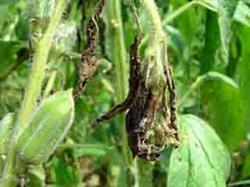
How should bacterial wilt in sesame be prevented and controlled?
I. Symptom expression Sesame bacterial wilt occurs relatively early. In the early stage of the disease, the roots turn brown, and the top of the plant wilts and droops. Afterward, dark green patches appear on the stem and gradually deepen and turn black. The leaves wilt and droop progressively from top to bottom. Diseased plants are shorter than healthy plants. The vascular bundles of the roots and stems turn brown, and finally the pith becomes hollow. Bacterial fluid oozes out both inside and outside the stem. The leaf vascular bundles are also affected, with dark green streaks on the veins. After the capsules are infected, water-soaked lesions appear and gradually develop into dark brown streaks of uneven thickness.
-

What issues should be noted when buying dairy cows
What issues should be noted when buying dairy cows
-
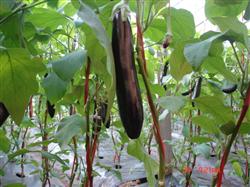
How should base fertilizer be applied to eggplants? These methods need to be mastered
Sclerotinia rot is an important disease on early-spring greenhouse eggplants in coastal areas in recent years. It can occur from the seedling stage to the mature plant stage, with the most severe damage during the early flowering and fruiting period, often causing the buds and young fruits of the first eggplant and the second eggplant to rot and drop, the main stem and branches to die, and early yield to drop sharply. Symptoms of the disease: at the seedling stage, the disease starts at the base of the stem, ...
-
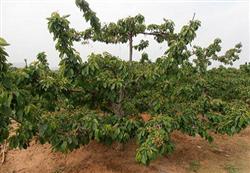
Autumn basal fertilization for sweet cherries is timely now, and fruit growers should not miss it
When it comes to the key points of autumn basal fertilization, the first thing to emphasize is "early." It is generally carried out in September-October, but early application in September gives the best results. This is because during this period the soil temperature is relatively high, the roots absorb fertilizer over a longer time, and the absorption rate is also fast. Once the fertilization timing is grasped, the application rate must also be increased...
-
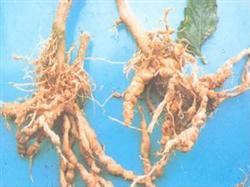
What chemical agents should be used to control tomato root-knot nematode disease?
In recent years, the occurrence of tomato root-knot nematode disease has shown an upward trend, especially in dry sandy loam soil where the disease is severe, causing great losses. Root-knot nematodes have a wide range of hosts; besides damaging tomatoes, cucumbers, sweet peppers and others also suffer severely. Root-knot nematodes often overwinter in the soil as eggs or second-stage larvae with galls, root knots, and diseased plant residues...
-
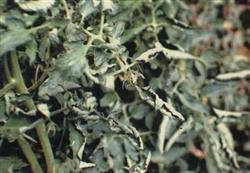
What chemicals should be used to control tomato leaf curl disease?
For physiological leaf curl, the control measures are timely watering and fertilizing after fruit set, and covering with a shade net: cover it during the day on sunny days, uncover it at night, and do not cover it on cloudy days. The symptoms of damage by the broad mite (Polyphagotarsonemus latus) are leaves becoming narrower, stiff and upright, shrunken or distorted and deformed, and finally the growing tip becoming bare. For chemical control, 1.8% Abamectin can be sprayed at a 3000-fold dilution. Hormone...
-
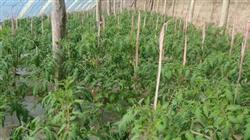
Why should mepiquat chloride be used cautiously on tomatoes?
In recent years, many farmers have used hormones such as mepiquat chloride when carrying out chemical control on tomatoes. However, improper use of mepiquat chloride often causes phenomena such as small fruit, fruit cracking and green shoulders. For this reason, it is recommended that chemical control of tomatoes should focus on nutritional regulation, and attention should be paid to preventing the following situations. 1. "Small fruit disorder": because farmers at...
-
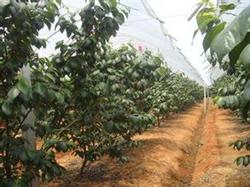
Do not relax post-harvest management of cherries; grower friends should take it seriously
I. Focus on summer pruning. While removing the film, promptly cut back the canopy and carry out heavy pruning. 1. Cut back the canopy. This method can reduce the overall height of each cherry tree canopy by 50-80 cm respectively, preventing the tree from growing taller and taller and affecting the ventilation and light conditions inside. 2. Cut and thin the main branches. Heavy cutting is required...
-
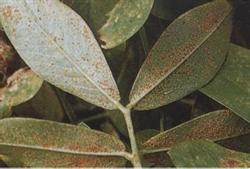
Spring peanut planting should emphasize increased phosphate fertilizer application
After spring peanut planting this year, there has been more rain, many overcast and rainy days, and high field humidity, which is favorable for the reproduction of peanut rust pathogen. Damage has already begun to occur. If measures are not taken in time to prevent and control it, peanut yield will be seriously affected. Peanut rust mainly damages leaves, but also damages stems, pod stalks and pod shells. Generally...
-

条件筛选