-
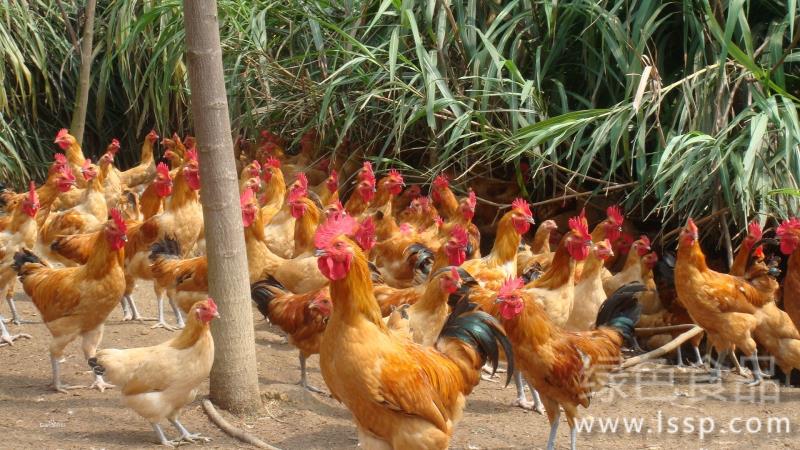
How should free-range chickens be raised and managed during the laying period to ensure the laying rate?
Key points for feeding and management of free-range chickens during the laying period to ensure the laying rate
-
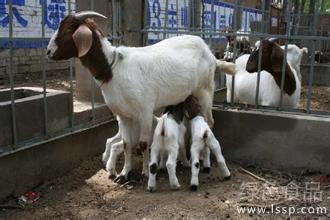
How should ewes in late pregnancy be fed to be reasonable?
Reasonable feeding methods for ewes in late pregnancy
-

How should soybeans be harvested properly? A full breakdown of the key methods
Soybeans should be harvested promptly once mature. If harvesting is too late, the pods lose too much moisture and are prone to shattering and dropping seeds, causing losses. The suitable harvest period should be determined according to different harvest methods. When harvesting with a sickle, begin harvesting after all soybean leaves have fallen, as nutrient transport to the seeds has essentially stopped by then. Mechanical harvesting must be done after the whole plant is fully mature and dry. Manual harvesting is best done in the morning, when the soybean plants have a higher moisture content, so they do not prick the hands and are less prone to pod shattering. A low stubble height is required, with no "horse ears" left exposed and no missed cutting.
-
What should be noted when growing Gastrodia elata in boxes?
① You must choose high-quality fungus logs, preferably those with many young rhizomorphs distributed evenly. ② The fungus logs must be free of contamination by other fungi. ③ If there are not many rhizomorphs on the fungus logs, you may appropriately add some fungus branches or secondary or tertiary solid spawn of Armillaria mellea. You can also cover the fungus logs with a layer of culture substrate for cultivating Armillaria mellea (because the substrate contains Armillaria mellea, which acts as spawn). ④ If a piece of fungus wood is placed parallel 3 cm beside a high-quality fungus log, once the fungus wood connects with and grows Armillaria mellea well in the later stage, it can continuously supply nutrients to Gastrodia elata. But do not plant the Gastrodia near the fungus wood
-
How should Gastrodia elata tubers be selected for use as seed?
Gastrodia elata tubers that are undamaged, free of pests and diseases, and not deformed are best for cultivation as seed. However, when seed is in short supply, tubers with minor damage can also be used for cultivation as seed after treatment. The treatment method is: first cut away the damaged part with a knife or bamboo strip, sun-dry the cut surface until it no longer exudes sap, and then plant it; generally it will grow as normal. When large white Gastrodia tubers are cultivated as seed, after 1 year they can become 1 large arrow tuber. When arrow tubers are cultivated as seed for asexual propagation, the "parrot beak"-like mixed bud at the top of the arrow tuber must be broken off, so that the arrow tuber will not produce an arrow (no longer bolt)
-
How should you select mushroom spawn for high yields when cultivating Agaricus bisporus in paddy fields?
Give priority to granular wheat grain spawn with good yield performance and strong stress resistance, followed by manure-straw bag spawn. To plant 1 mu of field mushrooms, about 400 bottles of wheat grain spawn are needed, with an investment of 800-900 yuan; or 800-1000 bags of manure-straw bag spawn, with an investment of about 1000 yuan. Farmers should be especially reminded that when buying spawn, they must go to a spawn farm with a good reputation.
-
How should baby rabbits be raised so they can grow up healthily?
Getting enough colostrum. A newborn kit has no fur on its body surface, its eyes are tightly shut, its ears are closed, its ability to regulate body temperature is very poor, and its digestive organs are not yet fully developed. The colostrum secreted by the doe during the first 1-2 days after kindling contains large amounts of antibodies and trace elements, and also has a mild laxative effect, which helps promote the growth of the kits and helps them pass all their meconium. Therefore, if the kits can get enough colostrum in time and sleep well, their normal growth and development can be ensured. Some does, especially first-time does, do not have a strong mothering instinct and do not nurse their kits after kindling. In this case, the doe should be restrained
-
Canine distemper should not be taken lightly; dog owners must pay attention to prevention
"Canine distemper" is also called distemper, a highly contagious, acute infectious disease caused by a virus, and puppies under 1 year old are most susceptible. Currently there is no specific drug that can cure the disease, the mortality rate is between 50% and 90%, and it can occur in all four seasons. The key points for identifying dogs with canine distemper are as follows: First, body temperature shows a "U"-shaped change. That is, at the beginning of the illness the body temperature often rises to around 40, then returns to normal after 2 to 3 days, with a fever-free interval appearing; after several days, the body temperature rises again, mostly staying at 39.
-
What should be noted in mechanized potato harvesting
When harvesting potatoes mechanically, in order to save time, labor and effort, improve the economic benefits of machine use and the marketable rate of potatoes, the following issues should be noted. (1) About 10 days before the determined harvest date, the vines should first be rolled or cut (the method of rolling vines is to thread old tires onto an axle in a string and pull them with a tractor to roll the vines), so that the potato skins age and are prevented from being damaged during harvest, which would affect the quality of marketable potatoes. (2) The number of potato pickers matched to each machine unit should be reasonable. Small harvesters are generally matched with
-
How should golden pear be managed in summer to improve quality?
In recent years, golden pear has developed rapidly, and the planting area has continued to expand, but the rate of high-quality fruit is not high, mainly because there are too many deformed fruits and russeted fruits. Summer management is the key period for improving fruit quality. The main technical measures for summer management of golden pear are summarized as follows: 1. From mid-June to late August is the fruit expansion period, and golden pear has a relatively high water requirement. Under drought conditions, the pear shrinks and wrinkles during the day and absorbs water at night to replenish itself, so it can recover or grow; otherwise the fruit is small or wrinkled skin forms throughout. In late July
条件筛选