-
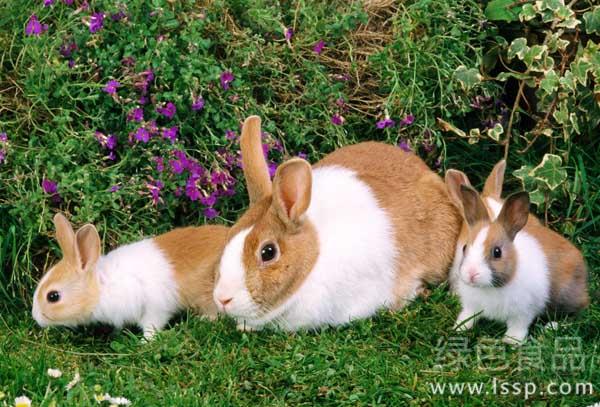
How should lactating does be managed to increase milk production?
Lactating does need increased milk production: how to manage lactating does well
-

How should initial management be carried out after tea plants are planted?
Tea seedlings sown directly or transplanted have a weak ability to resist natural disasters during the seedling stage, so careful and meticulous cultivation and management are required to ensure healthy growth of the tea seedlings, especially in the management of the first and second years. At the same time, the growth of tea plants continues for a considerable number of years. If early management is extensive, the seedlings grow poorly or the survival rate is low, and there are serious gaps where plants are missing, this will inevitably affect later growth and lead to low yield per unit area. Therefore, the focus of initial management lies in carefully protecting the seedlings and ensuring a full stand of strong seedlings. The tasks of the first year can be summarized as: drought resistance, freeze prevention, weeding and fertilization, and thinning and gap filling. In addition, direct
-
What to Do When Tea Plants Bloom? These Response Methods You Should Know
Yu Huaijiong from Guihua Village, Yuping Town, Hongya County wrote in saying: At present, local tea plants are blooming and fruiting heavily, consuming the tea plants' nutrients and affecting next year's tea yield. He asked what pollution-free pesticide could be used to remove the flowers and fruits produced by the tea plants, to ensure a bumper tea harvest next year. Liao Changli, a tea cultivation expert from Pujiang County, answered: This year's climate featured high temperatures and drought in the early period, increased rainfall in the later period, which caused waterlogging in some low-lying areas with poor drainage, as well as the recent warm winter - these three factors have led to tea plants blooming and fruiting in some areas of our province. This phenomenon will inevitably affect next year's tea yield.
-
How should Gastrodia elata production develop? An analysis of development ideas and countermeasures
1. Current market conditions. Because the Gastrodia elata cultivation area increased substantially in the previous two years, and because cultivation techniques improved, total Gastrodia elata output has more than doubled compared with 3 years ago; in the Gastrodia elata production and sales market, on the one hand output has risen sharply, but on the other hand, because the increase in processing for medicinal use (patent medicines) has been relatively small, the market is currently in a sluggish state. The Gastrodia elata market is similar to other traditional Chinese medicinal herb markets, generally with a "market cycle" of 3-5 years, so waiting until the Gastrodia elata market picks up before carrying out sexual breeding is not feasible; if even the seed tubers are disposed of now
-
How Many Times Should You Actually Disinfect a Rabbitry? A Detailed Explanation of the Correct Frequency
The disinfection theory in books says, "Twice a week in summer, once a week the rest of the year." I think this disinfection practice involves far too many rounds. The purpose of disinfection is to kill harmful bacteria; my approach is once every half month in summer, and once a month the rest of the time. If you disinfect frequently, the aim is to kill harmful bacteria, but the result is that you kill all the beneficial bacteria too. Also, after we finish disinfecting, we sling the sprayer on our backs, turn around and leave the rabbit shed, leaving the rabbits in their cages reluctantly "inhaling the chemicals," and side effects are very likely to occur. Based on what I have observed
-
How Should Garlic Be Stored? Five New Methods to Teach You
There are many methods for storing garlic. Depending on the storage purpose and conditions, methods such as hanging storage, heap storage, burial storage, radiation storage, and chemical treatment storage can be used. They are specifically introduced as follows. 1. Hanging storage method: When harvesting garlic, the garlic intended for hanging storage should be strictly selected, removing those heads that are too small, have rotten stems and leaves, are damaged, or have been affected by moisture. Then spread them on the ground to dry in the sun until the stems and leaves become soft and yellow, and the outer skin of the garlic is dry. Finally, select 50 to 100 garlic heads of uniform size, braid them, and hang them under a cool, ventilated, rain-sheltered eave so they are air-dried and stored.
-
Be Alert to Porcine Epidemic Diarrhea: Pig Farmers Should Take Precautions Early Around Spring Festival
Epidemic diarrhea occurs mainly around the Spring Festival (from December to March of the following year), and mostly breaks out after cold, damp weather or a sudden cold wave, showing endemic prevalence. Clinical symptoms: piglets first vomit and then develop diarrhea, with thin feces that are yellow or green and mixed with milk curds, arched backs, tucked tails, sensitivity to cold and shivering, and in the later stage sunken eyeballs and severe dehydration, with body temperature normal or slightly elevated; the course of disease is 5-7 days, and the younger the age, the higher the mortality rate, with a mortality rate of 30%-40% in piglets within 7 days of age; adult pigs refuse feed, show projectile diarrhea and pass watery thin feces,
-
What should be noted when mixing chicken daily rations?
There are many kinds of chicken feed; which feed should be the main one? How can it be mixed scientifically and rationally while also being low in price? 1. First, you must understand what nutrients the chickens you raise need. Because the requirements of various chickens differ, such as light-layer chickens, heavy-layer chickens, or meat chickens, chicks, older chickens, or breeding chickens, the nutrients needed by various chickens are not completely the same in quantity and quality. Chicken farmers should consult the corresponding materials according to chicken breed and size to determine the required nutrients. 2. You need to know which type of feed produced locally is more abundant and lower in price
-
Cotton is prone to premature aging during the dog days, so growers should be on guard
Once cotton shows premature aging, remedial measures are of little use, and prevention is what matters. Early August is the peak period of cotton flowering and boll setting; if vegetative growth and reproductive growth are well coordinated, premature aging is unlikely. The earlier premature aging occurs, the more severe the yield loss. In severe years, some fields show premature aging in mid-to-late August. How to prevent cotton premature aging and increase yield is an urgent problem in cotton production. Below are several measures to prevent cotton premature aging. Pay attention to the watering method. Summer drought causes cotton premature aging, so if there is no rain during the dog days, water promptly. Alternate-furrow irrigation is preferable,
-
What causes premature senescence in cotton seed production fields? How should it be prevented and controlled?
As cotton seed production fields are planted year after year, premature senescence occurs from time to time, and has become an important factor restricting the increase of per-unit yield and the improvement of quality in seed production fields. 1. Causes of premature senescence 1. Continuous successive cropping of seed cotton fields In cotton-growing areas, cotton has been planted continuously on the same land for many years, resulting in a lack of organic matter in the plow layer, which cannot satisfy the soil's sustained fertilizer supply effect. At the same time, successive cropping causes the accumulation of pathogenic bacteria in the soil and a reduction in the number of insect-resistant bacteria, blocking the normal growth of the cotton root system, thereby affecting the upper growth of cotton and causing premature senescence. 2. Cotton
条件筛选