-

What key points should be noted for late-planted rice when transplanting into fields prepared with stored water?
The general requirement for transplanting late-planted rice into fields prepared with stored water is to seize the water, prepare the field, and transplant the seedlings, increasing the number of hills, seedlings, and panicles. For rice fields transplanted with stored water, as soon as rainfall occurs or another water source becomes available, measures such as blocking, diverting, and pumping water should be taken immediately to seize the water, prepare the field, and transplant the seedlings. For late-planted fields, planting density should be increased. For seedlings aged 60-70 days, transplant more than 13,000 hills per mu (8 x 6 cun), with two seedlings per hill (2 grains of rice); for seedlings aged over 70 days, transplant more than 15,000 hills per mu (8 x 5 cun), with about 10 seedlings per hill, so that the number of seedlings planted per mu reaches 150,000
-
Pig tail-biting is related to stress, so how should it be prevented and treated?
In current intensive pig production, the phenomenon of pigs biting each other's tails is fairly common, and it is especially likely to occur in pig herds under production conditions. 1. Stress. In intensive pig production, stressors affecting the normal physiological activities of pigs are increasing day by day. After animals are affected by stressors, immune function can decline, catabolism increases while anabolism decreases, and sexual function becomes disordered; in severe cases, a series of stress syndromes can be caused. Such as pale, soft, exudative pork; dry, hard, dark pork; adult
-
Pig eczema is prone to occur in hot weather, farmers should pay attention to prevention
In the hot summer, many pigs often suffer from eczema. Affected pigs develop flat papules the size of millet grains, rice grains, or even peas on the ear base, chest, lower abdomen, and inner sides of the four limbs; some turn red, some form small vesicles or small pustules, and some form bran-like black scabs. The affected pigs show reduced appetite, indigestion, and listlessness, severely affecting their growth and development. There are many causes of pig eczema, such as unsanitary, dark and damp pig pens, unclean pig skin, insect bites, chemical irritation, as well as chronic digestive tract diseases,
-
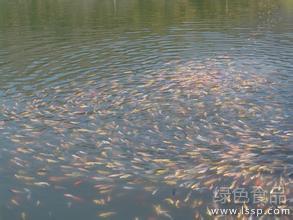
What should be noted when cultivating fish fingerlings in summer? Good-quality fingerlings are the foundation of successful fish farming
Good-quality fingerlings are the foundation of successful fish farming: precautions for cultivating fish fingerlings in summer
-
What remedial measures should be taken after tea plants suffer frost damage?
1. All the tender buds and tender branches on the surface of the canopy that have withered and scorched due to frost damage must be pruned off, and the specific pruning depth should be determined according to the degree of frost damage. 2. The pruning time is best set between February 15 and March 5, that is, the period between Yushui and Jingzhe. 3. Timely topdressing: after the frost-damaged tender buds and tender branches are pruned off, the tea plant will consume a great deal of nutrients, and timely topdressing can prompt the tea plant to recover growth quickly. Generally, for conventional tea gardens, 20-30 kg of urea per mu can be broadcast on a sunny day; for organic tea gardens, 1-2 applications of mineral foliar fertilizer and organic foliar fertilizer can be sprayed 10-20 days before the spring tea harvest.
-
What technical points should be noted when introducing tea plants?
Tea plant introduction is simple and easy to achieve results. Since the 1950s, the area planted with improved varieties has been expanded. For example, the Yunnan large-leaf variety was introduced to Guangdong, Guangxi, Sichuan, Guizhou and other provinces and autonomous regions, and the area has reached more than 1 million mu. Fujian, Zhejiang and other provinces used introduced and acclimatized Yunnan large-leaf varieties as original material to breed a group of excellent high-yield new varieties. New progress has been made in introducing tea from the south to the north. The northernmost boundary of tea plant distribution in China has shifted from about 34°40'N to near 37°49'N, advancing northward by more than 350 km. Tea varieties have also been introduced successively from the former Soviet Union, Ja
-
How should a snake house for the banded krait be built?
For artificial rearing of the banded krait, a snake garden or snake house can be used; for keeping a small number, a snake box can be used. The snake garden or snake house for the banded krait should be built in a sheltered, sunny place with high, dry ground and dense soil, close to a water source yet far from residential areas, and in a quiet spot. The snake garden should simulate the wild environmental conditions of the banded krait. The wall around the snake garden should be 2.5 m high, the inner surface of the wall should be smoothed with cement, the corners of the wall should be built in a rounded arc shape, the wall foundation should extend 1.5 m underground, and at a soil depth of 1.5 m it should be rammed solid with lime-sand-clay mixture to prevent rodents from burrowing and the snakes from escaping. The ground of the snake garden
-
What issues should be noted in the efficient cultivation of kernel apricots?
Kernel apricot is one of the main dried fruits in northern China, with excellent economic returns. In recent years, due to the development of almonds, the comparative benefit of kernel apricots has somewhat declined. To improve the production efficiency of kernel apricots, comprehensive measures should be adopted. 1) Develop in suitable sites. Kernel apricots are drought-tolerant, tolerant of poor soil, and widely adaptable, but for efficient production, orchards must be established in locations with deep soil layers, fertile soil, and sheltered, south-facing slopes. Because kernel apricots bloom early and are susceptible to late frost damage, avoid establishing orchards on mountain ridges, wind gaps, and low-lying areas. 2) Pay attention to configuring pollinizer trees.
-
How should garlic be stored to keep it fresh? These methods are very practical
1. High-temperature storage. Keeping garlic in a relatively high temperature environment between 28-32°C can keep it from sprouting, thereby extending its storage time, but this method is only suitable for shorter-term storage, because the garlic bulbs are prone to losing water, becoming spongy, and shrinking. 2. Low-humidity storage. Use mechanical refrigeration (constant-temperature warehouse storage) to lower the temperature, inhibit its life activities, and control the sprouting of the cloves. This method is currently widely used. 3. Controlled-atmosphere storage. By using the inhibitory effect of the gaseous environment on life activities, under suitable low-temperature conditions, adjust
-
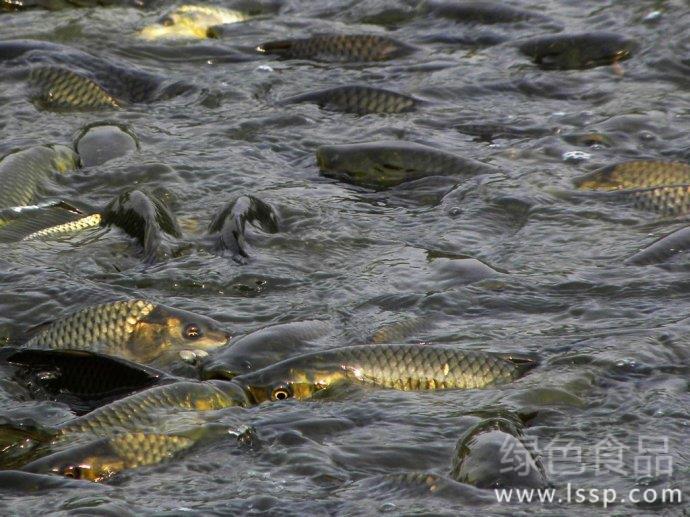
The plum rain season is a high-risk period for aquaculture. How should fish ponds be managed?
The plum rain season, a disaster season for aquaculture: how to manage fish ponds well during the plum rain season
条件筛选