-

Master the Three Earlies and Three Skills for Spring Potato Planting to Achieve High Returns
Three Earlies: Choose early-maturing varieties. Practice has proven that selecting high-yielding, high-quality, virus-free potato varieties with a growth period within 70 days (from emergence to harvest) is the key to achieving high, stable yields and quality in spring-planted potatoes. Currently ideal varieties include Holland No. 7, Holland No. 15, Zhengshu No. 6, etc. Start sprouting early. Using a sunny cold frame before planting to pre-sprout can make potatoes emerge early and uniformly, with complete and strong seedlings, promoting early plant development and early tuber formation - this is an important yield-increasing measure. The key points of sprouting technique are: before planting
-
How to control the cupreous chafer? Master its occurrence patterns and key control points
The cupreous chafer beetle belongs to the order Coleoptera, family Scarabaeidae. It occurs in many apple orchards in our region, and its hosts include apple, hawthorn, crabapple, pear, apricot, peach, plum, Japanese apricot, persimmon, walnut, strawberry, and so on. I. Damage symptoms: Apple trees suffer the most severe damage from the cupreous chafer beetle; the adults feed on leaves, often causing large areas of young fruit trees to have incomplete leaves, and even entire trees stripped of all leaves. II. Occurrence patterns: (I) The cupreous chafer beetle has 1 generation per year, overwintering as mature
-
There are techniques for medicating poultry, and the correct methods must be mastered
1. When mixing drugs with water or feed, the amount of medicated water or feed should be properly controlled so that it can be consumed within 2 hours. When mixing medication, the drug and feed should be evenly blended; when using injectable drugs, the volume of liquid per injection: young poultry no more than 0.2 ml, growing poultry no more than 0.5 ml, and adult poultry no more than 1.5 ml. 2. When using antibiotic drugs, the first dose should be doubled. During treatment, generally 3-4 drugs with different antibacterial spectra can be selected to broaden the bactericidal range. For preventive medication, only one drug is needed.
-
How can sheep farmers prevent sheep diseases? Six major measures to master
1. Doing a good job of scientific feeding and management is an important foundation for preventing sheep diseases. Practice has proven that most sheep diseases are caused by improper feeding and management. Based on the living habits of sheep, do a good job with the three words "eat, housing, movement": Eat - feed enough grass, supplement concentrate, and standardize the formulation of the daily ration. Housing - ventilation in summer, warmth in winter, clean and hygienic pens that are dry. Movement - housed sheep flocks need exercise, and sheep in late pregnancy should be prevented from falling. 2. It is forbidden to buy sheep from epidemic areas. Sheep purchased from non-epidemic areas should also first be isolated and raised for 1 month, and only after it is truly confirmed that they are disease-free
-
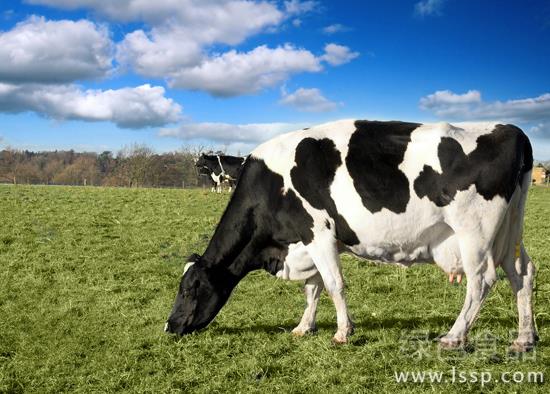
Be cautious when feeding silage to dairy cows in spring: master these feeding key points
Be cautious when using silage in spring: key points for feeding silage to dairy cows
-
How to prevent and control frost damage to young and newly planted tea trees? These seven methods must be mastered
1. Apply winter manure. Young and newly planted tea trees have relatively weak cold resistance, so before overwintering, a heavy application of winter manure should be combined with earthing up and mounding around the base. The fertilizer should mainly be farmyard manure, stable manure and biogas residue, which have a certain heat-preserving effect, along with a certain amount of cake fertilizer, superphosphate and potassium sulfate fertilizer. Winter manure can not only preserve heat and prevent freezing and enhance the tea trees' freeze resistance, but also lay a good foundation for the tea trees' growth the following year. 2. Earth up and mound around the base. Preventing the root crown from freezing is a key measure for protecting young and newly planted tea trees from frost. Therefore, before young and newly planted tea trees overwinter, they should
-
How to fertilize cotton during the seedling stage? Master the right method to grow strong seedlings
During cotton sowing, seedling raising and transplanting, fertilization should be done correctly to ensure full, even and strong seedlings. Seedbed base fertilizer should be refined and moderate in amount. Cotton plants are small during the seedling stage and need few nutrients, so the amount of seedbed base fertilizer should not be too much, with emphasis on being refined and moderate. Organic fertilizer must be fully decomposed, and weed roots and stems should be removed. If bio-organic fertilizer is used, the amount per 10 sq m of seedbed should not exceed 5 kg, and the amount of compound fertilizer should not exceed 1 kg. If decomposed human manure and urine are used, apply them 20 days in advance, then plow and mix thoroughly with the soil. Urea cannot be used as seedbed base
-
How to grow lilies? Master these cultivation key points
Lilies are perennial herbaceous plants, and their underground bulbs are formed by dozens of scale leaves wrapped together. Lilies are divided into two major categories, sweet and bitter. Bitter lilies are mainly used for medicinal purposes, while sweet lilies are mostly used as food (the main varieties include Longya lily, etc.). Sweet lilies have a sweet flavor and are rich in nutrients. They can be processed into dried slices or lily powder, etc. Regular consumption has effects such as moistening the lungs and relieving coughs, and calming the mind and soothing the nerves. The products sell well domestically and abroad. Planting lilies can yield more than 1000 kg per mu, with considerable economic benefits. The main cultivation technical measures are as follows: 1. Land preparation
-
How to increase the yield of lilies? Master these four methods
Lily, also known as white lily and lily garlic, has effects such as moistening the lungs and stopping cough, clearing the heart, and calming the mind. It is an economic crop suitable for both medicinal and vegetable use, with relatively high planting benefits. Under conventional cultivation and management, farmers can adopt the following four methods to achieve the goal of increasing yield and efficiency. 1. Chemical regulation method. When lily seedlings grow to 18-20 cm tall, carry out chemical regulation: per mu use the plant growth regulator paclobutrazol 20-50 grams, or mepiquat chloride 10-15 grams, or daminozide (B9) 5-10 grams, or mepiquat chloride 5-10 grams, choose any one, add water 50-
-
How to prevent and control garlic viral disease? These methods you must master
Mr. Sun of Xingyang City, Mr. Song of Sheqi County, Mr. Zhao of Biyang County and other readers called the newspaper's science and technology 110 hotline to ask how to prevent and control garlic viral disease. A reporter of this newspaper interviewed relevant experts from the newspaper's expert advisory group on this issue. Experts pointed out that the viral sources of garlic viral disease are mainly garlic mosaic virus and garlic latent virus. The virus mainly attaches to the bulbs to overwinter and becomes the primary infection source. When virus-carrying bulbs are sown, the seedlings can be infected after emergence, and through aphids, sap contact or farm operations in field management to healthy host
条件筛选