-
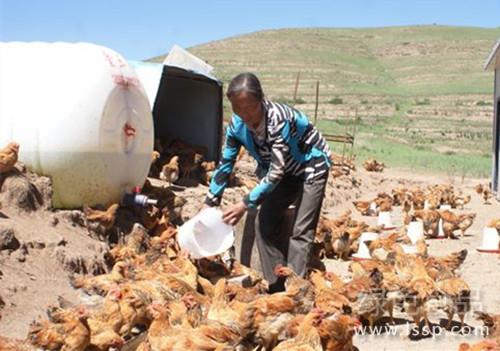
Laying hens have high water requirements during peak laying periods; they drink more in summer and no less in winter
They drink more in summer and no less in winter: water requirements of laying hens during peak laying
-

What are the key points of high-yield cultivation techniques for reishi mushroom?
Reishi mushroom is also known as the herb of immortality or the immortal herb. It is a precious large medicinal fungus, whose fruiting bodies and spores are used for medicinal purposes. It has the effects of nourishing and strengthening the body and prolonging life. Clinically, it can treat neurasthenia, chronic bronchitis, stomach diseases, liver diseases, high blood pressure, diabetes, coronary heart disease and many other ailments. When used as an adjunct in tumor treatment, it can reduce the side effects caused by radiotherapy and chemotherapy. Regular consumption of reishi mushroom spore powder can significantly improve the body's disease resistance, enhance immunity, and reduce the probability of illness. Therefore, cultivating, researching, and developing reishi mushroom products is a
-
Detailed Explanation of Key Points for High-Yield Cultivation Techniques of Red Reishi Mushroom
I. Preparation of the Reishi Mushroom Shed According to the biological characteristics of reishi mushroom, select a dedicated reishi mushroom shed or civilian house with good insulation, moisture retention, ventilation, appropriate light, and smooth drainage, with a clean floor and smooth, moisture-resistant walls. Before reishi mushrooms are brought into the shed for cultivation, the shed must be strictly disinfected; for every cubic meter of space, use 5 ml of formaldehyde and 10 g of potassium permanganate for sealed fumigation for 24 hours before use. II. Selection of Cultivation Substrate Formulas Each region can adapt to local conditions and use local materials, choosing a formula suitable for its own area. 1. Cottonseed hulls 77%, bran 10%, cornmeal 10%, sugar, phosphorus, fertilizer
-
What are the improved varieties of edible fungi? Introducing several high-quality varieties
Xiagu 93 mushroom is a high-temperature type, with a fruiting temperature of 25-34°C. The mushroom body is round and neat, pure white, with a short stalk, thick and dense flesh, not prone to browning, and a long fresh-keeping period. It is an excellent strain suitable for cultivation in summer. Zongxiu No. 1 mushroom is a medium-low temperature type, with a fruiting temperature of 5-25°C. The mushroom cap is brown, the flesh and stalk are white, the taste is delicious, and the shelf life is long. It has a wide suitable temperature range, strong fruiting ability at low temperatures, high yield, and stress resistance. L-Dongxiang 03 shiitake is a medium-temperature type, with a fruiting temperature of 8-25°C. The fruiting body is medium to large, the cap is thick, the mushroom shape is attractive, and the quality
-
For high yield and high efficiency in edible mushrooms, balanced nutrition is key
High yield and high efficiency in edible mushroom cultivation is the urgent wish of the broad community of mushroom growers, and also a research topic for edible mushroom scientists and technicians. However, since the 1990s, the cultivation yields of most mushroom growers have stagnated, resulting in little increase in production benefits. Taking the oyster mushroom (Pleurotus ostreatus) as an example, for many years it has still followed the production model of the 1990s or even the 1980s, with cultivation and management lasting 3 to 5 months, and the total biological efficiency remaining at around 100%, sometimes even below 80%. With such a long management period and such a low yield level
-
What to do when large silkworms are forced to mature prematurely by high temperatures? Do a good job of heat prevention and cooling
(1) In hot weather, prevent mulberry leaves from wilting and overheating. When feeding the silkworms, wait until the mulberry leaves have cooled before feeding. When feeding at noon, provide appropriate supplementary water to help cool things down and delay mulberry leaf wilting. This can be combined with supplementary feeding of miecanying or xiaoteling for disinfection. The standard for supplementary feeding of miecanying is 1 milliliter of miecanying agent added to 0.5 kg of water, fed with 4-5 kg of mulberry leaves, mixed evenly and then fed to the silkworms, with supplementary feeding once every 48 hours. The standard for preparing the xiaoteling agent water solution for disease prevention is to add 25 kg of water to each packet of the main agent. First use a small amount of water to
-
Key Technical Points for High-Quality, High-Yield Cultivation of Ginger-Wheat Intercropping
Ginger-wheat intercropping can make full use of light and heat resources, reduce the shading procedure, and resolve the conflict over land between ginger and grain. Generally, the yield of ginger is 2000-3000 kg per mu, with high yields reaching 3500-4000 kg, and wheat yield is 300-4D0 kg per mu. The technical measures are as follows: 1. Intercropping pattern. On the premise of ensuring ginger density, determine the spacing between ginger and wheat in intercropping. Trials show that the pattern with a row spacing of 50 cm, leaving an intercropping row in between, and drilling two rows of wheat in furrows gives the highest yield, and the shading condition is best at three parts light and seven parts shade.
-
Detailed Explanation of Key Techniques for High-Benefit Cultivation of Wild Mountain Pepper
Wild mountain pepper, commonly known as pointing-to-heaven pepper, is mainly used as a seasoning for cooking and side dishes, and as a condiment for spicy non-staple foods. Wild mountain pepper can be eaten fresh or dried, and can also be processed into canned food. In recent years, canned green peppers have been in high market demand and in short supply. Growing wild mountain pepper requires low investment, gives high yields, and has broad market channels, generally yielding 150-2000 kg per mu. Selection of seedling site: choose a plot that is sheltered from wind and faces the sun, with relatively high terrain, convenient drainage and irrigation, close to the main field, and with relatively high soil fertility, and the selected
-
New japonica rice variety Zhengdao 18 passes national approval, combining high yield, disease resistance and good quality
Zhengdao 18 is a new japonica rice variety with high yield, disease resistance and wide adaptability, bred by the Grain Crops Research Institute of the Henan Academy of Agricultural Sciences. In 2005, plant variety right protection was applied for, with announcement number CNA002221E. In 2006, it passed provincial approval in Henan, and in August 2007 it passed national approval. I. Characteristics: The whole growth period is about 152 days, the plant type is compact, the plant height is 95 cm, growth is vigorous, tillering ability is strong, the effective panicle rate is high, the stems are thick, the leaf color is green, the flag leaf is short and held upright, and the leaf sheath is green; the panicle length is 16 cm, the grains are densely set
-
An introduction to the characteristics and advantages of the high-quality fish species ayu
The ayu (Plecoglossus altivelis) belongs to the class Osteichthyes, order Salmoniformes, family Plecoglossidae. It is an important small, valuable economic fish in China. Its flesh is tender and its body color is beautiful, and along its dorsal ridge runs a cavity filled with aromatic fat that gives off an enticing delicate fragrance, hence its name. After being dried over fire, the ayu turns golden yellow, excellent in color, aroma and taste, with a unique flavor, and is known as one of the "Five Treasures of Yandang." The ayu is a sub-cold-water fish, preferring to inhabit medium-sized sea-connected rivers with clear water, swift currents, relatively low water temperatures and gravelly riverbeds. It is characterized by a short food chain, fast growth, and adaptability to temperature
条件筛选