-

Phalaenopsis Flower Forcing Techniques and Analysis of Key Points
In order to supply Phalaenopsis potted flowers to the market during New Year's Day and the Spring Festival, the Rizhao City Landscape Bureau and the Rizhao City Agricultural High-Tech Demonstration Park in Shandong Province conducted 3 years of research on Phalaenopsis flower forcing technology and systematically summarized a set of technical regulations. The production facility uses an improved solar greenhouse, equipped with necessary temperature and humidity control equipment such as fan coil heating, fan wet curtain, and external shading for cooling and humidification. Technical measures: Temperature control. (1) Day-night temperature: during the vegetative growth period, the daytime temperature is controlled between 26°C and 28°C
-
Detailed Explanation of the Forcing Cultivation Techniques for Chicory (Softening Type)
After the root plants are harvested, it is best to subject them to a certain period of low-temperature treatment before forcing cultivation. The duration of low-temperature treatment varies by variety: early-maturing varieties can be treated for a shorter time, while late-maturing varieties should be treated for a longer time, so that tighter chicons can be formed. The methods of forcing cultivation are quite flexible and can be broadly divided into soil culture and water culture. Soil culture is a relatively traditional cultivation method and can be carried out by digging trenches in the ground inside a plastic tunnel or greenhouse. Its characteristics are low cost and simple operation, but the biggest drawback is that the chicons formed are not clean. Water
-
Detailed Explanation of the Forcing Cultivation Techniques for Softening-Type Chicory
After the roots are harvested, it is best to subject them to a period of low-temperature treatment before carrying out forcing cultivation. The duration of the low-temperature treatment varies by variety; early-maturing varieties can be treated for a shorter time, while late-maturing varieties should be treated for a longer time, so that tighter chicons can be formed. The methods of forcing cultivation are quite flexible and can be broadly divided into the soil culture method and the water culture method. The soil culture method is a relatively traditional cultivation method and can be carried out by digging trenches in the ground inside plastic tunnels or greenhouses. Its characteristics are low cost and simple operation, but the fact that the chicons formed are not clean is its greatest drawback. The water culture method requires specialized
-
Problems and Countermeasures in Winter Forcing Cultivation of Witloof Chicory
Witloof chicory, also known as Belgian endive, chicory witloof and French bitter chicory, is a biennial or perennial herbaceous plant of the Asteraceae family, grown for the chicons produced by forcing the fleshy roots after harvest. The chicons of witloof chicory are cream-colored, slightly bitter with a sweet note, extremely crisp and tender, and can be eaten raw or made into a delicious, appetizing salad. In particular, the chicons contain bitter compounds not found in ordinary vegetables, such as aesculin, lactucin, lactucopicrin and intybin, which have liver-protecting and bile-promoting health benefits, making it a aristocratic vegetable,,.
-
Bougainvillea Flower Forcing Methods and Measures Explained
Bougainvillea, with abundant flowers and lush leaves, is easy to grow in pots and not difficult to propagate, with excellent cold resistance. In the northwestern Jiangxi region, it can overwinter just placed under the south-facing eaves. The drawback is: vigorous vegetative growth; if sunlight is insufficient and care and management are improper, it will be difficult to bloom. Adopting one of the following technical measures can make it bloom as early as June to July, with a flowering period lasting about 2 to 3 months. 1. Water withholding: Purple-red bougainvillea that has overwintered in dormancy sprouts and grows new branches in March, and by May most new branches have grown to about 10 cm; choose hot sunny days to withhold water, for 3 to
-

Detailed Explanation of Key Techniques for Flower Forcing and Fruit Retention in Wax Apple
Flower Forcing and Fruit Retention Techniques for Wax Apple
-
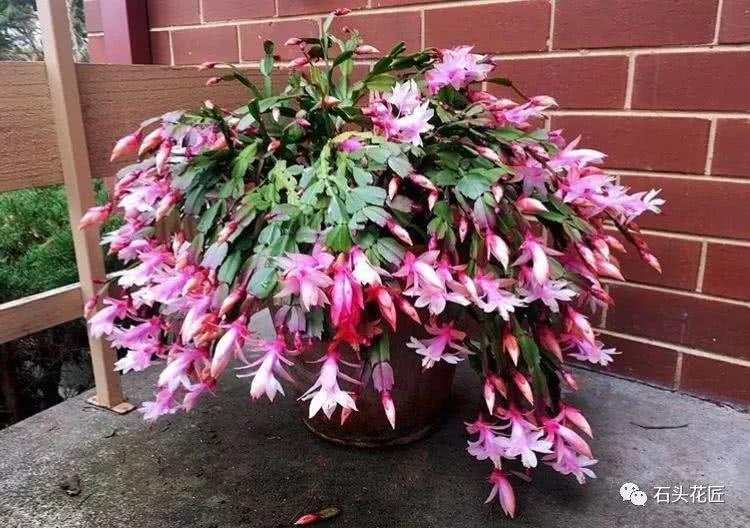
To grow a Christmas cactus, be willing to twist off some leaves and spray a little flower-forcing solution, and it will bloom in a burst within 3 weeks
To grow a Christmas cactus, you must be "willing to let go": twist off a leaf or two, spray a little "flower-forcing solution", and it will bloom in a burst within 3 weeks. As people's living standards improve, more and more people like to grow some flowers and plants, such as spider plants, money trees, clivias, pothos...
-

Master these 3 techniques for forcing Kalanchoe to bloom, and the flowers will open evenly, abundantly, and beautifully
The Kalanchoe plant is small and delicate, with dense, emerald-green leaves clustered into compact mounds and a rich variety of flower colors. It is a delightful indoor potted flower, and it also carries the meaning of long life and prosperity and peace, so it is often used as a "holiday flower." Kalanchoe...
-

Detailed Explanation of Key Management Techniques for Forcing Culture of Strawberries
1. Change flat-bed cultivation to high-ridge cultivation. With flat-bed cultivation, field humidity is high, ventilation and aeration are poor, pests and diseases are severe, and the fruit is highly prone to mildew and rot, reducing quality and yield. High-ridge cultivation can overcome the above weaknesses and is better suited to the needs of protected cultivation. The specific method of high-ridge cultivation is: select level terrain, sheltered...
-
How is the planting time determined for early spring forcing cultivation of cucumbers in small arched tunnels
When is the best time to plant cucumbers for early spring forcing cultivation in small arched tunnels? How can they be helped to recover from transplanting quickly and grow vigorously? The suitable planting period for early-maturing cultivation of cucumbers in plastic-film small arched tunnels is late March. After planting, how quickly the cucumbers recover from transplanting and how well they grow is the result of many environmental factors acting together, among which the most important is how well the root system grows...
条件筛选