-
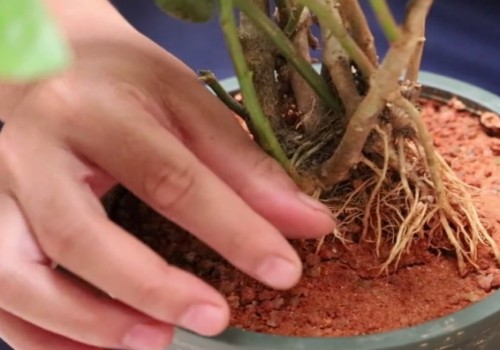
Timing and Methods for Forcing Jasmine to Bloom and Extending Its Flowering Period
Jasmine's natural flowering period is relatively long, blooming from May to November each year, which many other common flowering plants cannot match. Moreover, jasmine flowers are pure white and flawless, very pure and beautiful. It can bloom 3 times within a year, and in order to achieve
-

Experience sharing on forcing cultivation of tulips to bloom during Spring Festival
Tulips have strong cold resistance, tolerating low temperatures of -35°C in winter, and can grow normally at 5°C-8°C, making them suitable for winter forcing cultivation. Forcing cultivation of tulips means breaking the dormancy of flower primordia and leaf primordia through variable temperature treatment of the bulbs, eliminating factors that inhibit flower bud germination, and promoting flower bud differentiation, then through artificial heating, supplemental lighting and other measures, making tulips bloom outside their natural flowering period. Currently on the market there are commonly 5°C bulbs and 9°C bulbs; we generally choose 5°C bulbs for forcing cultivation to bloom during Spring Festival. Substrate
-
Detailed Explanation of Key Management Techniques for Forcing Cultivation of Tulips
Tulip (Tulipa gesneriana), of the Liliaceae family and the genus Tulipa, is a perennial bulbous herbaceous flower, and is a world-famous material for cut flowers as well as flower beds and flower borders. Its elegant and graceful flower form and pure, simple fragrance make it deeply loved by people. Due to the tulip's own biological characteristics and ecological habits, under natural cultivation conditions in northwest China, people can only catch a glimpse of its elegance and splendor from May to June each year. In recent years, in order to enable tulips to appear on the flower market stage from New Year's Day to the Spring Festival, we have used solar energy-saving
-
Detailed Explanation of Tulip Forcing Cultivation Methods and Techniques
9℃ box cultivation method: Storing tulip bulbs in a 9℃ box for a period allows flower buds to germinate 7 to 10 days earlier than planting them directly in soil. This is because giving tulip bulbs a certain cold treatment is very important. Normally, within a few weeks, the treatment temperature should gradually decrease from 9℃ to 7℃, 5℃, and 2℃, so that they receive the required cold before entering the greenhouse for cultivation. Once these bulbs treated in the 9℃ box are planted in greenhouse soil, they immediately begin to grow and elongate. The reason is
-
Key Techniques and Methods for Forcing Tulips into Bloom
Tulips grown in natural conditions generally bloom from March to May. To make tulips bloom at Spring Festival, the following technical measures should be taken. Selection of bulbs: in October, choose plump, well-developed bulbs free of pests and diseases, and remove the brown outer skin. Disinfection of bulbs: before low-temperature treatment, soak them for 15-20 minutes in a 75% chlorothalonil wettable powder solution diluted 800 times, then let them dry naturally. Low-temperature treatment of bulbs: tulips grown in natural conditions all undergo a natural dormancy process. To make tulips bloom earlier at
-
Detailed Explanation of Key Techniques for Forcing Cut Tulips
Tulips belong to the genus Tulipa in the lily family (Liliaceae), perennial bulbous herbaceous plants. Because of their unusual flowers, large blooms and brilliant colors, symbolizing "holiness and happiness," they are highly favored by people. 1. Select good varieties. Cut tulip bulbs are generally imported from the Netherlands. First, select as few late-flowering varieties as possible; generally choose mid-season, tall-stemmed varieties, with a comprehensive color mix to suit the needs of consumers at different levels. Red varieties include Apollo, Parade, Miss Holland, Le France, and Remember Le Feber; yellow varieties include Golden Apollo and Golden Parade; white varieties include Ai
-
A Detailed Guide to Forcing Tulips: Master the Techniques to Make Them Bloom Early
When tulips are planted in a natural environment, they usually bloom from March to May. To make tulips bloom at Spring Festival, the following technical measures should be taken. Selection of bulbs: in October, choose plump, well-filled bulbs free of pests and diseases, and remove the brown outer skin. Disinfection of bulbs: before cold treatment, soak them for 15-20 minutes in a 800-fold dilution of 75% chlorothalonil wettable powder, then let them dry naturally. Cold treatment of bulbs: tulips grown in a natural environment all undergo a natural dormancy process. To make tulips bloom earlier at Spring Festival,
-
Detailed Explanation of Key Techniques for Forcing Hydrangea macrophylla into Bloom
Hydrangea macrophylla, also known as hydrangea, powder-ball flower, or zi yang hua, is an ornamental shrub in the family Saxifragaceae, genus Hydrangea. Potted varieties grow about 30cm tall, with opposite leaves and flower heads up to 20cm in diameter, nearly spherical, borne at the tips of branches, in white, pink, and blue-purple; the flowering period is from May to July, and with proper cultivation it can be extended to the end of September. Its flowers are large, brilliantly colored, and gracefully shaped, making it highly favored by people. The market development prospects are broad. I. Characteristics Hydrangea macrophylla is native to China and has now become a famous ornamental woody flower in the Yangtze River Basin. Hydrangea macrophylla has relatively strong adaptability, belonging to
-
Key Points of Commercial Forcing Cultivation Techniques for Hydrangea
After undergoing the necessary cold treatment, hydrangeas are usually shipped and sold from late autumn to early winter. Like dormant plants, they can be planted in 4-6 inch pots, or pre-planted in 4-inch pots like bare-root plants. Newly introduced plants should first have their root growth stimulated (about 2 weeks) before final planting. The optimum temperature for hydrangeas to begin growing is a soil temperature of 15.6°C-16.7°C, while maintaining a slightly lower air temperature of about 15°C, which promotes root activity before bud break. Keep the soil slightly dry before transplanting
-
Phalaenopsis Flower Forcing Techniques and Analysis of Key Points
In order to supply Phalaenopsis potted flowers to the market during New Year's Day and the Spring Festival, the Rizhao City Landscape Bureau and the Rizhao City Agricultural High-Tech Demonstration Park in Shandong Province conducted 3 years of research on Phalaenopsis flower forcing technology and systematically summarized a set of technical regulations. The production facility uses an improved solar greenhouse, equipped with necessary temperature and humidity control equipment such as fan coil heating, fan wet curtain, and external shading for cooling and humidification. Technical measures: Temperature control. (1) Day-night temperature: during the vegetative growth period, the daytime temperature is controlled between 26°C and 28°C
条件筛选