-
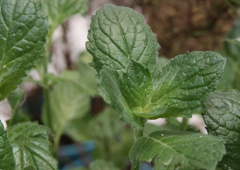
Five Steps for Growing Mint Herbs and a Detailed Guide to Precautions
Busy with work and unable to relax properly? In fact, simply placing a pot of herb planting on your desk, with its unique fragrance and greenery, can relieve the stress of work. Beginners can start with growing mint, especially in the hot summer, where you can pick it fresh at any time and make your own
-
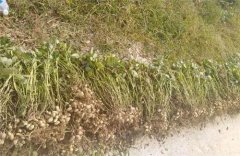
Wanhua No. 2 Peanut: Characteristics and Key Cultivation Techniques for a Yield of 2000 jin per mu
There are quite a few peanut varieties, and here is an introduction to peanut planting time and planting methods; if you are not familiar with this Wanhua No. 2 peanut variety, then let us take a look together! Variety name: Wanhua No. 2. Characteristics: It belongs to the erect, sparse-branching type, with a summer-sowing growth period of
-
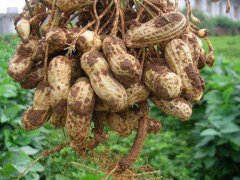
How to choose good peanut varieties? Three aspects teach you to pick the right variety for high yields
Peanut planting methods, we should all know them, so what are the methods for selecting good peanut varieties in high-yield peanut planting technology? Let's take a look together! 1. Choose varieties according to the planting pattern. Generally speaking, the peanut seeds sold at current seed shops
-
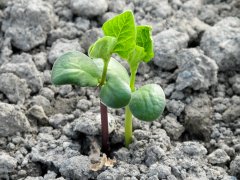
Can Soybeans Be Saved for Seed Yourself? Seed-Saving Practices During Cultivation and After Harvest
Soybean cultivation and management techniques, among which the soybean seed-saving method is a task every farmer must do. As soybeans are being harvested one after another recently, Agri-Media invited Zhou Guolong, associate researcher and branch station chief of the Qinan Branch Station of the Kaohsiung District Agricultural Research and Extension Station of the Council of Agriculture, who is known as the "Edamame Prince" and has long studied edamame and promoted domestically grown soybeans, to share the points to note when saving seed.
-
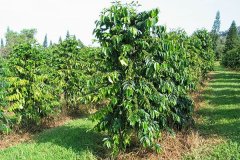
Where in China is suitable for growing coffee, and is Yunnan small-bean coffee specialty coffee?
Simple coffee-growing notes. Coffee growing seems like a very simple proposition, but in fact growing the coffee we drink every day is a systematic proposition. Here it is explained from several angles: 1. Coffee can be grown anywhere; coffee is a tropical and subtropical
-
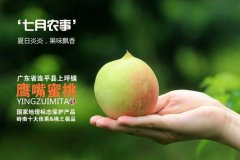
Lianping Shangping eagle-beak honey peach opens for picking and goes on the market in July, 10 yuan per jin, reachable by navigation
If you look for the Lianping eagle-beak honey peach base on your phone's map and navigation apps, you will find three results, but in fact the results are not accurate; two of the places, when you get there, have only a few mu of peach trees past their season. If you search for Lianping Shangping eagle-beak honey peach on your phone, you will find that it is still 12 km after getting off the expressway. In fact, as soon as you exit the expressway, you get the feeling of having entered the eagle-beak honey peach production area. Right away the roadside is lined with eagle-beak peaches, and you do not really need to enter the base itself; just find one or two orchards right by the roadside, 10 yuan per jin, while the price on the Guangzhou market at the same time is 11.8, but in the market you will find that in fact many are not from Lianping eagle-beak honey peaches and are replaced with those from other places.<br /> <img alt="Lianping Shangping eagle-beak peach" src="/uploads/allimg/190730/1-1ZI0142GLY.jpg" style="width: 730px; height: 487px;" /><br /> <br /> <div> The soil in Lianping County, Heyuan City is acidic, and winter is not very cold and not long, an environment relatively suitable for honey peach growth. Each town, based on this natural resource advantage and combined with the local farmers' traditional habit of growing honey peaches, put forward the rural economic development idea of “hope lies in the mountains, wealth lies in the mountains”. Among the many fruits of Lianping, the eagle-beak honey peach is famous both inside and outside the county for its large fruit, clear sweetness, crispness and honey flavor, and is favored by consumers. Through extensive market surveys and research by agricultural experts from the province, it was confirmed that the honey peaches of Shangping Town and Beitou Town are rare fine varieties in the whole province. Therefore, honey peach planting was vigorously promoted, and honey peach production was designated as the characteristic economy of Lianping County's “one town, one product”.</div> <div> </div> <div> Before 2002, Shangping Town, Lianping County, Heyuan City had 4,000 mu of honey peach base. In 2003, Shangping Town completed the land preparation and planting task for 6,000 mu of eagle-beak peaches and began preparing to build the 10,000-mu honey peach base in the Jiulian Mountains. In order to give full play to the brand effect and realize industrialized operation, Shangping Town, with strong support from the county party committee, county government and relevant departments, set off a boom in honey peach planting throughout the town. Starting in September 2003, in less than three months, Shangping Town completed 4,350 mu of land preparation and hole digging, and base construction was unprecedentedly fast. The masses' enthusiasm for planting honey peaches ran high; in Zhongcun and Gukeng of Shangping, nearly 1,000 people went up the hills every day to prepare land and dig holes. From 2003 to 2005, Shangping Town mobilized the masses to expand planting by more than 10,000 mu. The honey peach planting project in Shangping Town implemented the policy of unified planning, contiguous development and household operation, which fully mobilized the enthusiasm of farmers. With the Jiulian Mountain eagle-beak honey peach base as the center, it spread to surrounding villages, forming a pattern of “every village has a base, every household has an orchard”, reaching more than 1 mu of peach orchard per person, making Shangping Town a veritable honey peach specialized town.<br /> </div> <div> At the same time, at the end of 2002, Beitou Town, Lianping County, Heyuan City also began planting eagle-beak peaches, and by 2005 several hundred mu of fields or hillside land had also been planted with eagle-beak peach trees. To this day, planting in Beitou Town has also reached over a thousand mu. This completed the goal of the eagle-beak peach base radiating toward the northwest of the Jiulian Mountains.</div> <div> In 2005, Shangping Town was rated by the relevant national departments as “China's Hometown of Eagle-Beak Honey Peach”. In October 2011, at the “Top Ten Excellent Fruits of Lingnan” award ceremony held in Deqing, Zhaoqing, the Lianping eagle-beak honey peach received this honor. The “Lianping eagle-beak honey peach” is currently the best peach variety in Guangdong and even southern China, and has been praised by agricultural experts as the “best of peaches”.</div> <br /> <br />
-

Wuhan Lingquan Temple seeks kindred spirits to share its bounty of vegetables, but 3 hours later it ends up humbly begging for mercy
During the pandemic, many have been affected and chosen to produce for self-rescue; there are kindergartens selling grilled skewers, cinemas selling popcorn, and temples are no exception. @Wuhan Lingquan Temple during the pandemic cleared land to grow vegetables, and unexpectedly planted so much that they couldn't finish eating them all. Yesterday (the 10th) it posted on Weibo sincerely inviting locals
-

Japanese sweet potatoes used this way! A superb ingredient for Japanese shochu
Shochu and sake have similar bottle shapes, and their labels usually feature Japanese kanji and kana together. They are also displayed together in Japanese restaurants and on the liquor shelves of supermarkets, and when poured into a glass both are transparent or pale yellow, so they are often mistaken for the same thing.
-
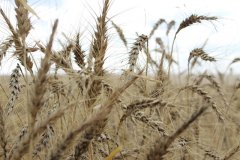
China Said to Suspend Imports of Australian Agricultural Products Including Barley and Wine
Foreign media, citing informed sources, reported that China has issued a notice requiring the suspension of imports of at least 7 categories of goods originating from Australia, including barley and wine. The report said China has asked that customs clearance be suspended for Australian imports including barley, wine, sugar, timber, coal, lobster and copper ore.
-

Bayer sets aside 84.3 billion for seed company Monsanto, quarterly results show huge loss
German chemical giant Bayer announced its third-quarter results, showing the group paid a heavy price for acquiring US seed supplier Monsanto, resulting in a loss before tax and interest of 9.4 billion euros (HK$85.764 billion) during the quarter; the net loss for the period was 2.7 billion euros
条件筛选