-

The National Development Council will prioritize promoting local revitalization in 134 townships, with mountain villages and indigenous homelands leading the way
Rural and Local Revitalization 09 / The National Development Council will prioritize promoting local revitalization in 134 townships, with mountain villages and indigenous homelands leading the way
-
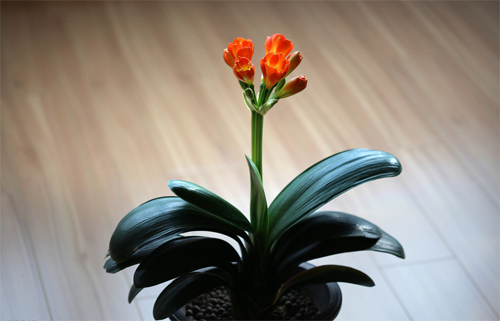
What to Do When Clivia Leaves Turn Yellow, Develop Spots, and Grow Unevenly
Clivia is very common, but many people run into a lot of problems when growing it. During cultivation, the leaves can turn yellow, develop spots, look as unsightly as can be, and even grow unevenly. So what should be done?
-
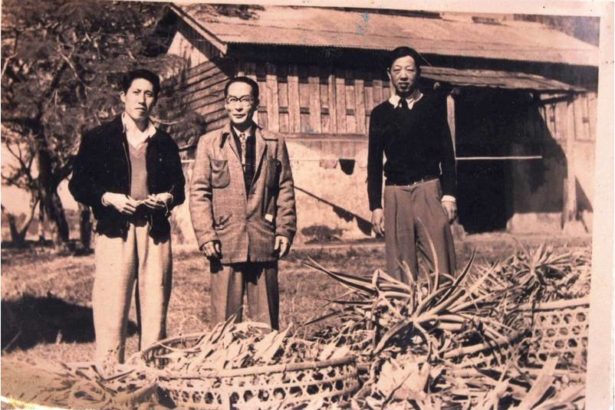
Sun Shougong used a magnifying glass to develop Sun-Huang microbial control materials and protect Taiwan's plant pathology
A lifelong legend in the field of plant pathology, Sun Shougong guarded Taiwan, China with a magnifying glass and developed "Sun-Huang" to launch microbial control materials
-

Wild mushrooms may be developed into anti-cancer drugs
Seemingly ordinary macrofungi, that is, wild mushrooms commonly parasitic on tree trunks, may actually be developed into antibacterial and even anti-cancer drugs. A research team composed of four lecturers and their students from the School of Chemical and Life Sciences at Nanyang Polytechnic in Singapore has, over the past two years, classified and studied more than 400 species of local wild mushrooms, and found that two of them contain anti-cancer compounds and 30 contain antibacterial compounds. At present, they have successfully identified the chemical structure of one wild mushroom with anti-cancer properties, and confirmed
-
What are the growth and development characteristics of Panax notoginseng?
Panax notoginseng seeds have after-ripening characteristics and must be stored under moist conditions to complete physiological after-ripening and germinate. Once the seeds dry out, they lose their viability. A one-year-old seedling grows only 1 palmately compound leaf; in winter the stems and leaves wither, and around the spring equinox of the second year, new shoots emerge from the rhizome above ground. In winter it is dormant, and in spring of the second year it sprouts and grows stems and leaves. If the young bud is damaged that year, it cannot germinate into a seedling the following year and must remain dormant underground for one year; after a new bud forms the following year, a new shoot grows in the spring of the third year. One-year-old plants do not bolt
-
In the field of licorice research and development, our country has become the leader
It was recently learned at the founding conference of the Special Committee on Chinese Materia Medica Pharmaceutics of the World Federation of Chinese Medicine Societies and the International Symposium on Chinese Materia Medica Pharmaceutics that our country has successfully applied chiral catalysis technology to the purification of the active ingredients of licorice, increasing it from 3% to 97%, greatly saving medicinal materials. At the same time, following the recent introduction of the Class I new drug and chiral liver drug "Tianqing Ganmei", this shows that our country has already taken a world-leading position in the research, development and innovation of licorice preparations. Chiral technology works by scientifically adjusting the chemical structure arrangement
-
Honeysuckle is an ideal choice for economic development in mountainous areas
I. Development and utilization prospects of honeysuckle (1) Medicinal value Honeysuckle is one of the ten precious and widely used medicinal herbs nationwide. As early as more than 2000 years ago, the "Shennong Bencao Jing" listed it as a superior grade, and recorded that "taken over a long period it lightens the body and prolongs life." Its flower buds contain luteolin, inositol, and chlorogenic acid. Research shows that chlorogenic acid is the main active ingredient for antibacterial and anti-inflammatory effects. It has a significant inhibitory effect on Staphylococcus aureus, hemolytic Streptococcus, Shigella dysenteriae, Salmonella typhi, Salmonella paratyphi, and Pneumococcus.
-
How to manage greenhouse apricots in spring? Focus on management to promote development
For apricot trees in a winter-warm greenhouse, the fruit development period runs from mid-February to the end of April, and this period is divided into three main development stages. The first stage is the first rapid growth period of the apricot tree and the new shoot growth period, lasting 28-34 days; the second stage is the pit-hardening period, lasting 8-12 days; the third stage is the second rapid growth period of the apricot fruit and the new shoot growth period, lasting 20-30 days. Management work for the first stage: after flowering, apply 0.5 kg of nitrogen fertilizer and 1 kg of phosphorus fertilizer per tree, and within two weeks after flowering spray 0.3% urea once every 7 days. After leaf expansion, spray Yibianjing or Yashijing
-
How Are Russian Olive Foods Developed and Utilized? A Full Explanation of Pathways and Value
Russian olive (Elaeagnus angustifolia L.), also known as Guixiang willow, silver willow, or Qilixiang, belongs to the Elaeagnaceae family, genus Elaeagnus. It is an evergreen shrub. Russian olive is light-demanding, cold-tolerant, highly resistant to wind-blown sand and saline-alkali conditions, grows fast, has wide uses, and holds high economic value. Russian olive is distributed in Shaanxi, Gansu, Inner Mongolia, Ningxia, **, Qinghai and other places; in ** it is found in the Taklamakan Desert and along the banks of various rivers, and it is also distributed in Yili, Toksun and other places in northern **. Russian olive is a "treasure tree" of desert saline-alkali land; its edible value and medicinal value are both very high, and it has great potential for development into green foods.
-
Golden trout is a new variety first developed in China
The Yongchang County Golden Trout Breeding and Propagation Base is located in Jiaojiazhuang Township, 10 kilometers west of Yongchang County town. The entire township is rich in spring water resources, with springs flowing continuously throughout the year. The water quality is excellent, rich in strontium, lithium, zinc and various other minerals beneficial to human health, with no harmful elements and no pollution whatsoever, making it a purely natural treasure. The water quality and water temperature are very suitable for the growth of cold-water freshwater fish. At present, the township has built 1 Yongchang Golden Trout Breeding and Propagation Center, with 6 specialized golden trout farming households, more than 200 broodstock, over twenty thousand large-size fingerlings
条件筛选