What to Do When Clivia Leaves Turn Yellow, Develop Spots, and Grow Unevenly
Clivia is very common, but many people run into a lot of problems when growing it. During cultivation, the leaves can turn yellow, develop spots, look as unsightly as can be, and even grow unevenly. So what should be done? Come see the solutions with Women's Network:
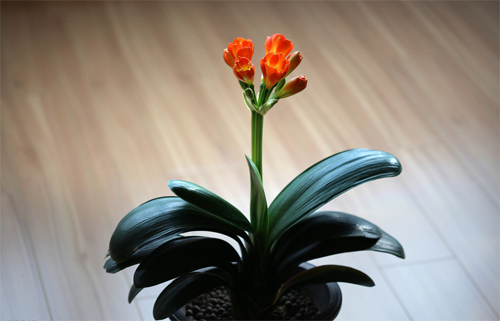
What to Do When Clivia Leaves Turn Yellow and Develop Spots?
1. Clivia leaves turn yellow, and the small central leaves turn black and rot
Solution: For this symptom, you first need to use the above 9 methods to treat the root cause. If the small central leaves turn black and rot, further judgment is needed. Pry apart two leaves to check. If the gap between the leaves is black and oozing decayed sap, it can be determined that a formed Clivia flower scape failed to grow out from between the leaves in time and rotted directly in the middle of the leaves.
There are many causes of flower scape rot: one is that too much water was sprayed while the flower was in the owner's hands, causing dirty water to flow into the gaps and leading to bacterial infection and rot; another is that careless watering caused dirty water to splash into the gaps and thus cause rot. Consequences: Generally it will not affect the life of the plant, but in high-temperature and high-humidity weather, it can very easily cause the crown to rot off and the whole plant to rot. Treatment: Use toilet paper or tissue paper to absorb the decayed sap, remove the filth that can be cleaned by suitable methods, and keep the environment relatively dry at ordinary times. The bottom-watering method is recommended.
2. All Clivia leaves turn yellow
Solution: When all leaves turn yellow, it is often a symptom of sunscald. Solution: Shade it immediately and cut off the yellow leaves.
3. Clivia leaves wither, yellow, and droop
Solution: Withered, yellow, or drooping leaves are a symptom of water shortage. For watering, follow the principle of not watering when the soil is not dry and not letting water accumulate in the pot.
4. Localized yellowing of Clivia leaves
Solution: Localized yellowing is very likely caused by scorching heat, cold wind, hot water, or acid or alkaline damage. Simply remove the external cause in time. Sometimes, insufficient nitrogen fertilizer can cause the plant to suffer from chlorosis. The reduction of chlorophyll causes the leaves to turn yellow. In this case, apply more fermented cake fertilizer water. (The methods of cultivation also differ from season to season.)
5. Clivia leaves wrinkle and develop yellow spots
Solution: Excessive fertilization causes root burn. Replace the soil immediately, soak the roots in a 0.1% potassium permanganate aqueous solution for 20-30 minutes, rinse with clean water, let dry, cut off the rotten roots, apply plant ash to the wounds, and replant;
6. The two outer leaves of Clivia turn yellow (planted for 4 years)
Solution: This is normal metabolism of the new layer; simply prune off the 2 outer leaves.
7. Clivia leaves appear grayish-yellow
Solution: The main cause of grayish-yellow Clivia leaves is overly strong direct sunlight, so Clivia needs to be shaded.
8. Chlorosis symptoms appear on Clivia leaves
Solution: Due to insufficient light, if the room is very dark, Clivia will become chlorotic. Solution: Use a fluorescent lamp to supplement light.
9. Clivia leaves are yellow and weak
Solution: Yellow, weak leaves indicate a lack of fertilizer. Apply thin fertilizer frequently; yellow leaves indicate the soil is raw and not breathable. Replace with leaf mold soil or pine needle soil;
10. Yellowing of lower leaves causes root rot
Solution:
Materials: scissors, utility knife, chlorothalonil, rooting water, nutrient water, spray bottle.
Operation method:
①: Pull the Clivia out with its roots.
②: Use a utility knife to cut away old leaves and rotten leaves.
③: Use scissors to cut off the roots that have already rotted and the old roots.
④: In the spray bottle, mix water and chlorothalonil at 3:5.
⑤: Move the Clivia back into the pot.
⑥: Water with rooting water and nutrient water.
⑦: At first, water about 2 times a month for 5 months.
⑧: After 5 months, water about 4 times a month for 2 months.
⑨: Return to the normal watering frequency.
Methods to prevent Clivia leaves from turning yellow:
The main cause of yellow Clivia leaves is improper management. The reasons that lead to yellow Clivia leaves are generally the following:
1. Overwatering (yellow leaves caused by water): If water accumulates in the flowerpot for too long, the leaves are prone to water-soaked yellowing. The affected part is the tips of young leaves, and the symptoms develop from top to bottom. This is the common water-yellowing, caused by watering too frequently. Its characteristic is that old leaves show no obvious change while young leaves turn yellow; in this case, water control should be implemented immediately;
2. Lack of water (yellow leaves caused by drought): If it is too dry, or if only half-watering is done each time, the old leaves will develop yellow tips. Caused by water shortage and drought, its characteristic is that old leaves turn yellow first from bottom to top. If the water shortage lasts a little longer, the whole plant's leaves will turn yellow, or it may even die, so water should be given in time;
3. Excess fertilizer (yellowing caused by too much fertilization): Too much or too concentrated fertilizer can cause root burn and yellow leaf tips. Caused by fertilizing too frequently or at too high a concentration; its characteristics are that young leaves are thick, glossy, and uneven; fertilizer should be controlled, and the soil should be loosened and watered;
4. Lack of elements causing chlorosis (iron deficiency): If the potting soil lacks iron, the leaf tips turn yellow first. If it lacks nitrogen, new leaves appear yellow-white.
5. Yellowing caused by insufficient nutrients: Caused by insufficient fertilizer, low fertilization concentration, and too long intervals between fertilizing; its characteristic is that young leaves and tender stems turn yellow first. If this phenomenon is seen and fertilizer is not applied in time, it can also cause the whole plant's leaves to turn yellow or even die. For flowers lacking fertilizer, never apply a large amount of concentrated fertilizer at one time, to avoid root burn. For woody flowers in greenhouses, because soil fertility conditions vary greatly, yellow leaves often appear. The characteristic is that young leaves are obvious, old leaves are lighter, the leaf flesh is yellow, the veins are green, and a typical network forms. It can be solved by applying ferrous sulfate aqueous solution. The method is: mix 7 parts cake fertilizer, 5 parts ferrous sulfate, and 200 parts water into a diluted solution and water with it.
6. Sunscald: After strong direct sunlight (in summer), yellow spots appear on the leaves, called sunscald. In high temperature (above 30°C) and dry conditions, the leaves also easily become withered and yellow.
7. Pollution: Clivia leaves should be kept clean. If dirty things splash on them, the polluted areas may turn yellow.
8. Freeze damage: Clivia suffers freeze damage below 0°C, and the symptom is still yellow leaves. To restore normal growth to Clivia after yellowing of the leaves, it is necessary to find the source of the problem and then take corresponding measures. The method is: dig out the whole Clivia plant and check the roots. If the roots are rotten, remove the decayed parts, replace with new soil and replant, and place a layer of fine sand under the roots. The potting soil should preferably be loose leaf mold soil, and the acidity and alkalinity (pH value) should preferably be neutral. Keep the soil neither dry nor wet, with good air permeability. Clivia likes weak light. Except in winter, in summer it should be placed in a half-shade, half-sun location, and direct sunlight should be avoided. If "chlorosis" occurs, liquid fertilizer can be added (such as black alum fertilizer water). The key point is to use small amounts but apply often, and be careful not to splash fertilizer liquid or mud onto the leaves or stems. If it splashes on the leaves, rinse it off promptly with clean water. When applying solid fertilizer, it is also best to avoid direct contact with the fleshy roots.
Questions about handling yellowing Clivia leaves:
1. Can yellowing Clivia leaves be pruned?
The key is to figure out why there are yellow leaves.
Common causes of yellow leaves are:
① It should be kept in a semi-shaded place for care; when the sun is too strong, the leaves will be sunburned and turn yellow.
② Clivia has fleshy roots, so the potting soil only needs to be kept slightly moist. Too much watering damages the roots and the leaves turn yellow.
③ Yellow leaves from fertilizer deficiency: Clivia only needs a thin nitrogen fertilizer once every half month; do not fertilize in the hot summer to avoid damaging the roots. Yellowing Clivia leaves can be pruned. Hold the scissors over a flame for a moment to disinfect them, then cut off the yellow leaves. But do not tear them.
2. Solutions for Clivia leaves turning yellow in spring:
After Clivia has gone through a winter, its leaves have turned yellow and withered. Will it still survive in spring?
It should be possible. Repot it, remove the withered leaves and hollow roots, use special Clivia soil mixed with large pieces of orchid stone; soil: orchid stone = 3:2. After repotting, water thoroughly once, place it in a spot with diffused light and good ventilation to recover for 1 month, then over one week gradually expose it to light, and then care for it normally. Do not expose it to strong sun.
3. Solutions for Clivia leaves turning yellow in summer:
Check whether it is usually watered too much. Too much watering easily causes root rot, leaf rot, and crown rot, and water should be poured into the potting soil, not onto the leaves. In particular, avoid pouring it into the central leaves. If the potting soil is often too wet, it will cause water to flow backward, and then, as you said, the leaves will gradually turn black starting from the tips and rot. Therefore, Clivia potting soil should preferably be on the drier side. In addition, summer temperatures are relatively high. If the temperature of its growing environment can be lowered below 25°C, it can also be given a diluted liquid fertilizer above 1:20 in summer, once every half month. This can promote the growth of Clivia and shorten or eliminate its dormancy period. There is also another situation: the light is too strong. Clivia likes soft light. If exposed to strong direct sunlight, the leaf surface becomes rough, the leaf color turns yellow and dark, loses its emerald green, and it is also prone to "sunscald."
What to Do When Clivia Leaves Are Crooked and Uneven?
1 Use a small clip with appropriate strength (such as a small bamboo clip used for drying clothes), pad it with soft paper, and directly clip the crooked leaf together with a properly shaped leaf. After a period of time, the crooked leaf can be corrected.
2 Use opaque tin foil paper, or thin cardboard, cut according to leaf length and folded to 1/2 the leaf width, and fix it on the leaf with a hair clip or paper clip. Whichever side the leaf leans toward, fix it on that side. After a few days, the leaf can recover. During this process, observe at all times to prevent overcorrection.
3 When viewed from the front of the Clivia, if the spacing between some two leaves is large and some two leaves are right next to each other, you can use thick cardboard to make a sleeve board, cut some slots with suitable spacing according to the number of leaves, and carefully insert the leaves into them. Through the above various methods of treatment and shaping, the Clivia can achieve the ideal form of appearing as a line when viewed from the side and like a fan when viewed from the front.
At ordinary times, pay attention to the orientation of the Clivia. Point the leaf tips toward the north-south direction respectively, and regularly rotate the flowerpot 180 degrees to alternately change the north-south orientation of the two groups of leaves. It is best to change the soil for Clivia in spring and autumn, because the temperature is suitable at these times and Clivia grows vigorously, so soil replacement will not affect its growth. In the south, the first vigorous growth period of Clivia is from March to June. At this time, the temperature in various places in the south is generally 10°C-15°C at the lowest and 20°C-28°C at the highest, and in some areas it may exceed 30°C. This is a relatively suitable growth temperature for Clivia. Growers can repot and change the soil in March to April according to the actual local conditions. The second period is from August to September. At this time, the weather is warm and cool, and the temperature is moderate, making it the second vigorous growth period for Clivia. According to the plant's growth condition, growers can carry out autumn repotting in mid-August. It should be noted that after Clivia shoots its scape, or while it is budding and flowering, it is best not to change the soil, because at this stage the plant needs relatively more nutrients, and carrying out soil replacement will affect the continuous supply of nutrients. However, if soil quality problems cause root rot or yellow leaves and the soil must be changed, care should also be taken not to break up the root ball, and to minimize root loss caused by changing the soil.
It is still quite difficult to grow Clivia to look beautiful. After reading these cultivation methods, you really do need to sort things out carefully.
Clivia Leaves Turning Yellow. What Causes Clivia Leaves to Turn Yellow? What to Do When Clivia Leaves Turn Yellow?
Clivia is a perennial herbaceous plant of the genus Clivia in the Amaryllidaceae family. It is a semi-shade plant that likes cool conditions and fears high temperatures. The suitable growth temperature is 15-25°C. Below 5°C, growth stops. It has very high ornamental value. However, Clivia can also encounter trouble during growth. What should be done when Clivia leaves turn yellow, and what are the causes?
Editor's recommendations:What plants absorb formaldehyde? What is the best anti-radiation plant, the golden barrel cactus? How do you grow the golden barrel cactus?
What Causes Clivia Leaves to Turn Yellow? What to Do When Clivia Leaves Turn Yellow?
>>Click the image to learn more related content<<
Cause One of Yellowing Clivia Leaves: Temperature
The suitable temperature for Clivia growth is 15-25°C. A day-night temperature difference of 8-12°C is most suitable for Clivia growth. When summer temperatures exceed 30°C for a long time, it enters semi-dormancy. At this time, if the air humidity is below 60%, Clivia leaves will become lighter, turn yellow, and even wilt; if the humidity is above 90%, the stems and leaves grow long. To prevent these undesirable phenomena, cooling measures should be taken, then ventilation and light transmission, and humidity should be controlled. In winter, when the temperature drops below 8°C, Clivia basically stops growing. If the temperature drops below 6°C, freeze damage occurs, causing the leaf tips and leaf margins to lose green and turn yellow, and even yellow-white necrotic spots appear.
>>Click the image to learn more related content<<
Cause Two of Yellowing Clivia Leaves: Humidity
Clivia is a moisture-loving plant and has relatively high requirements for the humidity of its growing environment. Its most suitable relative humidity range is 70%-80%. In this humidity environment, Clivia leaves are tender green, the veins are clear, and the leaves are short, wide, and neat, with high ornamental value. If the potting soil is too dry for a long time and the temperature is also high, the leaves easily turn yellow. But long-term overwatering easily leads to oxygen deficiency, hindering the plant's normal respiration and causing Clivia root rot or even death.
>>Click the image to learn more related content<<
Cause Three of Yellowing Clivia Leaves: Soil and Fertilizer
Clivia likes loose, fertile sandy soil. Soil compaction and insufficient fertilizer supply will cause the leaves to turn yellow and affect flowering. Generally, fertilizing once in spring and once in autumn within a year is enough. Deciduous leaves that resist rotting must be fermented before use; if not fermented, they easily burn the roots. Clivia must have its soil changed once a year. When the temperature at the Clivia care location is above 25°C, fertilizer should be appropriately reduced or stopped to avoid burning the fleshy roots from excessive fertilization. If the temperature can be lowered below 20°C, fertilizing can still continue as usual.
>>Click the image to learn more related content<<
Cause Four of Yellowing Clivia Leaves: Light
Clivia is a semi-sun plant and likes relatively weak diffused light. It is not tolerant of strong light. Too strong light easily causes sunscald; in mild cases the leaves turn from green to yellow, and in severe cases the leaves dehydrate, dry up, and die. Short-day conditions in winter and spring are more conducive to flowering. Good light is an important condition for ensuring large, brightly colored Clivia flowers. However, if the placement location is too dark and light is insufficient for a long time, the leaves will also lose their luster, old leaves will become dark green, and new leaves will become thinner and yellow or yellow-green (shade yellowing). At this time, Clivia should be moved to a place with slightly stronger light or given supplemental light. Clivia leaves have phototropism, so they should be grown facing the light in order to maintain the shape of appearing as a line from the side and a fan from the front.
>>Click the image to learn more related content<<
Cause Five of Yellowing Clivia Leaves: Ventilation
The thick fleshy roots of Clivia store plenty of water, and at the same time place higher demands on the soil it depends on for survival. Only nutrient soil with good air permeability, loose texture, and rich humus is suitable for the growth of Clivia's fleshy roots. If Clivia is placed too densely and the surrounding environment is closed off, it hinders air circulation and makes the plant thin, weak, yellow, and lean. Therefore, indoor ventilation should be strengthened and placement density should be avoided being too high.
What Causes Clivia Leaves to Turn Yellow? What to Do When Clivia Leaves Turn Yellow?
Clivia is a perennial herbaceous plant of the genus Clivia in the Amaryllidaceae family. It is a semi-shade plant that likes cool conditions and fears high temperatures. The suitable growth temperature is 15-25°C. Below 5°C, growth stops. It has very high ornamental value. However, Clivia can also encounter trouble during growth. What should be done when Clivia leaves turn yellow, and what are the causes?
Editor's recommendations:What plants absorb formaldehyde? What is the best anti-radiation plant? The golden barrel cactus, how do you grow the golden barrel cactus?
What Causes Clivia Leaves to Turn Yellow? What to Do When Clivia Leaves Turn Yellow?
>>Click the image to learn more related content<<
Cause One of Yellowing Clivia Leaves: Temperature
The suitable temperature for Clivia growth is 15-25°C. A day-night temperature difference of 8-12°C is most suitable for Clivia growth. When summer temperatures exceed 30°C for a long time, it enters semi-dormancy. At this time, if the air humidity is below 60%, Clivia leaves will become lighter, turn yellow, and even wilt; if the humidity is above 90%, the stems and leaves grow long. To prevent these undesirable phenomena, cooling measures should be taken, then ventilation and light transmission, and humidity should be controlled. In winter, when the temperature drops below 8°C, Clivia basically stops growing. If the temperature drops below 6°C, freeze damage occurs, causing the leaf tips and leaf margins to lose green and turn yellow, and even yellow-white necrotic spots appear.
>>Click the image to learn more related content<<
Cause Two of Yellowing Clivia Leaves: Humidity
Clivia is a moisture-loving plant and has relatively high requirements for the humidity of its growing environment. Its most suitable relative humidity range is 70%-80%. In this humidity environment, Clivia leaves are tender green, the veins are clear, and the leaves are short, wide, and neat, with high ornamental value. If the potting soil is too dry for a long time and the temperature is also high, the leaves easily turn yellow. But long-term overwatering easily leads to oxygen deficiency, hindering the plant's normal respiration and causing Clivia root rot or even death.
>>Click the image to learn more related content<<
Cause Three of Yellowing Clivia Leaves: Soil and Fertilizer
Clivia likes loose, fertile sandy soil. Soil compaction and insufficient fertilizer supply will cause the leaves to turn yellow and affect flowering. Generally, fertilizing once in spring and once in autumn within a year is enough. Deciduous leaves that resist rotting must be fermented before use; if not fermented, they easily burn the roots. Clivia must have its soil changed once a year. When the temperature at the Clivia care location is above 25°C, fertilizer should be appropriately reduced or stopped to avoid burning the fleshy roots from excessive fertilization. If the temperature can be lowered below 20°C, fertilizing can still continue as usual.
>>Click the image to learn more related content<<
Cause Four of Yellowing Clivia Leaves: Light
Clivia is a semi-sun plant and likes relatively weak diffused light. It is not tolerant of strong light. Too strong light easily causes sunscald; in mild cases the leaves turn from green to yellow, and in severe cases the leaves dehydrate, dry up, and die. Short-day conditions in winter and spring are more conducive to flowering. Good light is an important condition for ensuring large, brightly colored Clivia flowers. However, if the placement location is too dark and light is insufficient for a long time, the leaves will also lose their luster, old leaves will become dark green, and new leaves will become thinner and yellow or yellow-green (shade yellowing). At this time, Clivia should be moved to a place with slightly stronger light or given supplemental light. Clivia leaves have phototropism, so they should be grown facing the light in order to maintain the shape of appearing as a line from the side and a fan from the front.
>>Click the image to learn more related content<<
Cause Five of Yellowing Clivia Leaves: Ventilation
The thick fleshy roots of Clivia store plenty of water, and at the same time place higher demands on the soil it depends on for survival. Only nutrient soil with good air permeability, loose texture, and rich humus is suitable for the growth of Clivia's fleshy roots. If Clivia is placed too densely and the surrounding environment is closed off, it hinders air circulation and makes the plant thin, weak, yellow, and lean. Therefore, indoor ventilation should be strengthened and placement density should be avoided being too high.
Related recommendations:How to plant the golden barrel cactus, eight major elements of planting How to grow hyacinth, hyacinth cultivation methods What are the cultivation methods for kalanchoe?