-

Detailed introduction to the variety characteristics of the apple cultivar Qinguan
Bred by Yuan Wuzhou and others at the Shaanxi Institute of Fruit Tree Research, from the cross Golden Delicious x Jiguan. Crossed in 1957, selected in 1966, named in 1970. It participated in large apple regional trials and won the second prize of the National Invention Award in 1988. It is widely distributed in China, with more cultivation in the northwest region. The fruit is conical, with a single fruit weight of about 200-250 g; the ground color is yellow-green, with a dark red blush and broken red stripes on the sunny side, often with white russeting. In areas of the northwest at higher altitude, when fully mature, it can reach an overall dark red color, while in
-
Introduction to the cultivation techniques and management methods of the rose apple (water rose apple)
The rose apple (water rose apple) is an evergreen tree of the Myrtaceae family, 6-12 m tall. Bark smooth, grayish-brown, branching low, clear trunk height 1.5-3 m; crown oblate-spherical. Leaves opposite, leathery, lanceolate or long elliptic, 11-20 cm long, 3-5 cm wide, apex acuminate, base broadly cuneate, margin entire, leaf surface glossy, with transparent glands and marginal veins; petiole 7-10 mm long. Cyme terminal; flowers white, 3-4 cm in diameter; stamens numerous, about 25 cm long, delicately fragrant. Drupaceous ber
-
Six tricks for coloring Fuji apples to make the fruit color more evenly
The fruit of Red Fuji begins to color earlier than that of Guoguang (Ralls Janet), but the process is slow. It generally begins to color from mid to late August, and after early to mid September its coloring is still not as fast as that of Guoguang. To improve the coloring degree of Red Fuji, in addition to a series of work such as rational pruning and shaping and timely pest and disease control, the following measures can be implemented starting in early September: 1. Control nitrogen. After September, no more nitrogen fertilizer should be applied as a top dressing; a scientific water supply method of frequent and shallow irrigation should be adopted to maintain relatively stable soil and air temperatures. 2. Leaf removal. Remove the
-
Ping Su Li (Apple-crisp Pear)
Originally named Dongning No. 5, bred by the Mudanjiang Agricultural Science Institute of Heilongjiang Province, from the cross of Pingguo Li (Apple Pear) X Qingmei seedling. The fruit is nearly round, pale greenish-yellow at harvest, turning yellow after storage. The average single fruit weighs 320 grams, with a maximum of 685 grams. The flesh is white, crisp in texture, sweet and sour and palatable, with a rich flavor, superior in flavor to the Apple Pear. It ripens in early October. The skin is thick, resistant to rubbing, does not turn black, and stores extremely well, keeping until May of the following year. It bears fruit two to three years after planting, with high and stable yields. It has strong resistance to cold spells and can be cultivated in the Mudanjiang region of Heilongjiang Province and most areas of Jilin and Inner Mongolia. It is highly resistant to scab and black spot.
-
What is the Malacca rose apple? An introduction to the characteristics of this tropical fruit
The Malacca rose apple, also known as the Malay rose apple or large-fruited wax apple, is native to Malaysia and is the tree species with the best fruit flavor among the rose apple fruit trees. The fruit is pear-shaped, white or red, with a mint aroma, and the red fruit has a stronger aroma. It prefers stable high temperatures and cannot tolerate long periods of drought; its quality is best near large bodies of water and in humid places, and it grows best under the climate conditions of Malaysia. There are fruiting plants at the South Subtropical Crops Research Institute in Zhanjiang, Guangdong, and it was once introduced to Guangzhou for trial planting, but died because it could not tolerate low winter temperatures.
-
Wax apple is also called Jinshan wax apple, lianwu and tianwu.
Wax apple (Jinshan wax apple, lianwu, tianwu), an evergreen tree of the Myrtaceae family, 6-15 m tall. Bark brown, clear trunk height 2-4 m; crown oval. Leaves opposite, leathery. Oblong-elliptic, 12-25 cm long, 6-9 cm wide, entire, apex obtuse, base slightly concave or rounded, dark green above, with tiny glandular dots, midrib and lateral veins conspicuous on both surfaces, with marginal veins; petiole about 3 mm long. Cymes terminal or axillary; flowers white or pale yellow, stamens numerous. Berry top-shaped or shallowly cup-shaped, top flat and broad, concave in the middle.
-
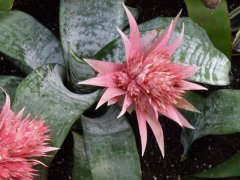
What Are Bromeliad Flowers? Introduction to Pink Pineapple, Guzmania, and Neoregelia
Below we introduce several different bromeliad flowers. Which one will you like? There is also growing information, so take a look as well. Whichever one you like, you can also grow it. Pink pineapple, this is the most popular among bromeliad flowers, especially Aechmea fascia
-
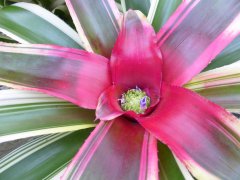
How to grow bromeliads? Master the care methods and watering tips after blooming
How do you plant bromeliads, do you know? Do you also want to grow a nice pot of bromeliads yourself? Then read the introduction below and see how bromeliads are grown. Bromeliads belong to the Bromeliaceae family, and most originate in the tropical rainforests of Central and South America. In total
-
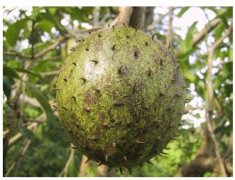
Is soursop the same as sugar apple? One article explains what soursop fruit actually is
What kind of fruit is soursop, and what does it look like? Want to know? Let's take a look together. Soursop is a relatively rare tropical fruit in Taiwan, China; botanically it is very closely related to the sugar apple, as both are fruit trees of the genus Annona. The fruit is long and conical in shape, with a surface
-
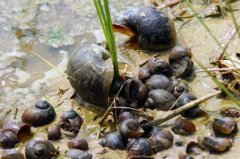
Is the apple snail a pest? Its harms and how to kill its eggs
Apple snails often appear in rice paddies, but the apple snail is a pest, and it can harm the growth of rice, so how do you control it? Would you like to learn about more scientific control methods? Let's take a look below. Because apple snails reproduce very quickly, in Taiwan, China they have almost
条件筛选