-
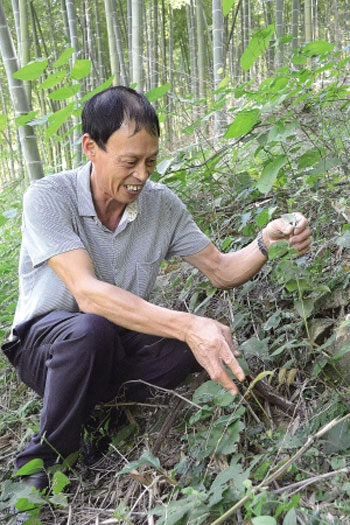
Growing Polygonatum under Chinese torreya forests; intercropping in bamboo forests works just as well
Growing Polygonatum under Chinese torreya forests; intercropping in bamboo forests works just as well
-

What are the issues to watch out for when growing Polygonatum?
What issues need attention when growing Polygonatum
-

How to Plant and Manage Polygonatum: Detailed Explanation of Sowing Time and Precautions
What Issues Need Attention in Polygonatum Cultivation
-
-

Key Field Management Techniques for Polygonatum odoratum Cultivation
How to Manage Polygonatum odoratum Cultivation
-
Methods and Technical Key Points for the Prevention and Control of Pests and Diseases in Polygonatum
(1) Black spot disease occurs mostly in spring, summer and autumn, and damages the leaves. Control methods: clean the garden at harvest time to eliminate diseased plant residues; in the early stage, spray 1:1:100 Bordeaux mixture once every 7 days, for 3 consecutive times. (2) White grubs damage plants in the larval stage, attacking the roots, biting off seedlings or gnawing the seedling roots, causing broken seedlings or cavities in the roots, and the damage is severe. Control methods: seed dressing with 75% phoxim emulsifiable concentrate at 0.1% of the seed amount; or during the field occurrence period, drench with 90% trichlorfon at 1000 times dilution.
-
Detailed Explanation of Key Techniques for Harvesting and Processing Polygonatum
Polygonatum can be harvested in either spring or autumn, with the best quality obtained from harvests in late autumn and early winter. After digging, remove the stems, leaves, fibrous roots, soil, sand and impurities; large ones can be split into 2 or 3 sections and placed in a steamer or wooden rice steamer to steam for about 12 hours, until they appear glossy and moist, then take them out and sun-dry or oven-dry (requires no smoke and low heat); or place them in water, boil, then remove and sun-dry or oven-dry. However, processing by the steaming method is better (after steaming it is prepared Polygonatum, while after boiling in water and sun-drying it is raw Polygonatum).
-
Methods and Technical Key Points for Pest and Disease Control in Polygonatum (Solomon's Seal)
Diseases include black spot disease, in which irregular yellowish-brown spots appear on the leaves starting from the leaf tip, with a purplish-red edge at the boundary between the diseased and healthy tissue, after which the spots spread downward and the leaves turn withered and yellow. For control, spray with a 50% Tuzet (thiophanate) 1000-fold dilution, applying the spray once every 7-10 days for 2-3 consecutive applications.
-
Harvesting, Processing Methods and Medicinal Effects of Polygonatum
Harvesting and processing: Polygonatum grown from transplanted rhizomes is harvested after 1 to 2 years, while plants grown from seed are harvested after 3 to 4 years. In late autumn or early spring, dig out the rhizomes, wash off the soil, remove the fibrous roots and diseased scars, steam for 10 to 20 minutes (until thoroughly steamed), take them out and dry them in the sun, kneading them while drying; after 7 to 10 days of sun-drying they will be dry. Medicinal effects: Polygonatum is sweet in flavor and neutral in nature. It enters the spleen, lung and kidney meridians. It has the effects of tonifying the spleen and moistening the lungs, nourishing yin and promoting fluid production, tonifying the middle and replenishing qi, and strengthening the tendons and bones. It treats consumptive damage with alternating cold and heat, pulmonary tuberculosis with coughing of blood, pulmonary tuberculosis with dry cough and no phlegm, diabetes, hypertension, and post-illness bodily
-
Propagation Methods and Cultivation Techniques of Polygonatum
Propagation methods: Propagated by rhizomes and seeds, mainly by rhizomes. 1. Site selection and land preparation: Choose loam soil with deep, fertile, loose and moist soil layers. Apply 2500 kg of decomposed compost or barnyard manure per 667 sq m, plow deeply 25-30 cm, then break up the soil finely and level it, and make beds 1.2 m wide. 2. Rhizome propagation: In late autumn or late March of early spring, dig out the underground rhizomes, cut them into small sections with 2-3 nodes, and air-dry them for half a day or 1 day to let the wounds heal. Open furrows at a row spacing of 20-25 cm, with a furrow depth of 6 cm, and at a plant spacing of 10-15
条件筛选