What is the market price of Polygonatum odoratum per jin?
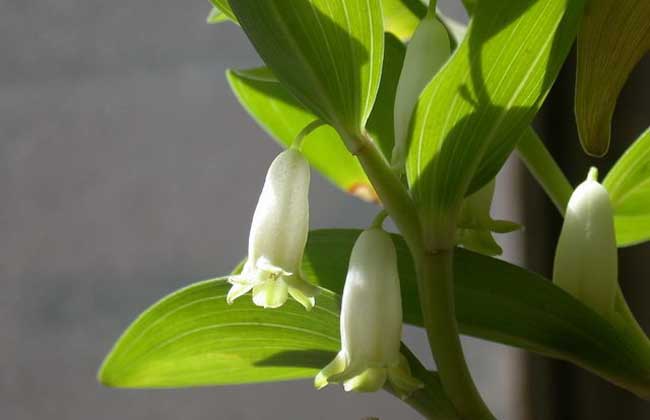
Polygonatum odoratum, also known as wei, diguanzi, weishen, lingdangcai, weirui, etc., is a perennial herbaceous plant of the Liliaceae family. Its rhizome creeps horizontally, is fleshy and yellowish-white, and is densely covered with numerous fibrous roots. It is native to southwestern China and is widely distributed in the wild. The rhizome can be used medicinally, and its traditional Chinese medicine name is also Polygonatum odoratum. It is a common bulk Chinese medicinal material. Let's take a look at the market price of Polygonatum odoratum below!
Market price of Polygonatum odoratum
The market price for Polygonatum odoratum is very good. The price of dried bulk goods is 35 yuan-40 yuan/kg, and the market price of sliced bulk goods is 22 yuan-25 yuan/kg. Prices vary depending on the place of origin and market.
Specifications and grades of Polygonatum odoratum
1. Hunan production area: The Hunan production area divides Polygonatum odoratum into 3 grades. Grade 1: strips more than 10 cm long, thick and strong, yellow-white in color, no more than 60 pieces per 100 grams. Grade 2: strips more than 7 cm long, thick and strong, yellow-white in color, no more than 100 pieces per 1000 grams. Grade 3: strips more than 3.5 cm long, no more than 200 pieces per 1000 grams.
2. Guangdong production area: Guangdong divides commercial Polygonatum odoratum into Polygonatum odoratum surface and Polygonatum odoratum head. Grade 1 Polygonatum odoratum surface: flat cylindrical, surface golden yellow, cross-section yellow-white, semi-transparent, soft in texture, rich in sugar, strips uniform, central circumference more than 2.3 cm. Grade 2 Polygonatum odoratum surface: central circumference more than 1 cm, the rest the same as Grade 1. Polygonatum odoratum head: bulk goods, flat cylindrical. Surface light yellow, cross-section yellow-white, semi-transparent, soft in texture, central circumference more than 3 cm.
3. Wild Polygonatum odoratum: bulk goods, slender and multi-noded, light yellow, semi-transparent, soft and fine in texture, with hair and fibrous roots removed.
Identification methods for Polygonatum odoratum
1. Key identification points: To identify Polygonatum odoratum, one should mainly grasp four points: first, the rhizome is cylindrical or slightly flat; second, it is light yellow with nodes, and has circular stem scars and fine root scars; third, it is hard and brittle in texture, with a horny cross-section, sweet taste and stickiness; fourth, cultivated products are plump and strong, while wild products are slender and tender.
2. Macroscopic identification: Polygonatum odoratum is long cylindrical, slightly flat, rarely branched, 4-18 cm long, 0.3-1.6 cm in diameter, with a yellow-white or light yellowish-brown surface, semi-transparent, with longitudinal wrinkles and slightly raised nodes, white dot-like fibrous root scars and disc-like stem scars. It is hard and brittle or slightly soft, easy to break, with a horny or granular cross-section, slight odor, sweet taste, and sticky when chewed.
3. Rapid identification: The rhizome of Polygonatum odoratum is cylindrical or flat cylindrical, branched or unbranched, of varying lengths, with a light yellow to light yellowish-brown surface, obvious nodes, and an internode length of about 1 cm. Fibrous root scars and circular stem scars are visible. When dry, it is hard and brittle, easy to break, with a horny cross-section, and becomes soft when damp. It has a slight odor, sweet taste and stickiness. Cultivated rhizomes are relatively thick and strong, while wild ones are generally more slender and tender. The best quality is (cultivated) rhizomes that are plump and strong, yellow-white, and glossy and soft.