-
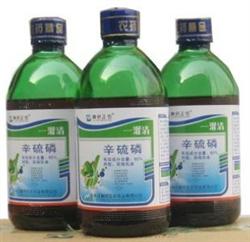
Application Methods and Technical Key Points of Botanical Insecticides
Chemical fertilizers, pesticides and hormones are major means of agricultural production and play an important role in ensuring increased agricultural output and higher farmer incomes. With social development, in order to improve labor efficiency and increase economic returns, farmers often mix two or more of chemical fertilizers, pesticides and hormones when applying them in production. Scientific and rational...
-
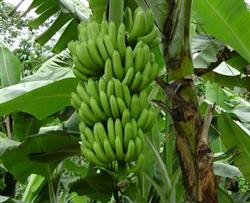
Tobacco can be used as a raw material to make green pesticides
(1) Derris extract is a botanical insecticide extracted from the roots of derris, with contact and stomach poisoning effects, and is quite effective against aphids and lepidopteran larvae. It is extremely safe for humans, livestock and crops, and is especially suitable for use on fruit, vegetables, tea and mulberry; the commonly used formulation is a 2.5% derris extract emulsifiable concentrate sprayed as a 500-800 times dilution. (2) Bacillus thuringiensis belongs to Bacillus thuringiensis...
-
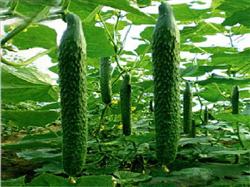
What are the commonly used pesticide insecticides for pollution-free vegetables?
Biological pesticides: BT, whose Chinese name is Bacillus thuringiensis, is a bacterial insecticide. This variety has been fully used in the main vegetable-growing areas of our country and has achieved good economic benefits. However, there are currently many BT manufacturers with varying quality, so a good-quality variety must be selected when using it. Precautions: BT works better when the temperature is slightly higher...
-
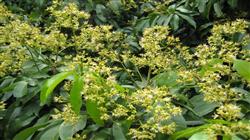
Why are insecticides prohibited during the lychee flowering period?
Experimental research and production practice have proven that placing bees for pollination during the lychee flowering period is the guarantee of a bumper lychee harvest, and the honey made by bees from collected pollen is also a natural health food for humans. In order to prevent bee poisoning and honey contamination, ensure that enough worker bees are out foraging for nectar, improve pollination effectiveness, and protect human health...
-
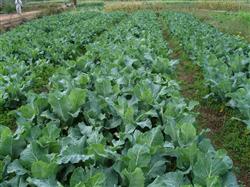
How to use BT insecticide on vegetables
The newspaper published a method for killing pests with BT insecticide. Many vegetable growers called in, some asking how to use BT insecticide, and others discussing with the reporter their experience of using BT insecticide in vegetable production. The reporter put together the insights of the vegetable growers who called in. BT insecticide, that is, Bacillus thuringiensis microbial...
-
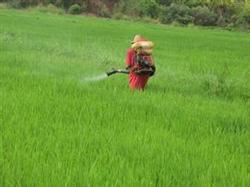
What is the best time to spray insecticide on rice?
Do not spray insecticide on rainy days; this is basic common sense that farmers understand. However, many farmers often spray at noon on sunny days, which is highly inadvisable and harmful, because: 1. At noon, the light is strong, and pests hide on the undersides of leaves and inside stems, so the insecticidal effect is poor; 2. Under high temperatures and strong light, the pesticide volatilizes and decomposes late...
-
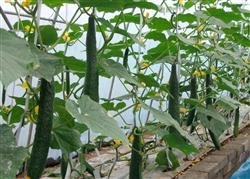
How to choose insecticides specifically for cucurbit crops?
During the growth of cucurbit crops, for the pests commonly encountered, there are some specialized insecticides, that is, low-toxicity pesticides that will not cause serious residue problems for cucurbits, introduced as follows. 1. Menazon. Also known as mieyaling. A highly effective, low-toxicity organophosphorus insecticide with contact and systemic action. In the early stage of melon aphid...
-
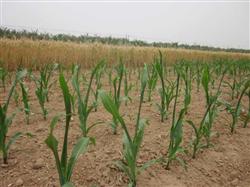
How can long-residual herbicides be used safely?
The main weeds in corn fields include: crabgrass, green foxtail, yellow foxtail, Chloris virgata, lovegrass, goosegrass, barnyardgrass, lambsquarters, Chenopodium serotinum, Chenopodium glaucum, Chenopodium aristatum, kochia, Russian thistle, amaranth, spiny amaranth, redroot pigweed, Amaranthus paniculatus, edible amaranth, Amaranthus hypochondriacus, green amaranth, Amaranthus roxburghianus, Celosia argentea, purslane, Acalypha australis, velvetleaf, wild...
-
The key to cultivating spice crops lies in the skillful use of herbicides
What are herbicides? How many categories are there? Chemical pesticides used to control various weeds in fields are called herbicides. Herbicides can be classified by mode of action, translocation within the plant, method of use, and chemical structure system. (1) Classification by chemical structure system: they can be divided into inorganic herbicides, mineral oil herbicides, ...
-
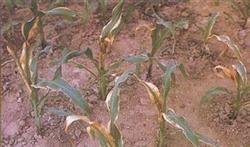
How to avoid herbicide damage? Keep these preventive methods in mind
1. Choose the right herbicide variety; for unfamiliar varieties or ones not previously used locally, it is best to conduct a trial first. 2. Use safeners to prevent damage. For example: before sowing corn, use NA (1,8-naphthalic anhydride) antidote at 0.5%-1.0% as a seed coating, which can protect corn fields from thiocarbamate herbicide damage...
条件筛选