How can long-residual herbicides be used safely?
The main weeds in corn fields include: crabgrass, green foxtail, yellow foxtail, Chloris virgata, lovegrass, goosegrass, barnyardgrass, lambsquarters, Chenopodium serotinum, Chenopodium glaucum, Chenopodium aristatum, kochia, Russian thistle, amaranth, spiny amaranth, redroot pigweed, Amaranthus paniculatus, edible amaranth, Amaranthus hypochondriacus, green amaranth, Amaranthus roxburghianus, Celosia argentea, purslane, Acalypha australis, velvetleaf, wild...
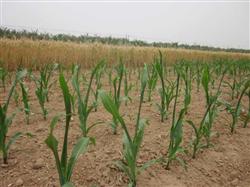 Long-residual herbicides refer to herbicides whose residual effect in the soil lasts more than 1 year after application, easily causing varying degrees of phytotoxicity to sensitive succeeding crops. Today, on the one hand, the herbicidal activity of herbicides is becoming stronger and stronger, and application rates are declining; on the other hand, crops are becoming more and more sensitive to them. This is especially true of sulfonylurea herbicides, which, although highly herbicidal and used in very small amounts, have some safety problems. In production practice, phytotoxicity to succeeding crops caused by the application of long-residual herbicides occurs from time to time, causing unnecessary losses to production. For example, long-residual herbicides currently used in various places with metsulfuron-methyl, chlorsulfuron, ethametsulfuron and others as their main components often cause phytotoxicity symptoms such as yellowing and stunting during the growth period of the succeeding rice crop. Therefore, attention must be paid to the harm these herbicides cause to succeeding crops.
First, different herbicides should be selected according to the characteristics of different soils, microbial species, climate and irrigation conditions. According to the literature, chlorsulfuron, chlorimuron-ethyl, and prosulfuron are mainly degraded in the soil through hydrolysis. When the field is alkaline soil, the rainfall in the year of application is low, or the soil is dry, their residual period in the soil tends to be prolonged, and succeeding crops are prone to injury; conversely, in acidic soil, moist soil, or irrigated farmland, the residual period is shortened, and succeeding crops are relatively safe.
Second, before planting succeeding crops, it is necessary to find out whether the herbicide applied to the previous crop is phytotoxic to the succeeding crop. If the previous crop was treated with herbicides containing chlorsulfuron or metsulfuron-methyl, such as maicaoning and maicaoling, then corn, soybean, cotton, peanut and other crops cannot be planted in the succeeding season, nor can the field be used as a seedling bed. In recent years, after the use of tribenuron-methyl (also known as juxing, kuoyejing) in some places, varying degrees of phytotoxicity have occurred in the succeeding peanut crop, causing difficulty in peanut emergence, slow growth and reduced yield. Third, improve application methods to reduce the amount of soil residue. First, the application rate must be accurate, and spraying must be uniform, with no missed spraying and no repeated spraying. For example, applying herbicides containing chlorsulfuron year after year not only causes phytotoxicity to succeeding crops but also causes phytotoxicity to the current-season crop. Second, the timing of use should be flexible. It can be applied as a soil treatment before sowing or before emergence, or as a post-emergence spray. At present, imazethapyr, clomazone and atrazine should be sprayed early post-emergence to achieve the purpose of reducing the application rate and reducing residues. When used after emergence, adding adjuvants or synergists is recommended to improve efficacy and reduce the application rate.
Third, apply pesticides rationally. Mixing chlorsulfuron with 2,4-D butyl ester can reduce the chlorsulfuron application rate by 50%. For soil treatment, imazethapyr can be mixed with trifluralin, acetochlor, alachlor, metribuzin and others. Band spraying with imazethapyr and clomazone can reduce the application rate by more than 30%.