How to identify bio-organic fertilizer? Remember these three points
The specific effects of organic fertilizer on soil fertility: organic fertilizer can increase soil organic matter and improve soil physical and chemical properties. Applying more organic fertilizer and continuously increasing soil organic matter content is the main link in improving soil fertility. Organic matter can increase soil aeration, water permeability, water retention, and improve the root growth environment so that...
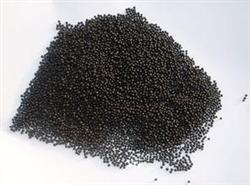 Bio-organic fertilizer is one of the products with the highest technical content among new types of fertilizers. In recent years, it has been recognized for its unique growth-promoting, disease-preventing and disease-resistant effects. According to research, the key factor for bio-organic fertilizer to produce obvious effects is "living + with special functions + microbial strains". Because its technology is too advanced, the testing technology of general fertilizer "administrative supervision departments" cannot keep up, leading to a mixed market where farmers cannot tell the difference. The "overcoming soil continuous cropping obstacles" research team of the College of Resources and Environmental Sciences of Nanjing Agricultural University has long been engaged in research on bio-organic fertilizers for the prevention and control of soil-borne diseases of economic crops such as watermelon, cucumber, tomato, pepper, eggplant and Chinese yam. Based on experience, the team designed a set of identification methods for reference.
Check whether the packaging is standard?
Product registration certificate: It has a Ministry of Agriculture microbial fertilizer registration certificate number (note: provincial-level departments have no registration authority). Correct method: "Microbial Fertilizer (registration year) Lin Zi (number) No." or "Microbial Fertilizer (registration year) Zhun Zi (number) No."
Product technical indicators: effective viable bacteria count (CFU) >= 0.2 billion/g. At the time of registration, the Ministry of Agriculture only allows labeling >= 0.2 billion/g, 0.5 billion/g (strictly stipulated, this value must be reached on the last day of the shelf life). In order to cater to the market, some companies deliberately label it as dozens of billions, which is unscientific (difficult to achieve with current technology) and wrong.
Product shelf life: The state stipulates that it is greater than 6 months. As the storage time of bio-organic fertilizer products prolongs, the number of effective viable bacteria will continue to decline, and labeling the shelf life too long is irresponsible.
Check whether the material is uniform?
If the product moisture content is too high or too low, it is not conducive to the survival of the strains. Judgment method: grab a handful of fertilizer and observe it in the sunlight. If it is damp and clumps together, or if it is dry and gray, it is not a normal product.
The "organic fertilizer nutrition" suitable for the growth of special functional strains should be a package type, composed of a variety of organic nutrients (such as fermented products made from rapeseed meal, soybean powder, etc.). Under light, traces of the raw materials can be seen, or the special odor of the raw materials can be smelled.
Check whether the effect is efficient?
Test method: add a small amount of water to mix the bio-organic fertilizer into a ball, put it in the refrigerator and freeze it into an ice cube, take it out the next day to thaw, and repeat three times. The strains in the fertilizer will be frozen to death or greatly reduced. At this time, use it for a comparative test with the original product, and observe the difference in the same field. A clear difference means good fertilizer. If the difference is not obvious, it indicates that the product has problems, and it is recommended to stop using it.