How Is Fertilizer Distributed in the Soil? An Analysis of the Principles Behind Nutrient Fate
After fertilizer is applied to the soil, only a small portion of its nutrients is taken up and used by crops, about 1/3 to 1/2 of the application amount, while most of the remaining nutrients are lost in different forms. Taking the nitrogen, phosphorus and potassium fertilizers we commonly apply as an example, after they are applied to the soil, the fate of their nutrients can be broadly divided into the following...
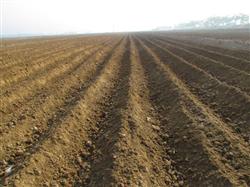
After fertilizer is applied to the soil, only a small portion of its nutrients is taken up and used by crops, about 1/3 to 1/2 of the application amount, while most of the remaining nutrients are lost in different forms. Taking the nitrogen, phosphorus and potassium fertilizers we commonly apply as an example, after they are applied to the soil, the fate of their nutrients can be broadly divided into the following four types: (1) used by crops; (2) leached away by water; (3) volatilized in gaseous form; (4) remaining in the soil.
In different soils, the amounts of the above four fates differ greatly. Taking ammonium sulfate as an example, when broadcast on the surface of cultivated land, on calcareous soil (slightly alkaline) and non-calcareous soil (slightly acidic), the nitrogen nutrients taken up and used by crops are 22.5% and 50% of the application amount respectively; the portions remaining in the soil are 26.3% and 21.4% respectively. It can be seen that on slightly alkaline soil, nitrogen loss is greater than on slightly acidic soil. Among nitrogen fertilizers, ammonium sulfate has the best stability; if it is replaced with urea and ammonium bicarbonate, the loss will be greater, and their utilization rate is less than 30% of the application amount. Most nitrogen loss is gaseous volatilization, with a portion leached away. When phosphorus fertilizer is applied to the soil, most of its phosphorus nutrients remain in the soil, accounting for 80% of the total application amount; the phosphorus remaining in the soil can be used by the next crop, and phosphorus nutrients are rarely leached away by water or volatilized in gaseous form. When potassium fertilizer is applied to the soil, the crop utilization rate of its potassium nutrients is relatively high among these three nutrients, generally around 50%.