What are the advantages and disadvantages of slow-release fertilizers?
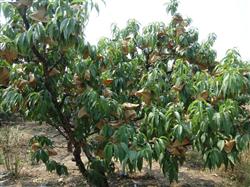
There are many varieties of fruit trees, and their life can be divided into five stages: the young tree stage, the early fruiting stage, the full fruiting stage, the late fruiting stage, and the aging stage. The demand for nutrient elements differs at each stage. During the young tree stage, because the root system and above-ground parts grow vigorously, a large supply of nitrogen and phosphorus is needed; during the fruiting stage, because of the large amount of fruit produced, there is also a need for...
 This year's No. 1 Central Document mentioned "launching a pilot subsidy program for the use of high-efficiency slow-release fertilizers," which provides a major opportunity for the development of slow-release fertilizers. Precisely because of this, slow-release fertilizers have become a hot topic in the industry.
The most important characteristic of slow-release fertilizers is that they can control the rate of nutrient release. After being applied to the soil, they gradually decompose and are gradually absorbed and used by crops, so that the nutrients in the fertilizer can meet the different needs of crops at various growth stages. After a single application, the fertilizer effect can last for several months or even a year. Experimental studies show that the fertilizer efficiency of slow-release fertilizers is at least 20 percentage points higher than that of conventional fertilizers of the same type. They can reduce the loss of fertilizer nutrients, especially nitrogen, in the soil, reduce environmental pollution, and help protect the ecological environment; reduce the number of fertilization operations, saving labor and costs; avoid damage to seeds or seedlings caused by excessive fertilization; and help improve the quality of agricultural products (8.77, -0.01, -0.11%) and food safety. But everything has two sides, and slow-release fertilizers themselves also have many shortcomings.
It is difficult to make nutrient release consistent with the law of crop nutrient uptake. Any crop, especially grains, vegetables, and fruits, absorbs different amounts of nutrients at different growth and development stages, and different crops also have different fertilizer requirements. However, with the current production technology and processes for slow-release fertilizers, especially constrained by coating materials, it is still very difficult at home and abroad to produce slow-release fertilizers whose nutrient release rate is consistent with the fertilizer requirements of crops, especially grains, vegetables, and fruits. Release is basically uniform, and there is also the problem of a relatively large release amount in the early and middle stages and a relatively small release amount in the middle and late stages. This is also one of the main reasons why slow-release fertilizers are difficult to promote on a large scale in the production of major crops.
Fertilizer efficiency evaluation is relatively simple. At present, the evaluation of the fertilizer efficiency of slow-release fertilizers is basically based on conventional field comparative trials and production surveys, and the effects are still evaluated using conventional methods, that is, comparison between input and output. Ecological benefits should be one of the most important benefits of slow-release fertilizers, and this is also the most important factor in developing slow-release fertilizers. However, current field trial conditions and methods make it very difficult, or even impossible, to detect the nutrient release rate and nutrient fate of slow-release fertilizers. In addition, under natural environmental conditions, the factors affecting the nutrient release rate of slow-release fertilizers are manifold, which further increases the difficulty of detecting the nutrient release rate and fate of slow-release fertilizers. This is also the fundamental reason for the lack of quantitative evaluation of the economic and environmental benefits of slow-release fertilizers. Therefore, it is necessary to further systematically and rigorously evaluate the field application fertilizer efficiency of slow-release fertilizers and related aspects such as their morphological transformation and fate in soil, so that the nutrient release rate of slow-release fertilizers is closer to the law of crop nutrient uptake, achieving maximum nutrient utilization and minimum loss.
Lack of unified standards. At present, there is still no unified international or industry standard for testing the controlled-release performance of fertilizers. Therefore, it is imperative to establish standard testing methods for the slow-release performance of fertilizers to promote and ensure their industrialization quality. At the same time, fertilizer production technology and processes as well as online quality detection technology still need to be further improved to meet the needs of the industrialization development of slow-release fertilizers.
Cost is too high. Farmers are the users of slow-release fertilizers and are one of the most critical factors determining whether the slow-release fertilizer industry can develop. Compared with conventional fertilizers, the production cost of slow-release fertilizers is 1 to 4 times higher, so most of this fertilizer is used only in the production of high-value flowers, lawns, and the like, which limits its widespread use. Although the No. 1 Central Document clearly mentions subsidies for the use of slow-release fertilizers, the most critical issues are, first, whether the state's financial resources can bear the burden of subsidies for large-scale use, and second, whether the state can continue subsidizing over the long term. Therefore, without solving the problem of excessively high prices for slow-release fertilizers, it will be very difficult to ensure the sustainable development of the slow-release fertilizer industry relying only on state financial subsidies.
These problems not only require the government to formulate related support policies such as taxation and subsidies for the development and promotion of slow-release fertilizers, but also require scientific research departments and production enterprises to step up technological efforts to solve the current shortcomings and problems of slow-release fertilizers, so as to achieve the sustainable development of the slow-release fertilizer industry.