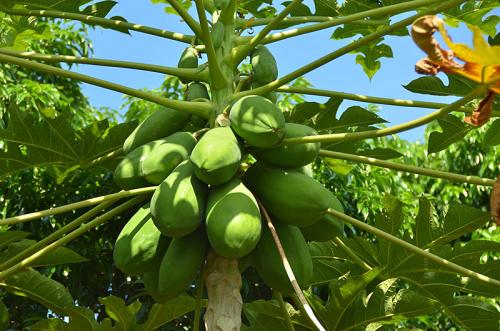
The Benefits of Papaya Enzymes and How to Select and Store Ripe and Green Papayas
Papaya was originally called "fan papaya" (foreign papaya) and is also known as the "longevity fruit." It originated in tropical America and is a tropical fruit tree. The papaya variety generally grown today is mainly the "Tainong No. 2" cultivar. How do you grow papaya from seed? Is it the same as other fruit trees?
Papaya was originally called "fan papaya" (foreign papaya) and is also known as the "longevity fruit." It originated in tropical America and is a tropical fruit tree. The papaya variety generally grown today is mainly the "Tainong No. 2" cultivar. How do you grow papaya from seed? Is it the same as other fruit trees? In fact, it is the same, only the growing habits differ, so the management methods also differ. September to November is the peak production season. Let's take a look at the key points for selecting and storing papayas!
Papaya enzymes aid digestion
Papaya is rich in carotenoids, organic acids, protein, fiber, vitamins A, B, B1, B2 and C, as well as calcium, iron and other nutrients. When an unripe fruit is cut, it exudes a white milky sap, which is why it is also called "milk melon." Avoid eating too much uncooked green papaya at one time, as it may upset the stomach and intestines. The papain (papaya enzyme) contained in papaya has the effect of tenderizing meat and helping gastrointestinal digestion. Consumed in moderation, it can promote intestinal peristalsis and aid digestion.
● Selection tips: For ripe papaya, choose one that is long and pear-shaped, plump and well-formed, with a groove on the lower half, smooth and fine skin, no bruises, and a color that is yellow with green or a rosy red; if the skin has an even powdery bloom, it is fresher.
If selecting green papaya, choose one that feels heavy in the hand, is bright green in color, and has firm, springy flesh; try to choose one with a green stem end, and if slight pressure causes juice to flow out, it is fresher; if the stem end is yellow, it means the flesh has softened, making it unsuitable for cold salads and only good for stewing.
● Storage tips: Both ripe and green papayas can be stored at room temperature for 1 to 2 days. If they cannot be eaten within a short time, they can be refrigerated for 4 to 5 days. For unripe papaya, wrap it in newspaper and place it in a cool, shaded place or in a rice container; after about 2 to 3 days, once the color turns yellow or red, it is ready to eat.
Green papaya placed in the refrigerator can be stored for about 1 week. If it has already been cut, it is recommended to wrap it in plastic wrap and refrigerate it, eating it within 2 to 3 days, otherwise the flesh tends to become fibrous and the texture is affected.