What Are Hawaiian Papayas Like? A Brief Introduction to Production and Prices
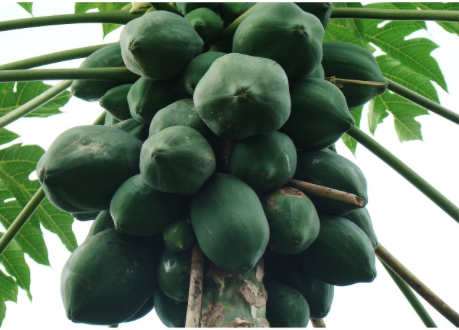
Hawaiian papaya is a papaya variety grown in Hawaii. Have you ever learned about this kind of papaya? Would you like to know the production and prices of Hawaiian papaya? Let's take a look together!
Hawaii's papaya industry in Hawaii, papaya has been cultivated for more than a century. For the papaya industry worldwide, the most important production constraint is Papaya ringspot virus (PRSV), a virus discovered in potatoes that spreads rapidly in a non-persistent manner through some aphid-like organisms. Although PRSV was discovered as early as the mid-1940s, it did not become a major problem for Hawaii's papaya industry until the 1950s. At that time, the main production area of Hawaii's papaya industry was Oahu, and in the late 1950s and early 1960s PRSV had already severely affected the island's papaya industry.
Later, due to the environmental advantages of the Puna district on the Big Island of Hawaii, the papaya industry shifted to the Puna district of the island of Hawaii. Because that district had sufficient low-priced land available for lease, sufficient rainfall and sunlight, and also had an excellent papaya ” Kapoho” variety that was very rarely able to adapt to the environment of that region, and most importantly, PRSV had not yet appeared in that district. In the 1970s, nearly 95% of all Hawaii papaya-growing area (about 2,500 acres) was located in the Puna district of the Big Island of Hawaii. However, in May 1992 PRSV was discovered in Puna, and the virus spread very rapidly. By the end of 1994, Hawaii's papaya industry had entered a very dangerous state.
Production and Prices of Hawaiian Papaya
The peak production of Hawaiian papaya was in 1984, when annual production exceeded 30,000 metric tons. After ringspot virus was discovered in PUNA in 1992, PUNA's annual fresh papaya production fell from more than 25,300 metric tons in 1992 to 16,000 metric tons in 1998. Before the market's rejection of genetically modified papaya became clear, large-scale planting of genetically modified varieties did indeed increase the harvest, and in 2001 production reached more than 23,600 metric tons, but since 2001 genetically modified papaya production has shown a declining trend. In 2004 production fell to only 15,500 metric tons, less than the production in the mid-1990s when the ringspot virus outbreak was most severe. In 2005 production decreased by another 12%, leaving only 13,600 metric tons (see Figure 1), the lowest level in recent generations. However, in countries that also produce and export papaya, such as Mexico and Brazil, papaya production increased steadily during the same period.
Due to reduced supply, the price of fresh papaya rose from 0.55 USD per kilogram in 1992 to an average of 1.17 USD per kilogram that farmers could sell for in 1997 when ringspot-virus-resistant genetically modified papaya came on the market. In 1998, Hawaii papaya's long-time buyers Japan and Canada refused to buy genetically modified fruit, causing the selling price to plummet to 0.77 USD per kilogram. Even though Canada agreed in 2003 to allow genetically modified fruit on the market, the price could not recover. In the past two years (2004 and 2005), the price on average remained below 0.8 USD per kilogram, which for many farmers only reached or barely exceeded the cost of production.
In the genetically modified papaya variety production areas, affected by declines in both price and production, the papaya harvest area in 2004 was only 500 hectares, 42% less than in 1998, and it was the smallest harvest area since 1979. In 2006 the papaya planting area slightly recovered to 619 hectares (Figure 2), but production continued to decline.
Since genetically modified papaya first entered the market in 1998, all the main indicators of Hawaii's papaya industry have declined. Ten years earlier, that is, in 1995, the total value of Hawaii fresh papaya exceeded 18 million USD. In 2006 it was only 10.9 million USD, having fallen to 60% of the level ten years earlier. Although agricultural product markets are affected by many factors, such as climate, production and marketing distance, and bargaining conditions, Hawaii's genetically modified papaya products still show a clearly unfavorable situation in export markets.