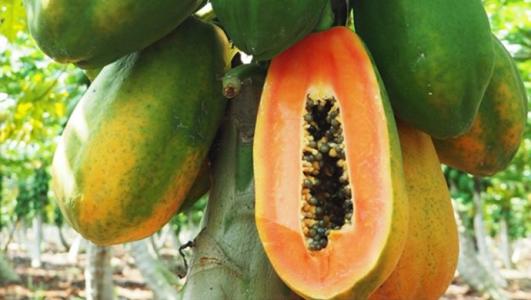
What is the difference between the smooth-skinned papaya (Chaenomeles sinensis) and the hairy-leaved papaya (Chaenomeles cathayensis)? An introduction to the uses of the smooth-skinned papaya
Papaya and perfume lemon are fairly common fruits for us. Introduction to the papaya tree (smooth-skinned papaya), also known as wood pear. There are three common papaya varieties: smooth-skinned papaya, wrinkled-skinned papaya, and hairy-leaved papaya. Below is an introduction to the smooth-skinned papaya and the hairy-leaved papaya
Papaya and perfume lemon are fairly common fruits for us. Introduction to the papaya tree (smooth-skinned papaya), also known as wood pear. There are three common papaya varieties: smooth-skinned papaya, wrinkled-skinned papaya, and hairy-leaved papaya. Below is an introduction to the characteristics of the smooth-skinned papaya and the hairy-leaved papaya.
The smooth-skinned papaya is mainly distributed in China's temperate and subtropical zones. The smooth-skinned papaya tree grows slowly, with a distinctive tree shape, bark, flowers, and fruit, and can adapt to cultivation in any soil. It prefers ample sunlight, tolerates slight shade, is cold-resistant, drought-resistant, and disease-resistant, and has no strict soil requirements; it can grow in both slightly alkaline and slightly acidic soils. The smooth-skinned papaya has a unique, long-lasting fragrance, can be soaked in liquor, and is also a remarkably effective medicinal material.
Uses of the smooth-skinned papaya:
1. Anti-tumor effect
2. Antibacterial and antiparasitic effect
3. Protease effect
4. Anticoagulant effect
5. Blood pressure-lowering effect
6. Smooth muscle inhibitory effect
7. Abortifacient effect
8. Cardiac and central inhibitory effect
The smooth-skinned papaya can be cultivated for ornamental purposes; its fruit is astringent in taste and can be eaten after boiling in water or soaking in sugar syrup. Used as medicine, it has the effects of sobering up from alcohol, removing phlegm, regulating qi, and stopping diarrhea. After drying, the fruit skin remains smooth and does not shrink, hence the name smooth-skinned papaya. Its hard wood can be used for bed posts.
After reading this, do you now have an understanding of these two papaya varieties? Then take a look together!
The smooth-skinned papaya can be cultivated for ornamental purposes; its fruit is astringent in taste and can be eaten after boiling in water or soaking in sugar syrup. Used as medicine, it has the effects of sobering up from alcohol, removing phlegm, regulating qi, and stopping diarrhea. After drying, the fruit skin remains smooth and does not shrink, hence the name smooth-skinned papaya. Its hard wood can be used for bed posts.
Hairy-leaved papaya:
Whenever people hear "papaya," they think of that yellow fruit with black seeds that tastes rather bland, the common papaya. The hairy-leaved papaya is a plant of the genus Chaenomeles in the rose family, also known as papaya crabapple, and is the "mu tao" of the Classic of Poetry. This papaya variety can grow to a height of 2-6 m; the branches are erect, with short spur thorns; the branchlets are cylindrical, slightly curved, hairless, purple-brown, with sparsely scattered light brown lenticels.
Whenever people hear "papaya," they think of that yellow fruit with black seeds that tastes rather bland, the common papaya. The hairy-leaved papaya is a plant of the genus Chaenomeles in the rose family, also known as papaya crabapple, and is the "mu tao" of the Classic of Poetry. This papaya variety can grow to a height of 2-6 m; the branches are erect, with short spur thorns; the branchlets are cylindrical, slightly curved, hairless, purple-brown, with sparsely scattered light brown lenticels.
Morphological characteristics: The flowers open before the leaves, clustered 2-3 together on two-year-old branches, with short thick pedicels or nearly no pedicels; ovate to elliptical, with an obtuse to truncate apex, entire margins or with shallow teeth and yellow-brown cilia.
After reading this, do you now have an understanding of these two papaya varieties? Then take a look together!