Key Points of Taro Cultivation: A Detailed Guide to Site Selection, Sprouting, and Water and Fertilizer Management
Taro is a perennial herbaceous crop of the genus Colocasia in the Araceae family. In production it is mostly grown as an annual, with the swollen underground corm as the edible part; it can be used both as a vegetable and as a coarse grain. It prefers a warm, humid climate and is not tolerant of drought or frost. Based on the growing environment, it is broadly divided into two types, wetland taro and upland taro, and it is relatively commonly grown in southern China.
To grow taro, you must first choose a good plot, ideally loam or sandy loam with deep, loose, fertile soil that retains water and nutrients. Continuous cropping must be avoided, and the previous crop is best something like rice or legumes. When sowing, select daughter corms with plump apical buds, no lesions, and no damage as seed material. After sunning the seed and sprouting it, plant once the temperature rises and the soil temperature is stable, and give the plants enough room to grow with proper spacing between plants and rows.
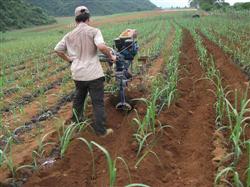
The key to field management lies in water and fertilizer. Taro needs a large amount of water during its growing period, and the soil should be kept moist at all times; for wetland taro fields, an appropriate shallow water layer can be maintained according to the growth stage. Topdressing should be done in several applications: during the seedling stage, mainly nitrogen fertilizer to promote stem and leaf growth; after entering the corm enlargement stage, increase potassium fertilizer and combine it with an appropriate amount of phosphorus fertilizer so the corms grow plump. In addition, hilling should be done several times along with cultivation, which both promotes corm enlargement and prevents the taro from being exposed above the soil surface and turning green, which would affect quality.
During the growing period, you also need to watch for diseases and pests such as blight, soft rot, aphids, and cotton leafworm; reduce their occurrence through rational crop rotation, timely clearing of ditches and drainage, and removal of diseased plants. When most leaves turn yellow and the petioles begin to wither, the corms are basically mature. Harvest can be done on a sunny day, and after harvest store them in a cool, dry place, taking care to protect against moisture and freezing so the eating quality of the taro can be maintained.
Related Reading