Sugarcane Cultivation Techniques: How to Fertilize Sugarcane for Good Results?
How to fertilize sugarcane well? A detailed analysis and introduction. Sugarcane has a long growth period and high yield, generally yielding 5-8 tons of cane stalks per mu, with high-yield fields reaching 10 tons. It absorbs a large amount of nutrients throughout its entire growth period and is one of the crops with relatively high fertilizer requirements. The optimal fertilization periods for sugarcane are the seedling stage, tillering stage, and elongation stage. Detailed fertilization methods...
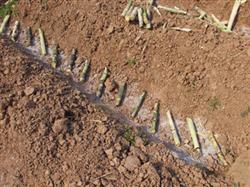 How to fertilize sugarcane well? A detailed analysis and introduction
Sugarcane has a long growth period and high yield, generally yielding 5-8 tons of cane stalks per mu, with high-yield fields reaching 10 tons. It absorbs a large amount of nutrients throughout its entire growth period and is one of the crops with relatively high fertilizer requirements. The optimal fertilization periods for sugarcane are the seedling stage, tillering stage, and elongation stage. For detailed fertilization methods, refer to the following:
Base fertilizer for sugarcane planting:
The base fertilizer should be mainly organic fertilizer, used in combination with chemical fertilizer, to create good conditions for rapid sprouting of cane buds, root elongation, and early and strong tillering. Generally, apply 1500-2000 kg of fully decomposed organic fertilizer per mu, along with 20-30 kg of general-purpose compound fertilizer (15-15-15). When applying, for spring-planted sugarcane, open planting furrows, place the organic fertilizer at the bottom of the furrow, and then apply the inorganic fertilizer on both sides of the furrow; for winter-planted sugarcane, use the organic fertilizer as a seed-covering fertilizer, then cover with a layer of soil.
Seedling-promoting fertilizer for sugarcane:
During the seedling stage, sugarcane requires a small amount of fertilizer but has an urgent need for it, with a high demand for nitrogen, followed by potassium and phosphorus. Early application of seedling-promoting fertilizer not only promotes the growth of cane seedlings and root systems but also promotes leaf growth, continuously expanding leaf area and improving photosynthesis, thereby promoting early and rapid tillering. If fertilizer is insufficient, it will lead to short and stunted seedling and tiller growth, poor development, and even if fertilizer is supplemented later, it is difficult to recover, ultimately leading to decreased yield and quality.
For seedling fertilizer, it is recommended to use high-nitrogen compound fertilizer. When cane seedlings grow to 3-4 leaves, apply 8-10 kg of compound fertilizer per mu. When applying, it is best to combine with intertillage and earthing up for direct hole application, or hole application with water dilution. During drought, hole application with water dilution should be used. In addition, promptly check for and fill in missing plants to ensure uniform population growth.
Tillering fertilizer for sugarcane:
Tillering fertilizer should be determined according to specific conditions. If the base fertilizer and seedling-promoting fertilizer are relatively sufficient and the seedlings are strong, it can be applied all at once during the peak tillering stage, with a smaller application rate; if the base fertilizer is insufficient and the seedling-promoting fertilizer is also inadequate, and the seedlings are weak, the application rate should be increased and applied in two split applications.
One application is at the early tillering stage to promote tillering, called tillering-promoting fertilizer. The other is applied at the peak tillering stage to ensure strong tillers, called tiller-strengthening fertilizer. Tillering fertilizer generally uses high-nitrogen high-potassium compound fertilizer, applied at 8-15 kg per mu, with hole application and water dilution same as seedling fertilizer, while earthing up to a height of 10-12 cm.
Jointing fertilizer for sugarcane:
Jointing fertilizer is the key to increasing sugarcane yield and must be applied heavily. The stem-promoting fertilizer mainly involves topdressing nitrogen fertilizer. Generally, it is applied in two split applications at the early elongation stage and peak elongation stage, with 15-20 kg of high-nitrogen compound fertilizer per mu each time, combined with intertillage and heavy earthing up to promote cane root growth, strengthen absorption function, and enhance lodging resistance. If phosphorus and potassium were insufficient in the early stage, supplemental application should also be made, so as to achieve maximum growth while not reducing sugar content and yield due to excessive nitrogen fertilizer.
Tail fertilizer for sugarcane:
To promote and maintain late-stage growth, favor the development of underground cane buds, and lay a good foundation for ratoon cane the following year, a tail-strengthening fertilizer should be applied once. Generally, about two months before maturity, apply 5-8 kg of compound fertilizer per mu. The application time should not be too late, and the amount should not be too much, to avoid delaying maturity and reducing sugar content. After application, earth up.
If fertilizer deficiency symptoms appear 1 month before harvest, foliar spraying should be carried out. Mix 4 liang of potassium dihydrogen phosphate and 0.5 kg of urea with 100 kg of water per mu, mix evenly, and spray.
Click to get more sugarcane cultivation techniques
Click to get more fruit cultivation techniques