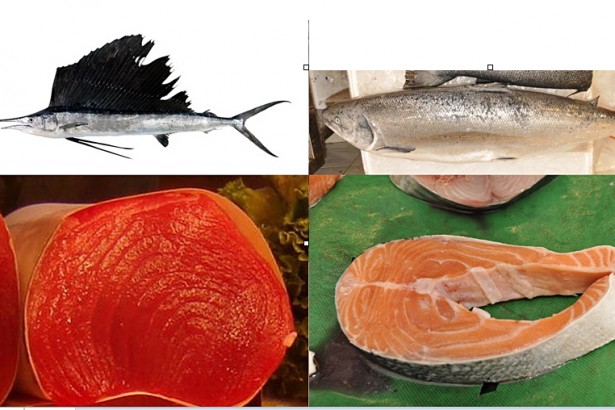
Pictures of Marine Fish Species and an Introduction to the Features of Common Varieties
Marine fish broadly refers to fish that live in marine environments; there are many species, and their forms vary greatly. Many people, when shopping at the market or keeping ornamental fish, are in the habit of first looking up pictures of the species for comparison and identification. Learning a fish's name, physical features and uses through pictures is the most intuitive way to get started.
From an edible standpoint, common marine fish include ribbonfish, yellow croaker, pomfret, sea bass, grouper, cod, Spanish mackerel, sardine and others. Ribbonfish have slender bodies that are silvery white throughout, grouper are mostly covered in spotted patterns, and pomfret have laterally compressed bodies; these features are all fairly easy to recognize in pictures. Large fish such as tuna, sailfish and salmon also often appear in marine fish pictures. They sit at the top of the food chain and are highly nutritious ingredients, but they should be eaten in moderation.
From an ornamental standpoint, marine aquarium fish are known for their bright colors and unusual shapes, with common examples including clownfish, butterflyfish, blue tang and lionfish. Such pictures are mostly used by aquarium hobbyists as a reference for selection and keeping. Note that different varieties have greatly differing requirements for water temperature, salinity and water quality, so you should do plenty of homework before keeping them.
Divided by the water layer they inhabit, marine fish can be broadly classified into pelagic fish and bottom-dwelling fish. The former, such as sardine and Spanish mackerel, mostly swim in open water and tend to have streamlined bodies; the latter, such as flounder and turbot, often stay close to the seafloor and have flat bodies, which is also an important clue when identifying them from pictures.
When looking at pictures of marine fish species, it is advisable to focus on parts such as body shape, body color, fin shape and markings, then make an overall judgment together with place of origin and living habits. Online pictures may be inaccurately labeled, so when you come across similar-looking varieties, it is best to compare multiple sources and avoid drawing conclusions from a single picture alone.
Related Reading