Grafting methods are a propagation technique commonly used in raising fruit tree and flower seedlings
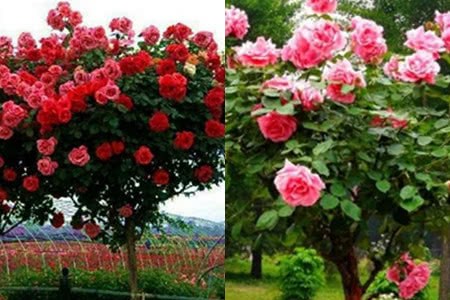
Grafting is a common method of asexual propagation in plants. It refers to taking the branch or bud of one plant as the scion and joining it onto the rootstock or branch of another plant, that is, the rootstock, so that the two heal and grow into one complete new plant. This method is widely used in raising seedlings of fruit trees, flowers and ornamental trees. Chinese roses, citrus, apples, peach trees and so on are all commonly propagated by grafting.
The greatest advantage of grafting is that it can stably retain the superior traits of the mother plant of the scion, and it flowers and fruits earlier than propagation by sowing. At the same time, it can also use the adaptability of the rootstock to enhance the plant's disease resistance, cold tolerance or drought tolerance. For varieties that are difficult to root from cuttings, grafting also provides an effective way to propagate.
Common grafting methods are mainly divided into two major categories: branch grafting and bud grafting. Branch grafting uses a branch segment with buds as the scion, including cut grafting, cleft grafting, side grafting, bark grafting and approach grafting, and is mostly carried out in early spring around the time of sap flow; bud grafting uses a single bud piece as the scion, among which T-shaped budding is the most common, generally carried out during the period of vigorous growth, when the bark is easy to peel off and the survival rate is relatively higher.
No matter which method is used, during operation it is necessary to ensure that the cut is smooth, align the cambium of the scion with that of the rootstock, and then bind tightly with plastic strips to retain moisture. After grafting, attention should be paid to shading and rain protection, and the sprouts and buds emerging on the rootstock should be removed in time to avoid competition for nutrients. After the scion survives, gradually remove the binding material. If the scion does not sprout for a long time or turns black and shrivels, it is mostly caused by the cambium not being fitted together or the graft union losing water. After identifying the cause, it can be re-grafted.
Related Reading