Autumn Delayed Cultivation Techniques and Management Key Points for Celery in Small and Medium-Sized Tunnels
Autumn delayed cultivation of celery in small and medium-sized tunnels is a protected cultivation method that builds on open-field autumn cultivation: when temperatures drop markedly in late autumn and frost is approaching, small arched tunnels or medium arched tunnels covered with plastic film are used to retain heat, allowing the celery to continue growing slowly and postponing the harvest. This method can push the harvest period back into winter, stagger it away from the peak marketing time, and is quite effective at improving growing returns.
Celery prefers a cool climate. In autumn, with ample sunlight and a large day-night temperature difference, the plants grow vigorously, making this one of the cropping periods with the better quality of the whole year. But as temperatures fall around the onset of winter, open-field celery is easily damaged by cold and its growth then stalls. After covering with small or medium tunnels, the temperature inside the tunnel rises, the leaf stalks can continue to thicken and fill out, and both yield and market quality improve.
In cultivation, seedlings are generally raised in summer and transplanted in autumn; before the tunnels are closed, management follows that for open-field autumn celery, with attention to fertilizer and water supply and to intertillage and loosening of the soil to promote full growth of the roots and leaf stalks. When the outside temperature drops to the lower limit required for celery growth, the tunnels should be closed and covered with film in good time; in the early stage after closing, pay attention to ventilation to prevent excessively high tunnel temperatures from causing spindly growth or aging of the leaf stalks; in the later stage, strengthen nighttime insulation, adding straw mats or other covers when necessary, and open the tunnels appropriately around noon to release moisture, keeping temperature and humidity inside the tunnel stable.
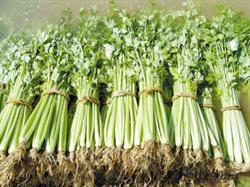
Harvesting can be carried out in stages according to market conditions, or the crop can be harvested all at once and then heeled in with roots or stored for successive marketing. If management is poor, problems such as hollow stalks, cracked leaf stalks or cold damage are likely, so a balanced water supply must be maintained, avoiding drought in the early stage and flooding irrigation in the later stage; after the tunnels are closed, pay attention to temperature control and frost prevention and harvest in good time to obtain better growing results.
Related Reading