Temperature and fertilizer-water management for celery cultivation in plastic greenhouses
Celery cultivation in plastic greenhouses refers to a growing method that uses greenhouses covered with plastic film to create a warm and humid growing environment for celery, and it is mostly used for off-season production in late autumn and the winter-spring season. Compared with open-field planting, greenhouses have good heat and moisture retention, which can reduce the effects of low-temperature freezing damage and rain washout, so the celery grows uniformly, with thick, crisp, and tender leaf stalks, and its market period falls right when market supply is relatively tight, so the returns are usually fairly good.
When planting, priority should be given to varieties with relatively strong cold tolerance, low susceptibility to premature bolting, and resistance to hollowing, and the choice should also be made in line with local consumer habits. Generally, seedlings are first raised in a seedbed, and after strong seedlings with well-developed root systems are cultivated, they are transplanted into the greenhouse; when raising seedlings in summer, attention should also be paid to shading, cooling, and moisture retention. When transplanting, the row and plant spacing should be arranged reasonably and must not be too dense; otherwise, ventilation and light transmission will be poor, and diseases will easily be triggered.
Management after transplanting focuses on three aspects: temperature, humidity, and fertilizer-water. When the greenhouse temperature is too high during the day, ventilation should be carried out promptly to cool it down and prevent excessive vegetative growth; the soil should be kept moist, and during the growing period, fertilizer should be applied several times along with watering, mainly nitrogen fertilizer, with an appropriate supplement of phosphorus and potassium fertilizer. Insufficient water and fertilizer supply can easily lead to hollow leaf stalks, while excessive humidity in the greenhouse can easily induce diseases, so ventilation and air exchange should be done frequently, and before a cold wave arrives, attention should be paid to cold protection and heat preservation.
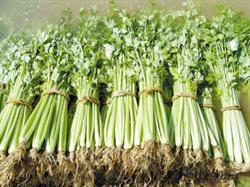
After the celery has grown, it can be harvested in batches according to market conditions, either by snapping off outer stalks or by harvesting all at once. The common problems in greenhouse celery are mainly hollowing, premature bolting, and leaf spot diseases, which are mostly related to improper temperature regulation, inadequate fertilizer and water, and poor ventilation. As long as management is careful and thorough, generally good cultivation results can be achieved.
Related Reading