Grey mould control: focus on early identification and scientific fungicide use
Grey mould is a fungal disease caused by Botrytis cinerea. It is one of the common and relatively difficult-to-control diseases of tomatoes, cucumbers, strawberries, grapes, aubergines and many other vegetables and fruit trees. The pathogen prefers low temperatures and high humidity, and it occurs especially commonly in greenhouse cultivation in winter and spring, with flowering and fruit-swelling stages being the most susceptible.
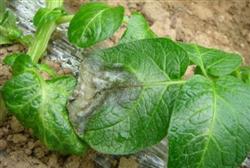
Infection usually begins at the flowering stage from residual petals, stigmas or wounds, appearing as water-soaked spots, after which a greyish-brown mould layer forms on the surface of the diseased tissue; in severe cases leaves, stems and fruits rot in patches. The pathogen's spores spread rapidly with airflow and irrigation water, and once a primary infected plant is found, failure to deal with it promptly allows it to spread quickly through the greenhouse.
The key to controlling grey mould is humidity management. When planting, use a reasonable density, adopt plastic film mulching and drip irrigation under the film to reduce water evaporation from the soil surface, and, while ensuring temperature, strengthen ventilation to lower the air humidity inside the greenhouse. In routine management, promptly remove diseased flowers, fruits and leaves and take them out of the field for destruction, avoiding leaving them scattered in the greenhouse. In fertilisation, pay attention to a balanced combination of nitrogen, phosphorus and potassium to prevent excessive vegetative growth.
For chemical control, grasp the key period of early disease onset. Fungicides specific to grey mould such as procymidone, pyrimethanil and iprodione can be used, and when spraying, focus on the flowers and the areas near the fruits. To delay the development of resistance, it is recommended to rotate several fungicides and strictly observe the pre-harvest interval. In greenhouses with more severe disease, the pathogen population can also be reduced after harvest by means such as high-temperature greenhouse sealing.
Related reading