To control greenhouse gray mold, do a good job of reducing humidity, ventilating and using pesticides scientifically
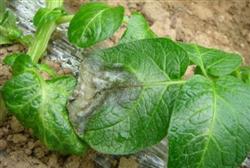
Greenhouse gray mold is a common fungal disease in greenhouse vegetable production, caused by infection with Botrytis cinerea. It mainly damages the flowers, fruits and leaves of crops such as tomato, cucumber, eggplant, pepper and strawberry. Water-soaked spots appear at the affected sites initially, followed by a large amount of grayish-brown mold, and in severe cases the fruits rot and drop off, greatly affecting yield and quality.
The disease prefers a low-temperature, high-humidity environment. It is most likely to become epidemic in winter and spring when the temperature inside the greenhouse is low, ventilation is poor and humidity is too high. Excessive watering, dripping from the greenhouse film, overly dense planting and incomplete clearing of plant residues all aggravate the disease.
For control, greenhouse environment management must come first. Use drip irrigation under the film or frequent light watering, avoid flood irrigation, and it is best to water in the morning on sunny days. Ventilate promptly after watering to remove moisture and reduce the time the leaves remain wet with dew. At the same time, plant at a reasonable density, prune and remove side shoots in time, remove diseased flowers, diseased fruits and lower old leaves, and take them outside the greenhouse for centralized disposal to cut off the sources of pathogen spread.
Chemical control should be carried out at the early stage of the disease. Fungicides targeted at gray mold such as procymidone, pyrimethanil and iprodione can be used, focusing on spraying the flowers and fruits. To delay resistance, it is recommended to rotate several pesticides and avoid using a single product for a long time. On rainy and cloudy days, smoke agents or dust formulations should be used as much as possible to avoid further increasing the humidity inside the greenhouse.
Overall, the key to controlling greenhouse gray mold lies in combining humidity reduction, temperature control, field sanitation and timely pesticide application. As long as daily management is done well, the severity of the disease can be significantly reduced.
Related Reading