Characteristics of the Clivia nobilis and an Introduction to Its Daily Care Methods
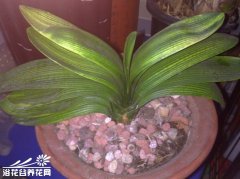
Clivia nobilis is a perennial evergreen herbaceous plant of the genus Clivia in the Amaryllidaceae family. It belongs to the same genus as the large-flowered clivia (Clivia miniata) but differs noticeably in form. Its most striking feature is that the flowers droop downward, with small orange-red tubular flowers arranged along the flower scape; when they open they look like a string of hanging little bells, and this is where the name "drooping laugh" comes from. Its leaves are narrower and longer than those of the large-flowered clivia, dark green and glossy, with fine serrations along the edges, which is also an important basis for distinguishing the two.
As for daily care, Clivia nobilis likes a warm, semi-shaded environment and is suitable for placement on a windowsill or balcony with scattered light. In summer, direct strong sunlight should be avoided to prevent the leaves from being scorched. Watering should follow the principle of watering when dry and withholding when wet; if the potting soil stays too wet for a long time, it easily causes root rot, which is the most common care problem for clivia-type plants. During the peak growing season, light fertilizer can be applied frequently in small amounts; after winter begins, gradually reduce water and fertilizer, and note that the ambient temperature should not be too low.
Common problems during care include crooked leaves, leaf spot disease and root rot. Because the leaves have obvious phototropism, if the pot is not turned for a long time, the leaves tend to grow toward one side; the pot can be rotated regularly to allow even light exposure and keep the plant's shape upright. Leaf spot disease is mostly related to poor ventilation and high humidity; diseased leaves should be pruned away promptly and the environment improved. If root rot is caused by overwatering, the plant should be removed from the pot as soon as possible, trimmed and then repotted.
Propagation is mostly done by division and sowing. Division is often carried out together with repotting in spring; it is simple to perform and has a relatively high survival rate. Clivia nobilis is excellent in both flower and foliage, with a dignified and elegant plant shape. As a household potted plant placed in the living room or study, it has ornamental value and also adds charm to daily life.
Related Reading