A Detailed Guide to the Role of Zinc Fertilizer and Scientific Application Methods
Zinc fertilizer refers to fertilizer whose main function is to supply zinc as a nutrient, and it is a type of micronutrient fertilizer. Zinc is an essential nutrient element for crop growth and development, participating in the composition and activity of various enzymes in the plant, and playing an important role in auxin formation, photosynthesis, and protein metabolism. Corn, rice, and fruit trees such as apple and citrus are relatively sensitive to zinc. When zinc is deficient, symptoms such as leaf chlorosis, white seedlings, small leaves, and shortened internodes often appear, and timely zinc supplementation can significantly improve growth.
Common zinc fertilizer varieties include zinc sulfate, zinc chloride, zinc oxide, and chelated zinc. Among them, zinc sulfate has good water solubility and is the most widely used, suitable for both basal application and spraying; chelated zinc is stable in nature and not easily fixed by the soil, making it suitable for foliar spraying, but its cost is relatively high. Growers can choose the appropriate variety according to crop type, soil conditions, and application method.
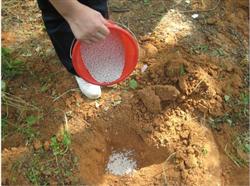
Zinc fertilizer can be applied to the soil as a basal fertilizer, or used for seed dressing, seed soaking, or foliar spraying. When used as a basal fertilizer, the amount should not be too large, and it can be mixed evenly with dry fine soil or organic fertilizer before application, taking care to distribute it evenly; for foliar spraying, water-soluble zinc fertilizer is generally selected and prepared into a low-concentration solution, and spraying in the early growth stage of the crop gives better results. The specific concentration and dosage should refer to the product instructions, and if necessary, consult local agricultural technicians.
When applying zinc fertilizer, avoid directly mixing it with phosphate fertilizer, because when zinc encounters a large amount of phosphorus, it is easily fixed into a poorly soluble substance, and the fertilizer effect will decrease markedly. On calcareous soil or slightly alkaline plots, the availability of zinc is relatively low, and zinc deficiency is more likely to occur, so appropriate supplementation should be carried out. In addition, micronutrient fertilizers emphasize moderate supplementation; blindly increasing the dosage is not only wasteful, but may also cause toxicity to crops. Supplementing only what is deficient is the scientific approach to fertilization.
Related Reading