A Detailed Guide to the Care Essentials and Ornamental Value of the Amur Rhododendron
The Amur rhododendron (Rhododendron mucronulatum) is a deciduous shrub in the family Ericaceae and the genus Rhododendron, also known as Yingshanhong, pointed-leaf rhododendron and Lanjingzi, named for blooming before its leaves emerge in early spring and opening to greet the lingering cold. It is mainly distributed in northeast China, north China and Shandong, and often grows wild on hillside scrub and forest edges; it is one of the ornamental flowering trees that bloom earliest in early spring in the north.
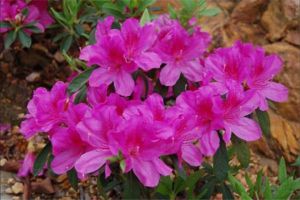
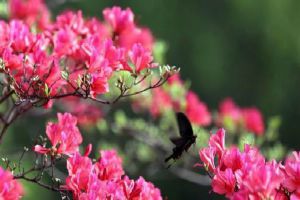
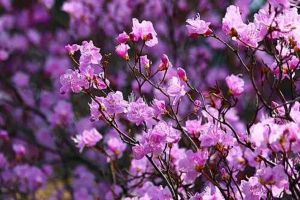
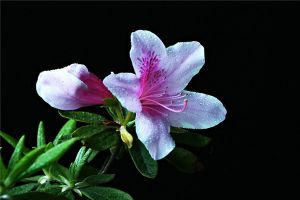
Its corolla is funnel-shaped and pale purplish-red or pink, with several flowers clustered at the tips of the branches and opening before the leaves, so that from a distance the whole branch appears covered in bloom and is very eye-catching. The leaves are nearly leathery, mostly oblong-lanceolate, and shed naturally after autumn. The plant has an open form and blooms uniformly, and looks excellent whether planted in groups or massed plantings.
For care, the Amur rhododendron prefers a cool, moist environment with dappled shade and dislikes intense sunlight and hot, dry conditions; it is best planted in loose, fertile, well-drained, slightly acidic soil. Water when the soil is dry and let it dry slightly between waterings, and avoid long-term waterlogging of the potting soil, which can cause root rot. When northern water and soil tend toward alkalinity, the leaves readily turn yellow, so acidic fertilizer or alum water can be added regularly to improve the situation.
During the growing season, attention should be paid to controlling common pests and diseases such as aphids, red spider mites, leaf spot and root rot; maintaining ventilation and light transmission can noticeably reduce their occurrence. In winter it is in a deciduous state, and leaf drop is normal and should not be mistaken for disease; simply reduce watering and provide cold protection.
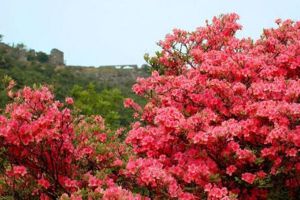
In landscape use, the Amur rhododendron is often planted in groups at forest edges, beside paths, next to rockeries or in courtyard corners; it gives a fine display of flowers in early spring, and can also be grown in pots on a balcony or in a bright indoor spot to add a touch of spring to the home.
Related Reading