Detailed Guide to Pest and Disease Control Methods for the Dewdrop Rhododendron
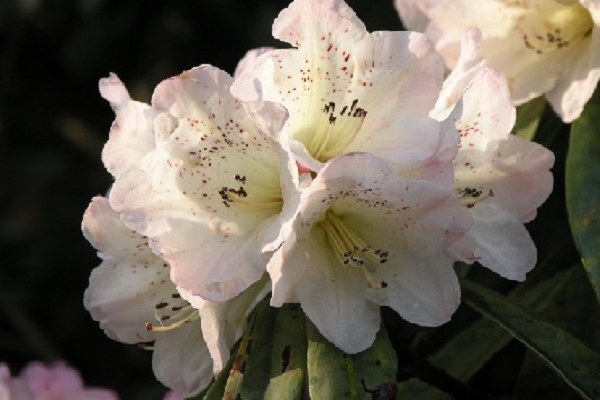
1. Brown spot disease:
This disease acts on the leaves, causing dark brown lesions to form on them, which affects the growth and ornamental value of the Dewdrop Rhododendron tree. It occurs mostly from May to August when the temperature is high and the humidity is great. Prevention requires timely shading and moisture control, and it is also necessary to prevent water accumulation in the growing soil from causing rot of the plant's roots and stems.>
If leaves have already begun to show disease, first remove them promptly, and second prepare spray agents, specifically mancozeb (50 percent concentration, 500-fold solution), thiophanate-methyl (70 percent concentration, 1,000-fold solution) and triadimefon (20 percent concentration, 4,000-fold solution), spraying once every ten days, for a total of seven to eight times.
2. Leaf gall disease:
This disease originates from fungi and acts on young buds, new leaves and new shoots. After infection, it not only makes them swell, thicken and enlarge, but also causes a grayish-white powdery layer to attach to the surface.
Leaf gall disease is most common at the turn of spring and summer, followed by late summer and early winter, and it is most likely to break out especially in weather with continuous rain and excessive humidity.
For prevention, a dedicated fungicide is generally sprayed before budding; when new shoots and new leaves are about to emerge, Bordeaux mixture (1:1:200) is sprayed, and leaves that have already developed the disease are promptly removed. After it is confirmed as leaf gall disease, spray mancozeb (about 70 percent concentration, 500-fold solution) or lime sulfur mixture (0.3-0.5 degrees Baume) three to five times.
3. Coin blight disease:
This disease is caused after leaves are pierced and infected by aphids, and it generally acts on the front end of the leaves.
At this time, a medicinal solution with added copper sulfate should be sprayed, and attention should be paid to removing diseased leaves.
4. Stephanitis lace bug:
The Stephanitis lace bug is a kind of pest that pierces and sucks the leaves of the Dewdrop Rhododendron, causing pale white spots on the front side and turning the back side into a yellow color faintly like rust, while the entire leaf loses all greenness, ultimately causing the leaves to fall off and the flowers to be unable to sprout.
For this pest, control is generally carried out in winter. First, use whitewash to brush the tree trunk; second, spray a dedicated medicinal solution once every ten days to half a month, for a total of two to three times; third, strengthen cleanliness and promptly clear the surrounding weeds and fallen leaves.
5. Red spider mite:
The red spider mite is similar to the Stephanitis lace bug, piercing and sucking the leaves of the Dewdrop Rhododendron to cause pale white spots, leading to leaf fall.
This pest occurs mostly during high summer temperatures; the pest damage is reduced during rainy weather and aggravated during the dry season. Clearing the surrounding weeds and fallen leaves in winter has a preventive effect, and after pest damage appears, insecticide is used to kill the pests.