Introducing the characteristics and uses of Emilia sonchifolia: getting to know this aster family herbaceous plant
Emilia sonchifolia, also known as sheep's-hoof herb, red-under-leaf, and red-backed leaf, is an annual or perennial herbaceous plant of the genus Emilia in the aster family (Asteraceae). It is very common in the southern provinces of our country, and mostly grows in sunny, moist places such as field edges, roadsides, forest margins, and barren slopes. Because of its wide distribution and tough habits, it is often regarded as an ordinary weed, but it does have certain application value.
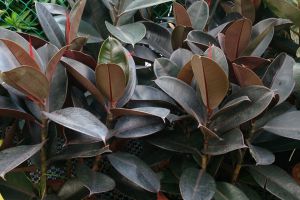
The plant is generally not tall, with an upright or ascending stem. The leaves are mostly concentrated on the lower part of the stem, and the leaf shape varies greatly, with the edges often showing irregular pinnate division. The underside of some leaves takes on a purplish-red color, which is also the origin of the alias red-backed leaf. The capitulum is terminal, and the florets are pink or purplish-red. When in bloom, it looks quite striking from a distance, and it is especially common in summer and autumn.
The value of Emilia sonchifolia is mainly reflected in three aspects. First is folk medicinal use; traditionally, the whole plant is often collected and dried for later use, mostly for matters related to clearing heat and detoxifying. For specific use, a professional physician should be consulted, and it should not be taken casually on one's own. Second is food use; in some regions, its tender stems and leaves are picked as a wild vegetable, and before eating they generally need to be blanched in water first. Third is ornamental and ecological value; its flowers are brightly colored and its flowering period is fairly long, so it can be used as a ground cover accent and can also provide a nectar source for small insects.
In terms of cultivation, Emilia sonchifolia has strong adaptability, likes warmth and sufficient light, has low soil requirements, tolerates drought and poor soil, and is relatively extensively managed. For home planting, it is enough to choose a sunny location with good drainage, water appropriately during the growing season, and there is no need for excessive fertilizing. It should be noted that when gathering food in the wild, care must be taken to carefully distinguish it from poisonous plants with similar appearances, and only use it after confirming it is correct, so as to avoid accidental ingestion.
Related Reading