A Detailed Guide to the Characteristics and Care Methods of Oriental Lily
The Oriental lily is a perennial bulbous flower of the genus Lilium in the family Liliaceae. It usually refers to a group of fragrant-flowered varieties bred by hybridizing Oriental lilies as parents, and it gets its name from its large flowers and rich fragrance. It is not the same type of plant as the scented rose or the French perfume flower; they merely share the word "perfume" in their names, so do not confuse them when buying and planting.
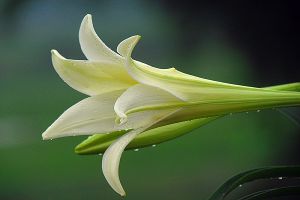
In appearance, its bulb is flat and round, buried in the soil to overwinter, and in spring it sends up erect flower stems, with lance-shaped alternate leaves. The flowers are borne singly or several in a raceme, shaped like a trumpet or a bowl, with petals that often curve backward outward, mainly in white and pink, while some varieties have purplish-red spots. The flowering period is mostly concentrated in summer, and when it blooms the fragrance fills the air; cutting a few stems and placing them in a vase can fragrance a whole room.
For care, the Oriental lily prefers a cool and humid climate and is suitable for planting in loose, fertile, well-drained sandy soil; it most fears waterlogging, otherwise the bulb easily rots. During the growing period, keep the potting soil alternately dry and moist, and appropriately supplement phosphorus and potassium fertilizer before budding and flowering. After the flowers fade, promptly cut off the spent flowers but keep the stems and leaves so the bulb can continue to accumulate nutrients, and only cut everything off after the aboveground parts turn yellow and wither.
Common problems are concentrated in two aspects: pests and diseases, and bulb degeneration. When ventilation is poor and humidity is too high, it is prone to aphids or gray mold infection; usually maintaining plant spacing and promptly cleaning up dead leaves can reduce the incidence of disease. Finally, a reminder: its pollen easily stains clothing, and its fragrance is rather strong, so it is not recommended to place it in the bedroom; lilies are toxic to cats, so households with cats should place the flowers where pets cannot reach them.
Related Reading