A Detailed Guide to the Characteristics and Care of the Variegated Firethorn
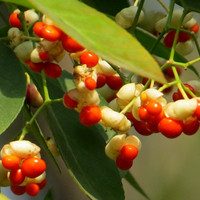
The variegated firethorn is an evergreen shrub of the genus Pyracantha in the rose family (Rosaceae), and it is a variegated-leaf cultivar of the firethorn. Its leaves are small, with creamy white or milky yellow markings on a green background, looking from a distance like a clown's motley costume, which is how it got its name. The branches bear small thorns, dense small white flowers bloom in late spring and early summer, and small orange-red fruits form after autumn, making it a plant valued for its foliage, flowers and fruit alike.
The most striking feature of the variegated firethorn is its bright leaf color, which remains stable through all four seasons; in a spot with ample light the markings become even clearer, and when planted in masses it looks like a spread-out floral carpet, so it is often used as a hedge, for color blocks and as ground cover. It tolerates pruning well and sprouts vigorously, and can be trimmed into many shapes such as balls and columns, or trained into a bonsai; it is a popular colorful-leaf shrub in landscaping.
As for care, the variegated firethorn likes a spot with plenty of sunlight and tolerates partial shade somewhat; a long period without light will cause the markings to fade. It is not demanding about soil, preferring a loose, well-drained sandy loam, and it has fairly strong drought tolerance and dislikes waterlogging, so watering can follow the principle of watering when dry and stopping when wet. During the peak growing season, apply light fertilizer frequently, and reduce nitrogen fertilizer after autumn sets in, which helps the fruit color up and the branches thicken.
The variegated firethorn tolerates pruning, and during the growing season you can cut away leggy and messy branches at any time; after pruning, the new shoots have even brighter leaf color and the plant's shape becomes more compact. Propagation is mainly by cuttings, usually done in spring and autumn: select semi-lignified branches and insert them into a sand bed, keep it moist, and rooting and survival are relatively easy. In daily care, pay attention to ventilation and guard against common pests such as aphids and scale insects; just deal with them promptly once found.
Related Reading