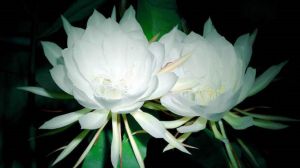
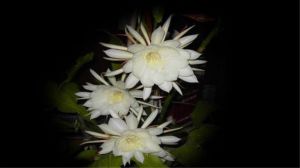
The Easter cactus (Rhipsalidopsis) is an ornamental plant in the cactus family that looks like the night-blooming cereus
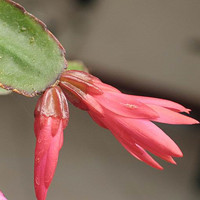
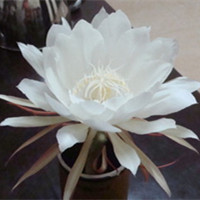
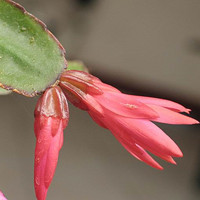
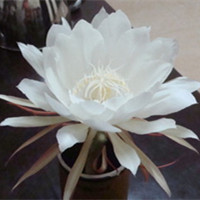
The Easter cactus is an epiphytic succulent in the cactus family, named because its flowers look somewhat similar to those of the night-blooming cereus, but it is not the night-blooming cereus. Its stem segments are flat, with blunt rounded notches along the edges, and the plant grows in clumps and droops slightly, making it suitable for growing in pots or hanging baskets. Native to tropical rainforest regions, it often grows attached to trees or rocks and naturally prefers a warm, humid, bright, semi-shaded environment.
The differences between the Easter cactus and the night-blooming cereus are fairly obvious. The night-blooming cereus has narrow, elongated stem segments, large white flowers that usually open at night, and a short blooming period; the Easter cactus, by contrast, has shorter, smaller stem segments and flowers that are mostly pink or red, usually opening during the day, with each individual flower staying ornamental for longer. It is also easily confused with the Christmas cactus and the orchid cactus, but comparing the shape of the stem segments and the flower form makes it possible to tell them apart. Its blooming period is mostly in spring, and when it flowers the bloom count is large, giving good ornamental value.
For care, the Easter cactus is best placed in a bright spot without direct strong light; in summer, provide appropriate shading so the stem segments do not get sunburned and turn red. For soil, choose a loose, breathable, well-draining leaf mold or a substrate mixed with sand. During the growing season, keep the potting soil slightly moist, and never let water accumulate, which causes root rot; in winter, reduce watering and keep the plant warm so it can enter dormancy smoothly. Before flowering, a small amount of phosphorus and potassium fertilizer can be added to help flower bud formation and produce a better flowering display.
In daily care, if the stem segments turn yellow, it is mostly related to too much light, overwatering, poor ventilation, or insufficient nutrients; first check the environmental conditions, then adjust the care method accordingly. Propagation of the Easter cactus is mainly by cuttings: cut healthy stem segments, let the wounds dry, then insert them into a slightly moist substrate; after rooting, move them into normal management. It is an ornamental plant suitable for home cultivation.
Related Reading