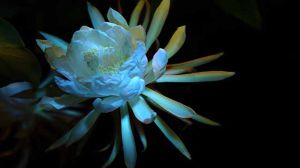
Night-Blooming Cereus Flowers at Night: Mastering How to Grow It Is Key
The night-blooming cereus (Epiphyllum) is an epiphytic plant in the cactus family, Epiphyllum genus, native to tropical America and now widely cultivated around the world. It often blooms at night, with large, pure white, funnel-shaped flowers and a rich fragrance, but the bloom lasts only a short time, gradually fading before dawn. People often use the phrase "a fleeting glimpse of the night-blooming cereus" to describe this brief, fleeting beauty, and for this reason it is also called the "Beauty Under the Moon."
In terms of growing habits, the night-blooming cereus likes a warm, humid, semi-shaded environment; it is not tolerant of severe cold, nor does it like harsh sun exposure. When caring for it, place it in a spot with plenty of scattered light and good ventilation; provide appropriate shading in summer, and move it indoors in winter to keep it warm and avoid cold damage from low temperatures.
In routine care, a loose, fertile, well-drained sandy soil is best; you can make a mix of leaf mold, garden soil, and river sand. Water according to the principle of letting the soil dry out before watering again, and do not let water stand in the pot for long periods, otherwise root rot is likely. During the growing season, apply some dilute liquid fertilizer, and appropriately supplement with phosphorus and potassium fertilizer during bud formation to encourage more and better blooms.
A common problem in care is yellowing leaves, which is mostly related to overwatering, insufficient light, or a lack of nutrients. Once noticed, the cause should be identified promptly and the care approach adjusted. In addition, the night-blooming cereus has a similar name to the false Christmas cactus (Rhipsalidopsis) in the same family and is easily confused with it, but the two differ clearly in flowering period and flower shape, so a little attention when buying is enough to tell them apart.
Related Reading